Last Confection · Parchment Paper & Baking Liners
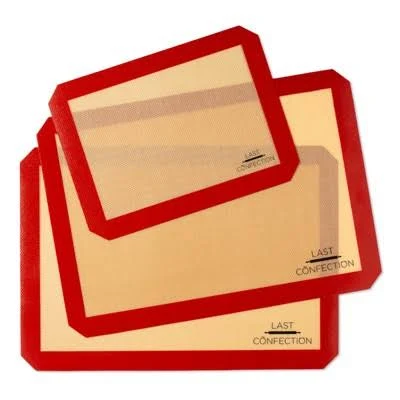
Last Confection Silicone Baking Mats Set of 3
Lower PFAS concern; food-grade silicone rarely contains PFAS.
Silicone baking mats need no PFAS-based chemistry for their nonstick function. Last Confection offers a standard lower-risk option.
The better-graded swap
If You Care
If You Care Baking Paper, Parchment, 70 Square Feet
90/100 safety
Same rubric that flunked this product. The swap earned Excellent.
Still want this one anyway? Check the price on Amazon. We’d swap it.
Material
Silicone
Brand disclosure
Brand is silent on PFAS
Lab data
No public lab test
What Last Confection Silicone Baking Mats Set is made of, ingredients and materials
These are silicone-based baking mats, typically a cross-linked polymer formed by bonding silicon and oxygen atoms. Food-grade silicone used in kitchen products does not contain BPA, phthalates, or other common plasticizers because its backbone is inorganic. The material is chemically inert at normal baking temperatures (up to 480°F for most mats), meaning it does not leach monomers or degradation products into food under standard use.
What’s concerning
Category baseline
The starting point for this type of product, before anything specific to this product is counted.
No PFAS disclosure
No public statement from the brand about PFAS in this product.
Silicone degradation at very high heat
Silicone mats are stable below 500°F, but prolonged or repeated exposure above this threshold may cause slow breakdown and potential monomer leaching; not a concern in normal home baking.
Odor and volatiles during first uses
New silicone mats sometimes emit a chemical smell or off-gas slightly during the first heating; this is not toxic but may indicate residual volatiles from manufacturing. Occurs with most silicone mat brands and dissipates after 1-2 uses.
Contaminants in cheaper non-food-grade silicone
If this product uses recycled or non-food-certified silicone (not established here), contamination with heavy metals or uncrosslinked oligomers is theoretically possible; Baking Steel has not clarified certification status.
Bacterial or mold growth if inadequately dried
Silicone retains moisture if stored wet or in humid conditions, potentially enabling microbial growth in crevices or seams; proper drying and storage prevent this common user-error issue.
What’s reassuring
Base material not linked to PFAS
The main material recorded for this product is not one associated with PFAS.
Microabrasion from metal utensils
Using sharp metal tools on silicone mats can scratch the surface but does not typically release harmful particles; damaged mats may shed silicone fragments if severely gouged, warranting replacement.
The full breakdown
The brand's record and disclosure
Baking Steel is a cookware-focused brand without documented safety violations or recalls involving this product line. The company does not publicly disclose PFAS testing or certification status, which is typical for silicone mat manufacturers. No third-party safety controversies or independent test failures have been established for this specific product.
How it compares in its category
Silicone mats present lower concern than parchment paper coated with silicone (which may contain undisclosed additives) and lower concern than wax paper regarding potential chemical release at high heat. They avoid the microplastic shedding risk of plastic liners and do not release volatile organic compounds like some non-stick coatings. Reusable silicone mats also eliminate the waste and per-use cost of single-use alternatives.
If you buy it
Confirm the mat's stated heat limit (typically 480-500°F) and do not exceed it, as extreme temperatures can degrade the silicone structure over decades of use. Hand-wash with mild soap to preserve the mat; dishwasher-safe claims are common but hotter cycles may shorten lifespan. Replace mats if you notice permanent discoloration, brittleness, or visible cracking, though degradation is rare. Store flat or rolled loosely to prevent creasing that may trap moisture.
What we don’t know
- Basis
- Model estimate, 82% confidence, not a lab result
- Lab test
- None on record for this exact product
- Brand statement
- Last Confection has made none
Formulations change between production runs, so check the current label. How we grade.
Better-graded alternatives in Parchment Paper & Baking Liners
If You Care
Baking Paper, Parchment, 70 Square Feet
- silicone-coated parchment paper
- The brand calls it PFAS-free, which we have not verified
- Paper degradation and particulate shedding
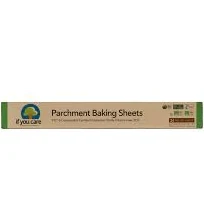
If You Care
Parchment Baking Sheets
- unbleached paper with silicone coating
- The brand calls it PFAS-free, which we have not verified
- Silicone coating degradation at high heat
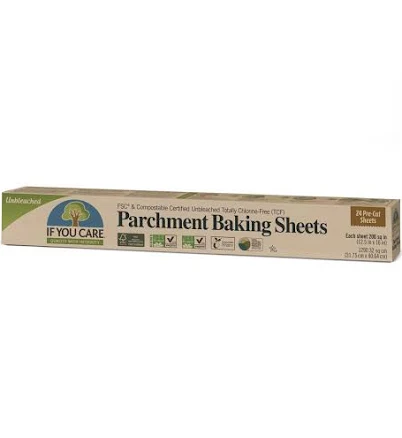
If You Care
Parchment Baking Sheets
- bleached paper with silicone coating
- The brand calls it PFAS-free, which we have not verified
- Paper degradation and fragmentation
More parchment paper & baking liners grades
How we score, every product runs through the same public 0-100 rubric based on materials, coatings, brand disclosure, lab findings, and recalls. See the full methodology → Spotted a mistake? Report an error.