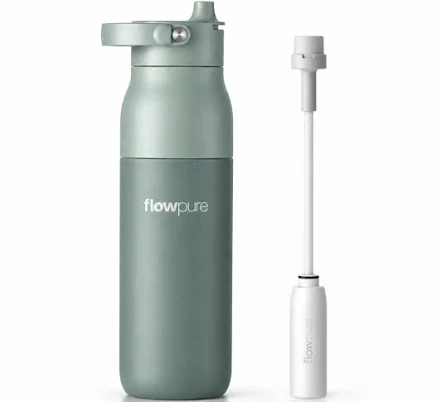
Stainless Steel Filter Water Bottle
Lower PFAS concern for stainless steel bottle; filter media composition unclear, request details.
Stainless steel bottle body carries lower PFAS risk. Doesn't disclose filter media composition, seals, or adhesives, which are common PFAS-use points.
We flunk more products than we pass. This one earned its grade. How we grade
Material
Stainless steel (primary); filter media unspecified
Brand disclosure
Brand is silent on PFAS
Lab data
No public lab test
You may also be interested in
Top-graded picks in the categories readers replace first, every one scored on the same rubric.

Aqua Pure
3M Aqua-Pure AP802B Whole House Filter Housing
- polypropylene filter housing, carbon/sediment cartridge
- We found no PFAS statement from the brand
- Bacterial growth in spent cartridges
3 hazards checked on this product. See all of them.

Aquasure
Premier Series 75 GPD Under Sink Reverse Osmosis Water Filtration System
- RO membrane, carbon filters, stainless steel housing
- We found no PFAS statement from the brand
- Bacterial and microbial growth in housing and filters
4 hazards checked on this product. See all of them.

Avocado
Vegan Mattress
- organic cotton, natural latex, coconut coir, recycled steel coils
- The brand calls it PFAS-free, which we have not verified
- Heavy metals
2 hazards checked on this product. See all of them.
What Stainless Steel Filter Water Bottle is made of, ingredients and materials
The bottle uses stainless steel as its primary container material, which does not leach heavy metals or degrade under normal use and temperature exposure. Stainless steel is chemically inert and does not require protective coatings that could shed or off-gas. The critical unknown is the filter media composition, activated carbon, ion-exchange resins, or membrane materials can leach or shed microparticles if degraded or contaminated, and this detail is not publicly specified for this product.
What’s concerning
No PFAS disclosure
No public statement from the brand about PFAS in this product.
Filter media leaching (unspecified composition)
The cartridge material type is not disclosed. If activated carbon is bonded with adhesives or if ion-exchange resin is used, degradation over time or poor manufacturing could release particles or chemical residues into water; this risk cannot be assessed without material disclosure.
Bacterial growth in filter or housing
All filtered water bottles carry microbial contamination risk if filter cartridges are not replaced on schedule or if the bottle is not dried between uses. No specific field reports or recalls for exist, but this is an inherent category risk.
Silicone or gasket leaching
Stainless steel bottles typically use silicone seals or gaskets around the filter housing. If these are not food-grade or high-quality silicone, they can leach oligomers under acidic water conditions or temperature stress; The brand does not specify gasket material grade.
Microplastic shedding from filter
Some activated carbon filters or synthetic membrane cartridges can shed fine particles if degraded or manufactured poorly. The brand's silence on filter material makes it impossible to rule out synthetic membrane use or particle shedding risk.
What’s reassuring
Bare uncoated material
Recorded as a bare, uncoated material with no surface coating or treatment.
Lead
No testing or recalls for heavy metal contamination in cartridges have been reported. This hazard is not specific to this brand but warrants due diligence if the product is used by children or pregnant individuals.
Source, ATSDR ↗The full breakdown
The brand's record and disclosure
The brand provides no publicly available safety certifications, material transparency statements, or third-party testing results on their website or standard retail channels. The brand has not published a PFAS stance or filter media composition sheet. No major recalls or safety controversies are on record for this brand, but the absence of proactive disclosure limits independent verification of filter safety claims.
How it compares in its category
Stainless steel filtered bottles have lower concern than plastic-bodied alternatives because they avoid BPA, BPS, and phthalate leaching from the container itself. However, filter media quality varies widely across brands; competitors like Grayl and LifeStraw publish filter material specifications and third-party microbial reduction certifications. The brand's lack of published cartridge specs puts it below category leaders in transparency but does not indicate a safety failure.
If you buy it
Replace filter cartridges on the manufacturer's recommended schedule (typically every 40-100 gallons) to prevent bacterial colonization and filter saturation. Do not use the bottle for hot beverages above 65-70°C, as this can accelerate any potential leaching from filter media or seals. Clean the bottle regularly with unscented soap and dry thoroughly between uses. Request the filter media material safety data sheet from customer service before first use to confirm cartridge composition.
What we don’t know
- Basis
- Model estimate, 62% confidence, not a lab result
- Lab test
- None on record for this exact product
- Brand statement
- has made none
Formulations change between production runs, so check the current label. How we grade.
More water filters grades
How we score, every product runs through the same public 0-100 rubric based on materials, coatings, brand disclosure, lab findings, and recalls. See the full methodology → Spotted a mistake? Report an error.