Aramark · Scrubs & Work Uniforms
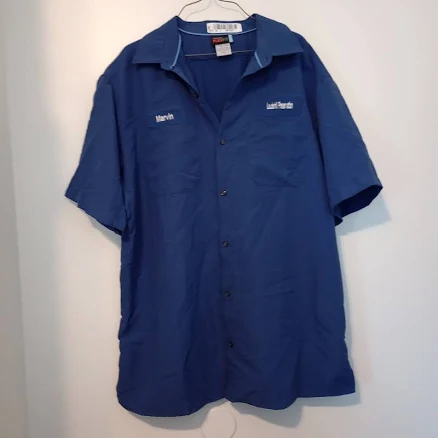
Xl Aramark Flexfit Blue Work Shirt Short Sleeve Uniform
Lower concern. Basic work shirt with no reported chemical treatments.
Standard polyester-cotton blend uniform shirt with no disclosed water-resistant or stain-resistant treatments. Aramark provides no PFAS information; typical work apparel of this type poses lower PFAS risk than treated outdoor gear.
Still want this one anyway? Check the price on Amazon. We’d swap it.
Material
polyester/cotton blend work shirt, no specified coating
Brand disclosure
Brand is silent on PFAS
Lab data
No public lab test
You may also be interested in
Top-graded picks in the categories readers replace first, every one scored on the same rubric.

- polypropylene filter housing, carbon/sediment cartridge
- We found no PFAS statement from the brand
- Bacterial growth in spent cartridges
3 hazards checked on this product, all on its full breakdown.

Aquasure
Premier Series 75 GPD Under Sink Reverse Osmosis Water Filtration System
- RO membrane, carbon filters, stainless steel housing
- We found no PFAS statement from the brand
- Bacterial and microbial growth in housing and filters
4 hazards checked on this product, all on its full breakdown.

Avocado
Vegan Mattress
- organic cotton, natural latex, coconut coir, recycled steel coils
- The brand calls it PFAS-free, which we have not verified
- Heavy metals
2 hazards checked on this product, all on its full breakdown.
What Xl Aramark Flexfit Blue Sleeve Uniform is made of, ingredients and materials
This shirt is a polyester-cotton blend, a common choice for work uniforms because it balances durability, wrinkle resistance, and breathability. Polyester itself is inert in finished form, but the concern in blended textiles centers on dyes and finishing resins applied during manufacture. The short-sleeve cut and basic uniform construction suggest minimal chemical treatment beyond standard dyeing, which reduces exposure to problematic finishing agents like formaldehyde-releasing resins used in wrinkle-resistant or antimicrobial finishes.
What’s concerning
Category baseline
The starting point for this type of product, before anything specific to this product is counted.
No PFAS disclosure
No public statement from the brand about PFAS in this product.
Heavy metals
Polyester-cotton work shirts are typically dyed with reactive or disperse dyes; azo dyes are not banned in the US for textiles worn by adults. No specific testing of this Aramark shirt for heavy metal content (cadmium, lead in pigments) is on record, but blue dyes in work apparel occasionally contain heavy metals depending on dye supplier. Risk is low for skin contact during normal wear.
Source, FDA ↗Phthalates
Some disperse dyes used in polyester may contain phthalate compounds as carriers, though they remain bound in the dye molecule. Risk of leaching into skin or sweat is considered low for apparel worn at body temperature. Pre-washing reduces any loose residues.
Source, ATSDR ↗Colorant transfer or dye bleeding with wear
Blue dyes on lower-cost work uniforms may bleed slightly during initial washes or if exposed to prolonged moisture or friction. This is a cosmetic and hygiene concern rather than a toxicological one; pre-washing and gentle initial care minimize transfer to skin.
What’s reassuring
Base material not linked to PFAS
The main material recorded for this product is not one associated with PFAS.
Formaldehyde / VOCs
No anti-wrinkle, antimicrobial, or stain-resistance finish is documented for this basic shirt, making formaldehyde-releasing resin treatment unlikely. Standard sizing and dye-set processes may involve trace formaldehyde, but pre-washing effectively removes these residues.
Source, ATSDR ↗Antimony in polyester
Antimony trioxide is used as a catalyst in polyester production and traces may remain in finished fabric. For a basic uniform shirt, exposure is negligible during wear, and no established health risk from trace antimony in polyester apparel has been documented.
How is this PFAS grade calculated?
The brand's record and disclosure
Aramark is a large workwear and uniform manufacturer but maintains minimal public transparency on chemical use in apparel products. No independent certifications (such as OEKO-TEX or Global Organic Textile Standard) are documented for this specific shirt. The brand has not faced major chemical-related recalls on work shirts in recent years, though no active disclosure of chemical testing or restricted substance lists is publicly visible. For a basic institutional uniform, this represents typical industry practice rather than a standout position.
How it compares in its category
Basic polyester-cotton work shirts are among the lowest-risk apparel items because they lack water-repellent coatings (which often contain PFAS), heavy dyes, or flame-retardant finishes. This product sits in the mainstream safety profile for utilitarian uniforms; certified organic or OEKO-TEX-labeled alternatives exist but command significantly higher cost. Compared to performance workwear (technical fabrics with stain or flame resistance), this shirt avoids chemical treatments that typically accompany those features.
If you buy it
Wash in warm water with standard detergent before first wear to remove residual dyes and finish chemicals. Dry on low to medium heat or air dry to avoid degrading the polyester and setting any remaining dyes. Replace when seams fray or fabric thinning appears, typically after 50-100 washes in regular work use. No special storage precautions needed; standard closet conditions are appropriate.
What is not known about PFAS in this product?
- Basis
- Model estimate, 72% confidence, not a lab result
- Lab test
- None on record for this exact product
- Brand statement
- Aramark has made none
Formulations change between production runs, so check the current label. How we grade.
More scrubs & work uniforms grades
How we score, every product runs through the same public 0-100 rubric based on materials, coatings, brand disclosure, lab findings, and recalls. See the full methodology → Spotted a mistake? Report an error.