Uniform Advantage · Scrubs & Work Uniforms
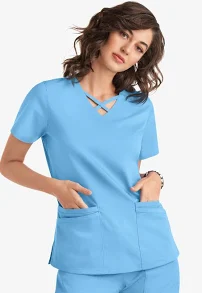
Butter Soft Blue Stretch Women's Scrub Top
No PFAS disclosure; standard stretch scrub fabric, lower concern.
Scrub top made from polyester-spandex blend with no water-resistant or stain-resistant claims, so unlikely to contain PFAS treatments. Brand makes no PFAS statements; standard medical apparel carries modest risk.
Still want this one anyway? Check the price on Amazon. We’d swap it.
Material
polyester and spandex blend, stretch fabric
Brand disclosure
Brand is silent on PFAS
Lab data
No public lab test
You may also be interested in
Top-graded picks in the categories readers replace first, every one scored on the same rubric.

- polypropylene filter housing, carbon/sediment cartridge
- We found no PFAS statement from the brand
- Bacterial growth in spent cartridges
3 hazards checked on this product, all on its full breakdown.

Aquasure
Premier Series 75 GPD Under Sink Reverse Osmosis Water Filtration System
- RO membrane, carbon filters, stainless steel housing
- We found no PFAS statement from the brand
- Bacterial and microbial growth in housing and filters
4 hazards checked on this product, all on its full breakdown.

Avocado
Vegan Mattress
- organic cotton, natural latex, coconut coir, recycled steel coils
- The brand calls it PFAS-free, which we have not verified
- Heavy metals
2 hazards checked on this product, all on its full breakdown.
What Butter Soft Blue Stretch Women's Scrub Top is made of, ingredients and materials
This scrub top is a polyester-spandex (elastane) blend, common in medical/stretch apparel. Polyester is a synthetic petroleum-derived fiber; spandex provides elasticity but both materials can be treated with dyes, finishes, and chemical stabilizers during manufacturing. The 'butter soft' marketing suggests a finishing treatment (likely silicone or resin-based) applied to improve hand-feel and reduce pilling. These finishes present lower concern for off-gassing after manufacturing, though volatile organic compounds (VOCs) may still off-gas during early wear and washing.
What’s concerning
Category baseline
The starting point for this type of product, before anything specific to this product is counted.
No PFAS disclosure
No public statement from the brand about PFAS in this product.
Azo dyes and colorant stability
Polyester textiles, especially bright colors like blue, often use azo dyes. Uniform Advantage provides no azo-dye restriction statement. Risk is low if dyes are properly fixed, but unverified. Concern rises if fabric bleeds color excessively on first wash.
Formaldehyde / VOCs
Polyester blends sometimes use formaldehyde-releasing resins for wrinkle resistance and shape retention. 'Butter soft' finishes may contain urea-formaldehyde or melamine-formaldehyde compounds. No disclosure from brand; risk is moderate but typically declines after 3-5 washes and air exposure.
Source, ATSDR ↗VOC and chemical off-gassing from finishes
Silicone softeners and resin finishes on stretch textiles commonly off-gas in first 24-72 hours and during washing. Odor and mild respiratory irritation are possible in poorly ventilated environments. Risk mitigates quickly with air drying and laundering.
Spandex degradation and leaching under heat or UV
Prolonged exposure to heat, chlorine, or UV can degrade spandex fibers and mobilize proprietary elastomer softeners and dyes. Medical environments with frequent high-temperature laundering (>60C) increase this risk over time. Standard low-heat home wash minimizes concern.
What’s reassuring
Base material not linked to PFAS
The main material recorded for this product is not one associated with PFAS.
Antimony in polyester
Antimony trioxide is a known catalyst residue in some polyester production; trace amounts (parts per million) may persist. No specific testing or recalls for Uniform Advantage scrubs on record; industry-wide residual risk is very low and non-bioaccumulative in clothing.
How is this PFAS grade calculated?
The brand's record and disclosure
Uniform Advantage is a mid-tier medical apparel supplier with no publicly available certifications (OEKO-TEX, GOTS, bluesign) or chemical disclosure statements on file. The brand has not published formaldehyde-free or azo-dye compliance statements. No major product safety recalls or regulatory actions against this brand are documented in public records. The silent PFAS stance reflects broader industry practice but offers no assurance of absence.
How it compares in its category
Stretch scrub tops across brands (Dickies, Cherokee, Koi) typically use identical polyester-spandex blends with similar finishing treatments; this product is materially representative, not exceptional. Certified alternatives (OEKO-TEX-verified scrubs) exist but at higher cost and availability trade-off. Uniform Advantage positions itself as budget-friendly mid-market, so chemical hazard profiles align with that tier, acceptable but unverified.
If you buy it
Wash in cool water before first wear to reduce VOC off-gassing and any loose dye residues. Avoid high-heat drying (air dry preferred; if machine drying, use low heat) as spandex degrades above 60 degrees Celsius, which can also increase leaching of finishing chemicals. Expect 50-100 wash cycles of typical durability; replace when elasticity visibly fails or fabric pills heavily. Do not use chlorine bleach, which can degrade both polyester and spandex and may mobilize residual dyes.
What is not known about PFAS in this product?
- Basis
- Model estimate, 72% confidence, not a lab result
- Lab test
- None on record for this exact product
- Brand statement
- Uniform Advantage has made none
Formulations change between production runs, so check the current label. How we grade.
More scrubs & work uniforms grades
How we score, every product runs through the same public 0-100 rubric based on materials, coatings, brand disclosure, lab findings, and recalls. See the full methodology → Spotted a mistake? Report an error.