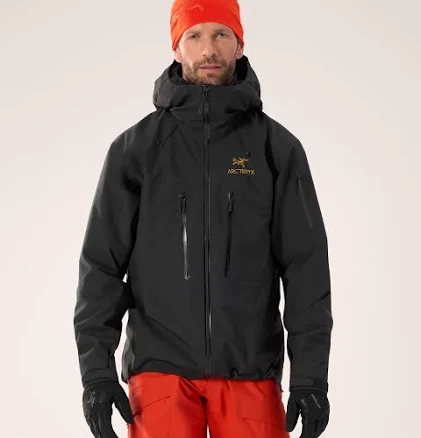
Arc'teryx · Ski & Snowboard Jackets
Arc'teryx Alpha SV Jacket Men's
High PFAS risk from Gore-Tex waterproofing without Arc'teryx public commitment.
This jacket uses Gore-Tex, a Teflon-type coating membrane historically linked to PFAS in manufacturing. Arc'teryx has not published a PFAS reduction roadmap or made verified claims about this model.
Still want this one anyway? Check the price on Amazon. We’d swap it.
Material
Gore-Tex membrane (Teflon-type coating-based) with nylon/polyester shell
Lab data
No public lab test
What Arc'teryx Alpha SV Jacket Men's is made of, ingredients and materials
The Alpha SV uses Gore-Tex, a laminated membrane of polytetrafluoroethylene (Teflon-type coating) bonded to nylon and polyester shells. Gore-Tex's water-blocking relies on PFAS chemistry to create microscopic pores; this is distinct from coating-based waterproofing. The nylon and polyester shells themselves carry low risk of hazardous leaching under normal wear, but the Gore-Tex membrane is the primary PFAS vehicle. Arc'teryx does not disclose PFAS content or lifecycle data.
What’s concerning
Category baseline
The starting point for this type of product, before anything specific to this product is counted.
No PFAS disclosure
No public statement from the brand about PFAS in this product.
Waterproof / stain-resistant treatment
Water-repellent coating treatments have historically used PFAS.
PFAS
Gore-Tex is inherently PFAS-based (Teflon-type coating polymer). water-repellent coating treatments on the nylon shell typically use fluorinated compounds. Arc'teryx discloses neither specific PFAS types nor concentration; the membrane and finish are the dominant PFAS sources in this jacket.
Source, ATSDR ↗Microplastic shedding from synthetic fibers and membrane
Nylon and polyester shells shed microfibers during washing and wear. Gore-Tex laminate can degrade over time with heat or UV exposure, potentially releasing Teflon-type coating fragments. Frequency and mass are not quantified for this specific product but are inherent to technical textiles.
What’s reassuring
Formaldehyde / VOCs
No recalls or public reports of formaldehyde-based resins in Arc'teryx jackets. Modern performance fabrics typically avoid formaldehyde, though it is not explicitly ruled out without third-party testing or material declarations.
Source, ATSDR ↗Heavy metals
Arc'teryx does not disclose dye chemistry or heavy-metal screening for the Alpha SV. Premium brands generally comply with EU and REACH restrictions on restricted azo dyes, but cadmium, lead, and chromium in pigments are not independently verified here.
Source, FDA ↗Flame retardants
The Alpha SV uses synthetic insulation (Coreloft or similar polyester); Arc'teryx does not declare whether flame retardants are applied. No public reports of halogenated flame retardants in Arc'teryx jackets, but absence of reporting does not confirm absence of treatment.
Source, EPA ↗The full breakdown
The brand's record and disclosure
Arc'teryx has not published specific PFAS reduction commitments, material transparency reports, or third-party certifications for PFAS avoidance as of available records. The company does not appear on public lists of brands committing to PFAS phaseout timelines. Arc'teryx focuses marketing on technical performance rather than chemical safety disclosure, which is typical for performance-outdoor apparel but leaves consumers without clear guidance on fluorochemical burden.
How it compares in its category
Most premium ski jackets (Patagonia, The North Face, Salomon) similarly use Gore-Tex or equivalent Teflon-type coating membranes, so the Alpha SV is not an outlier in PFAS exposure. Some brands (Patagonia, Arc'teryx's parent Amer Sports subset) have begun exploring PFAS-free alternatives, but Gore-Tex remains the category standard for durability and breathability trade-offs. Budget or mid-tier jackets sometimes use polyurethane membranes, which avoid PFAS but sacrifice longevity or comfort.
If you buy it
Wash separately in cool water and air-dry to minimize membrane degradation and reduce microfiber shedding. Avoid machine drying, direct heat, or prolonged exposure to temperatures above 70C (158F), which can degrade Gore-Tex adhesion. Reapply water-repellent coating (water-repellent coating) coating annually; most commercial water-repellent coating also contains PFAS, so minimize this step. Plan for 8-15 years of use to justify the PFAS footprint; premature replacement multiplies exposure per year worn.
What we don’t know
- Basis
- Model estimate, 65% confidence, not a lab result
- Lab test
- None on record for this exact product
- Brand statement
- Arc'teryx has made a specific claim
Formulations change between production runs, so check the current label. How we grade.
Better-graded alternatives in Ski & Snowboard Jackets
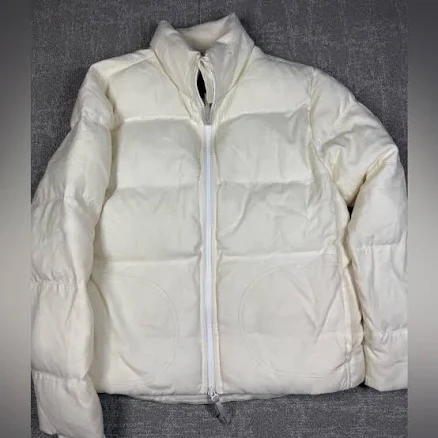
Allbirds
Jackets & Coats Allbirds Full Zip Wool Blend Puffer Jacket Women Size Small
- Wool blend with synthetic fill (likely polyester)
- We found no PFAS statement from the brand
- water-repellent coating (water-repellent coating) coating composition
3 hazards checked on this product. See all of them.
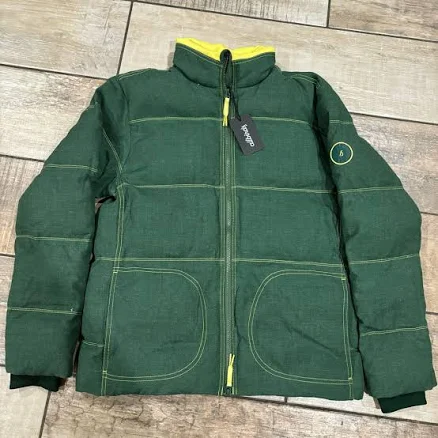
Allbirds
Jackets & Coats Allbirds Men's Trino Puffer Jacket Full Zip Wool Blend Forest Green Coat Size Sm
- wool blend (natural fiber dominant)
- We found no PFAS statement from the brand
- water-repellent coating (water-repellent coating) treatment - undisclosed chemistry
2 hazards checked on this product. See all of them.
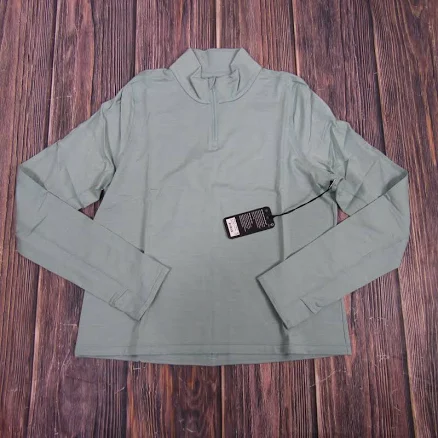
Allbirds
NWT Womens Medium Green Natural Run Mid Layer 1/4 Zip Jacket
- Merino wool blend (natural fiber)
- We found no PFAS statement from the brand
- Azo dyes and synthetic dye residue
3 hazards checked on this product. See all of them.
More ski & snowboard jackets grades
How we score, every product runs through the same public 0-100 rubric based on materials, coatings, brand disclosure, lab findings, and recalls. See the full methodology → Spotted a mistake? Report an error.