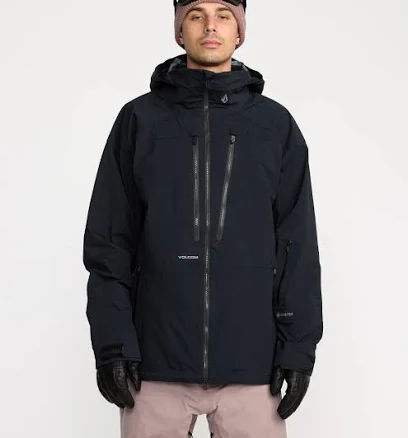
Volcom · Ski & Snowboard Jackets
Volcom Guch Stretch Gore Jacket Men's
High PFAS risk due to Gore-Tex waterproofing or Volcom does not disclose PFAS stance.
The Guch Stretch uses Gore-Tex, a laminated Teflon-family coating membrane widely documented to contain or rely on PFAS chemistry for its waterproof-breathable function. Volcom hasn't published a PFAS policy.
Still want this one anyway? Check the price on Amazon. We’d swap it.
Material
Gore-Tex (Teflon-family coating membrane) + nylon/polyester shell
Brand disclosure
Brand is silent on PFAS
Lab data
No public lab test
What Volcom Guch Stretch Gore Jacket Men's is made of, ingredients and materials
This jacket uses Gore-Tex, a Teflon-family coating membrane bonded to a nylon/polyester shell. Gore-Tex's water-repellent properties come from Teflon-type coating (polytetrafluoroethylene) and related fluorinated compounds applied during manufacturing. The shell fabric itself is a standard synthetic blend without known ceramic or metallic coatings. Performance waterproofing at this price point relies almost entirely on the Teflon-family coating layer, not mechanical sealing.
What’s concerning
Category baseline
The starting point for this type of product, before anything specific to this product is counted.
No PFAS disclosure
No public statement from the brand about PFAS in this product.
Waterproof / stain-resistant treatment
Water-repellent coating treatments have historically used PFAS.
Teflon-type coating/Teflon-family coating fume risk
Gore-Tex itself does not off-gas Teflon-type coating at normal wear temperatures. Risk is indirect, industrial heating during manufacturing or home dryer use above 140F can degrade the membrane and potentially release volatile fluorinated byproducts. Avoid high heat.
Formaldehyde / VOCs
Water-repellent and durable-press finishes on nylon/polyester may contain formaldehyde-releasing resins. Volcom does not disclose finish chemistry. New-purchase off-gassing is typical; washing reduces residual formaldehyde.
Source, ATSDR ↗Microparticle shedding from membrane degradation
Gore-Tex membranes can shed microfibers when abraded or aged, especially if seams are compromised. This is a wear-out issue, not an acute hazard, but contributes to microplastic exposure over the jacket's lifetime. Regular inspection of seams and membrane integrity is advisable.
What’s reassuring
Azo dyes in synthetic shell
No public record of azo dye restrictions or violations in Volcom jackets. Nylon and polyester shells can theoretically contain restricted azo compounds, but this is a category-wide risk with minimal brand-specific evidence for Volcom.
Heavy metals
No recalls or independent testing of Volcom jackets for cadmium, lead, or antimony in dyes. Standard textile testing would be required to rule this out; brand does not publish color chemistry details.
Source, FDA ↗The full breakdown
The brand's record and disclosure
Volcom, owned by Authentic Brands Group, does not publicly disclose PFAS use, sourcing practices, or Teflon-family coating supplier standards. The brand has not published sustainability reports addressing 'forever chemicals' or committed to phasing fluorinated treatments. No independent certifications (Bluesign, GOTS, or similar) appear linked to this specific model, limiting third-party verification of chemical inputs.
How it compares in its category
Most mid-range ski jackets (100-300 USD tier) use Gore-Tex or equivalent Teflon-family coating membranes; PFAS exposure is category-wide. Premium brands like Patagonia and Arc'teryx have published PFAS reduction roadmaps; budget competitors typically offer less disclosure. Non-Teflon-family coating alternatives (waxed cotton, polyurethane films) exist but sacrifice breathability and durability that skiers expect.
If you buy it
Wash separately from other garments in cold water; Teflon-family coating membranes can shed particles under high heat and mechanical stress. Air dry or use low heat only; dryer heat can degrade bonding and release volatile compounds. Replace when seams leak or membrane loses water beading (typically 3-5 years of regular use). Do not dry clean, as solvents compromise the membrane.
What we don’t know
- Basis
- Model estimate, 62% confidence, not a lab result
- Lab test
- None on record for this exact product
- Brand statement
- Volcom has made none
Formulations change between production runs, so check the current label. How we grade.
Better-graded alternatives in Ski & Snowboard Jackets
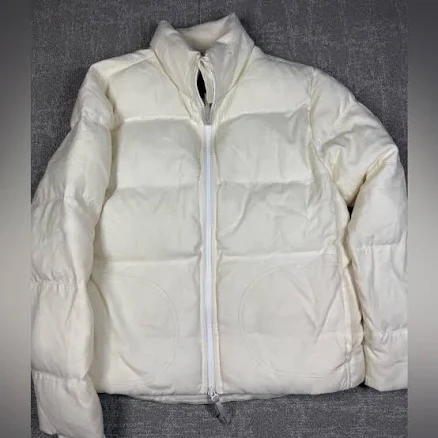
Allbirds
Jackets & Coats Allbirds Full Zip Wool Blend Puffer Jacket Women Size Small
- Wool blend with synthetic fill (likely polyester)
- We found no PFAS statement from the brand
- water-repellent coating (water-repellent coating) coating composition
3 hazards checked on this product. See all of them.
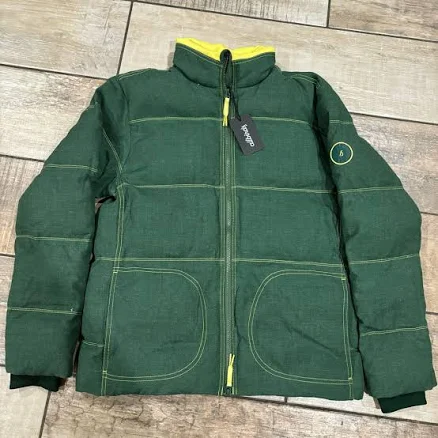
Allbirds
Jackets & Coats Allbirds Men's Trino Puffer Jacket Full Zip Wool Blend Forest Green Coat Size Sm
- wool blend (natural fiber dominant)
- We found no PFAS statement from the brand
- water-repellent coating (water-repellent coating) treatment - undisclosed chemistry
2 hazards checked on this product. See all of them.
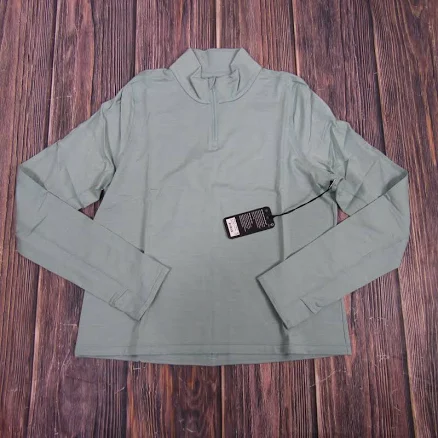
Allbirds
NWT Womens Medium Green Natural Run Mid Layer 1/4 Zip Jacket
- Merino wool blend (natural fiber)
- We found no PFAS statement from the brand
- Azo dyes and synthetic dye residue
3 hazards checked on this product. See all of them.
More ski & snowboard jackets grades
How we score, every product runs through the same public 0-100 rubric based on materials, coatings, brand disclosure, lab findings, and recalls. See the full methodology → Spotted a mistake? Report an error.