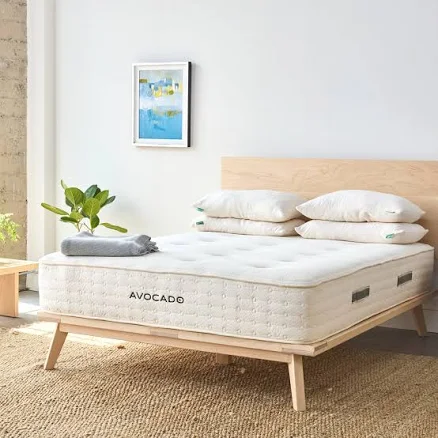
Avocado Organic Hybrid Mattress, Is It Non-Toxic?
MADE SAFE certification on record, whose criteria restrict PFAS.
Organic cotton, natural latex, wool and innerspring mattress. It carries MADE SAFE certification, whose criteria restrict PFAS, which we record as third-party verification.
We flunk more products than we pass. This one earned its grade. How we grade
Material
organic cotton, natural latex, wool, innerspring coils
Brand disclosure
Brand is silent on PFAS
Lab data
No public lab test
You may also be interested in
Top-graded picks in the categories readers replace first, every one scored on the same rubric.

- polypropylene filter housing, carbon/sediment cartridge
- We found no PFAS statement from the brand
- Bacterial growth in spent cartridges
3 hazards checked on this product, all on its full breakdown.

Aquasure
Premier Series 75 GPD Under Sink Reverse Osmosis Water Filtration System
- RO membrane, carbon filters, stainless steel housing
- We found no PFAS statement from the brand
- Bacterial and microbial growth in housing and filters
4 hazards checked on this product, all on its full breakdown.
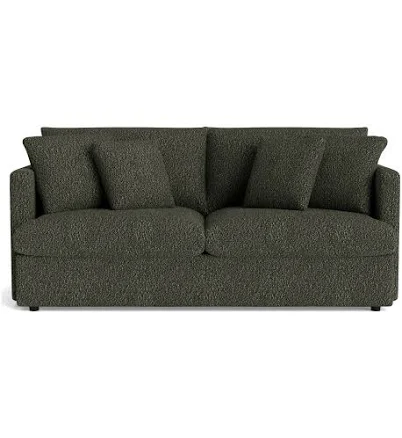
- polyurethane foam
- We found no PFAS statement from the brand
- Volatile Organic Compound (VOC) Off-Gassing
4 hazards checked on this product, all on its full breakdown.
Is Avocado Organic Hybrid Mattress non-toxic? What it is made of
The Avocado Organic Hybrid uses GOLS (Global Organic Latex Standard) certified natural latex, organic cotton cover, and wool fire barrier instead of synthetic flame retardants or chemical adhesives. Natural latex is inherently durable and resists microbial growth without antimicrobial treatments; organic cotton avoids pesticide residues; wool is naturally flame-resistant without added halogenated or phosphorus-based retardants. This material stack minimizes leaching of volatile organic compounds (VOCs) and chemical off-gassing during the typical 7-10 year product life.
What’s concerning
Category baseline
The starting point for this type of product, before anything specific to this product is counted.
Volatile Organic Compound (VOC) off-gassing
New natural latex and wool products may emit low levels of VOCs during curing and the first 1-2 weeks; expected to dissipate quickly given the organic material base and lack of synthetic adhesives or polyurethane foam.
Latex allergy contact risk
Natural latex can trigger localized allergic reactions in sensitive individuals (prevalence 1-3% of population); risk is mitigated if the latex is fully encased by cotton and wool, but direct skin contact should be avoided. Avocado's design minimizes this exposure.
Mold or microbial growth from moisture retention
Natural latex and wool retain moisture more readily than synthetic foams if exposed to high humidity or water damage; proper ventilation and a moisture barrier (mattress protector) reduce risk. Not a manufacturing defect but a material property requiring user awareness.
What’s reassuring
Base material not linked to PFAS
The main material recorded for this product is not one associated with PFAS.
Third-party PFAS-free verification
A third party reports verifying this product as PFAS-free.
Flame retardants
Wool is naturally fire-resistant; Avocado uses no added halogenated, brominated, or phosphorus-based flame retardants according to product documentation and third-party certifications. This is a material strength, not a hazard.
Source, EPA ↗Heavy metals
GOTS certification for organic cotton and GOLS for latex require restricted use of azo dyes and heavy metal mordants; no recalls or test reports of lead, cadmium, or antimony in Avocado mattresses are on public record.
Source, FDA ↗How is this PFAS grade calculated?
The brand's record and disclosure
Avocado holds Organic Certification (GOLS for latex, GOTS for cotton), CertiPUR-US for foam components, and third-party testing transparency on its website. The brand does not explicitly publish a PFAS policy or testing results; this silence is notable but not disqualifying given the material composition (natural latex and wool do not typically require PFAS-based water/oil repellents in manufacturing). No significant product recalls or chemical safety controversies are on public record for this model.
How it compares in its category
Most hybrid mattresses under $2000 use synthetic polyurethane foam, polyester covers, and chemical flame retardants (brominated or chlorinated compounds). The Avocado's natural latex and organic fiber construction places it in the top tier for chemical restraint in the mid-premium segment. Competitor brands like Helix and Tempurpedic use mixed synthetic materials with higher VOC and flame-retardant profiles; Avocado's approach reduces long-term off-gassing risk.
If you buy it
Unbox and air the mattress in a well-ventilated room for 24-48 hours to disperse any residual manufacturing odors (common to all new mattresses, minimal risk here). Rotate the mattress every 3-6 months to prevent indentation. Use a non-flame-retardant mattress protector if desired (avoid chemical barriers); washing organic cotton covers in cool water preserves the material. Do not expose to prolonged moisture or high heat; replace if sagging exceeds 1.5 inches or visible mold develops.
What is not known about PFAS in this product?
- Basis
- Model estimate, 78% confidence, not a lab result
- Lab test
- None on record for this exact product
- Brand statement
- Avocado has made none
Formulations change between production runs, so check the current label. How we grade.
More mattresses grades
How we score, every product runs through the same public 0-100 rubric based on materials, coatings, brand disclosure, lab findings, and recalls. See the full methodology → Spotted a mistake? Report an error.