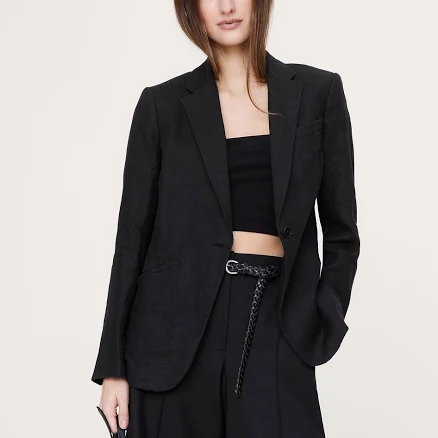
Banana Republic · Stain-Resistant Blazers & Suits
Banana Republic Women's Slim Linen Blazer
Linen blazer with no stain-resistant coating on record shows lower concern.
Material as recorded is 100% linen, not a material linked to PFAS. The brand has no PFAS statement on record and no coating is documented for this blazer.
Still want this one anyway? Check the price on Amazon. We’d swap it.
Material
100% linen
Brand disclosure
Brand is silent on PFAS
Lab data
No public lab test
You may also be interested in
Top-graded picks in the categories readers replace first, every one scored on the same rubric.

- polypropylene filter housing, carbon/sediment cartridge
- We found no PFAS statement from the brand
- Bacterial growth in spent cartridges
3 hazards checked on this product, all on its full breakdown.

Aquasure
Premier Series 75 GPD Under Sink Reverse Osmosis Water Filtration System
- RO membrane, carbon filters, stainless steel housing
- We found no PFAS statement from the brand
- Bacterial and microbial growth in housing and filters
4 hazards checked on this product, all on its full breakdown.

Avocado
Vegan Mattress
- organic cotton, natural latex, coconut coir, recycled steel coils
- The brand calls it PFAS-free, which we have not verified
- Heavy metals
2 hazards checked on this product, all on its full breakdown.
What Banana Republic Women's Slim Linen Blazer is made of, ingredients and materials
This blazer is 100% linen, a plant-based fiber with inherently low synthetic chemical burden compared to polyester or cotton blends. Linen production does involve some processing (retting, bleaching, dyeing), but the fiber itself does not require coating or stabilization with problematic polymers. The main chemical exposure during manufacturing would be from dyes and finishing treatments applied at the mill, not from the linen substrate.
What’s concerning
Category baseline
The starting point for this type of product, before anything specific to this product is counted.
No PFAS disclosure
No public statement from the brand about PFAS in this product.
Formaldehyde / VOCs
Linen fabrics may be treated with formaldehyde-based resins to improve wrinkle resistance or shrinkage control. Banana Republic does not disclose finish type, so presence is unconfirmed. First wash reduces formaldehyde residue substantially.
Source, ATSDR ↗Heavy metals
Linen blazers undergo dyeing; if non-compliant dyes were used, heavy metals (lead, cadmium) or banned azo dyes could remain in fibers. No recall history for this product, but brand does not publish dye standards. Risk is low for natural linen but present in unregulated supply chains.
Source, FDA ↗Sizing and finishing chemical residues
Mill sizing agents (starch, waxes, oils) and softeners used during linen finishing may include undisclosed synthetic compounds. These typically wash out over one to two cycles and pose minimal skin contact risk on a blazer (not an absorbent garment).
Button, hardware, or trim metals (if present)
Metal buttons or zippers may contain nickel or other allergens. Product description does not detail hardware; inspect if sensitive to nickel or verify material before purchase.
What’s reassuring
Base material not linked to PFAS
The main material recorded for this product is not one associated with PFAS.
Pesticide residue
Linen is grown from flax, which may be treated with pesticides if not organically certified. Banana Republic does not specify organic sourcing for this piece. Pesticide residue on finished fabric is generally minimal but unverified.
Source, EPA ↗How is this PFAS grade calculated?
The brand's record and disclosure
Banana Republic (owned by Gap Inc.) does not publicly disclose detailed chemical restriction policies or third-party certifications (GOTS, OEKO-TEX) for individual garments. The brand has faced general scrutiny around labor and supply chain transparency but no major chemical safety recalls or documented formaldehyde or azo dye incidents specific to linen pieces. Lack of transparency is a weakness, not a known hazard.
How it compares in its category
A 100% linen blazer has lower concern for antimony (a flame-retardant catalyst) and residual solvent loads compared to polyester or polyester-blend blazers. Linen is also preferable to blended fabrics that use synthetic sizing or wrinkle-resist finishes, which sometimes contain formaldehyde-release resins. Among natural-fiber blazers, linen is standard and carries lower hazard than wool (potential pesticide residue) or silk (heavy metal dyes).
If you buy it
Wash in cool to warm water before first wear to remove residual dyes and finishing agents. Linen wrinkles naturally and does not require dry cleaning, which eliminates perchloroethylene exposure. Inspect seams and hardware (if any) for rust or corrosion after several washes. Linen is durable and should last many years if not exposed to heat or bleach.
What is not known about PFAS in this product?
- Basis
- Model estimate, 75% confidence, not a lab result
- Lab test
- None on record for this exact product
- Brand statement
- Banana Republic has made none
Formulations change between production runs, so check the current label. How we grade.
More stain-resistant blazers & suits grades
How we score, every product runs through the same public 0-100 rubric based on materials, coatings, brand disclosure, lab findings, and recalls. See the full methodology → Spotted a mistake? Report an error.