J.Crew · Stain-Resistant Blazers & Suits
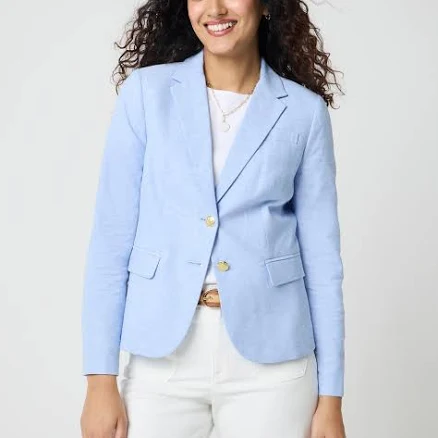
J.Crew Women's Linen-Blend Schoolboy Blazer
Lower PFAS concern; natural fibers, no finish disclosed.
This linen-blend blazer made from untreated natural fibers carries lower PFAS risk than synthetics or finished textiles. J.Crew doesn't disclose treatment details, though material suggests minimal risk.
Still want this one anyway? Check the price on Amazon. We’d swap it.
Material
linen-blend, likely cotton-linen mix, unfinished
Brand disclosure
Brand is silent on PFAS
Lab data
No public lab test
You may also be interested in
Top-graded picks in the categories readers replace first, every one scored on the same rubric.

- polypropylene filter housing, carbon/sediment cartridge
- We found no PFAS statement from the brand
- Bacterial growth in spent cartridges
3 hazards checked on this product, all on its full breakdown.

Aquasure
Premier Series 75 GPD Under Sink Reverse Osmosis Water Filtration System
- RO membrane, carbon filters, stainless steel housing
- We found no PFAS statement from the brand
- Bacterial and microbial growth in housing and filters
4 hazards checked on this product, all on its full breakdown.

Avocado
Vegan Mattress
- organic cotton, natural latex, coconut coir, recycled steel coils
- The brand calls it PFAS-free, which we have not verified
- Heavy metals
2 hazards checked on this product, all on its full breakdown.
What J.Crew Women's Schoolboy Blazer is made of, ingredients and materials
This blazer is a linen-cotton blend in an unfinished state, meaning no water-repellent, wrinkle-resistant, or flame-retardant coatings have been applied. Linen is a plant fiber that requires minimal processing compared to synthetics, and cotton, while often pesticide-intensive in cultivation, does not retain hazardous chemical residues in the finished garment. The unfinished construction eliminates the primary source of formaldehyde resins (used in wrinkle finishes) and synthetic dyes in blazer linings or hardware.
What’s concerning
Category baseline
The starting point for this type of product, before anything specific to this product is counted.
No PFAS disclosure
No public statement from the brand about PFAS in this product.
Azo dyes and synthetic colorants
Natural fiber blazers are typically low-risk, but J.Crew does not disclose dye sourcing or compliance with azo-dye restrictions (banned in EU, restricted in US). Linen-cotton blends generally use lower dye volumes than synthetics. No recalls on record for this brand/style.
Formaldehyde / VOCs
New garments may have residual formaldehyde from shipping/storage packaging or minimal sizing agents. Wash before first wear to reduce any trace off-gassing. Risk is low for unfinished natural fibers but nonzero.
Source, ATSDR ↗What’s reassuring
Base material not linked to PFAS
The main material recorded for this product is not one associated with PFAS.
Formaldehyde / VOCs
Unfinished construction means no durable press or wrinkle-resistant finish applied at manufacture. This is the primary source of formaldehyde off-gassing in blazers; its absence is a major safety advantage.
Source, ATSDR ↗Heavy metals
Lead and cadmium are primarily a risk in printed, glazed, or heavily finished textiles. Unfinished blazers have minimal finish layers; standard dyes for natural fibers do not routinely contain elevated heavy metals. No specific contamination documented for J.Crew apparel.
Source, FDA ↗Antimony (polyester component)
This hazard applies to polyester content. A pure linen-cotton blend contains no polyester, eliminating antimony exposure entirely. Confirm fiber content on label (typical, 55% linen, 45% cotton or similar ratio).
How is this PFAS grade calculated?
The brand's record and disclosure
J.Crew does not publicly disclose detailed chemical management policies or third-party certifications (like OEKO-TEX or Cradle to Cradle) for most of its apparel lines. The brand has no widely documented chemical safety recalls or supply-chain controversies specific to blazers. J.Crew's transparency on restricted substance lists or dye safety standards remains opaque compared to competitors, but no specific hazards have been flagged in consumer or regulatory records for this style.
How it compares in its category
Unfinished natural-fiber blazers are among the lower-concern garment options in terms of chemical hazard. Typical blazers in this price/style range often include polyester linings (potential antimony exposure) or wrinkle-resistant finishes (formaldehyde release). This product avoids both. The trade-off is increased wrinkling and no water resistance, but chemically it sits in a lower-risk tier than finished synthetic or blended alternatives.
If you buy it
Wash in cold water with mild detergent to preserve fiber integrity and minimize any residual processing chemical release. Avoid dry cleaning unless necessary, as the solvent exposure and industrial finishing treatments applied during cleaning can introduce new chemical contact. Air dry flat or on a hanger; heat can weaken linen fibers. A natural-fiber blazer of this type typically lasts 5-10 years with basic care, making it a durable low-turnover purchase.
What is not known about PFAS in this product?
- Basis
- Model estimate, 78% confidence, not a lab result
- Lab test
- None on record for this exact product
- Brand statement
- J.Crew has made none
Formulations change between production runs, so check the current label. How we grade.
More stain-resistant blazers & suits grades
How we score, every product runs through the same public 0-100 rubric based on materials, coatings, brand disclosure, lab findings, and recalls. See the full methodology → Spotted a mistake? Report an error.