J.Crew · Stain-Resistant Blazers & Suits
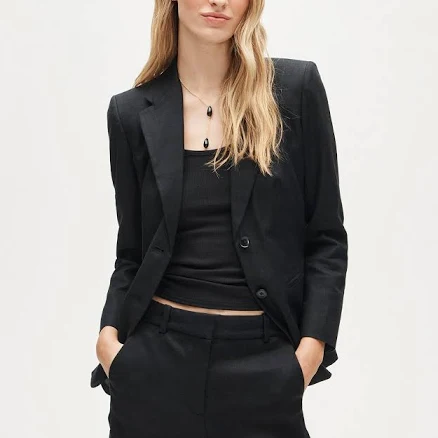
J.Crew Women's Margeaux Stretch Linen Blend Blazer
Lower concern, uncoated natural fiber with no water-repellent coating treatment disclosed.
This linen-blend blazer has no disclosed waterproofing or stain treatment. No PFAS signals appear in available product information, though J.Crew provides no explicit PFAS disclosure.
Still want this one anyway? Check the price on Amazon. We’d swap it.
Material
linen blend, no water-resistant treatment noted
Brand disclosure
Brand is silent on PFAS
Lab data
No public lab test
You may also be interested in
Top-graded picks in the categories readers replace first, every one scored on the same rubric.

- polypropylene filter housing, carbon/sediment cartridge
- We found no PFAS statement from the brand
- Bacterial growth in spent cartridges
3 hazards checked on this product, all on its full breakdown.

Aquasure
Premier Series 75 GPD Under Sink Reverse Osmosis Water Filtration System
- RO membrane, carbon filters, stainless steel housing
- We found no PFAS statement from the brand
- Bacterial and microbial growth in housing and filters
4 hazards checked on this product, all on its full breakdown.

Avocado
Vegan Mattress
- organic cotton, natural latex, coconut coir, recycled steel coils
- The brand calls it PFAS-free, which we have not verified
- Heavy metals
2 hazards checked on this product, all on its full breakdown.
What J.Crew Women's Margeaux Blend Blazer is made of, ingredients and materials
This blazer is a linen blend, likely linen-cotton or linen-synthetic mix. Linen itself is a cellulose fiber with minimal inherent chemical risk compared to pure synthetics. The 'blend' component matters, if polyester is included, antimony (a processing catalyst) may be present at trace levels in the fiber; if it contains elastane for stretch, the synthetic polymer poses low risk in woven form. No water-resistant or stain-resistant treatment is documented, which eliminates a major source of chemical coatings.
What’s concerning
Category baseline
The starting point for this type of product, before anything specific to this product is counted.
No PFAS disclosure
No public statement from the brand about PFAS in this product.
Formaldehyde / VOCs
Linen-blend fabrics sometimes receive formaldehyde-based wrinkle-resist or sizing treatments. J.Crew does not disclose finish chemistry for this blazer. Washing before wear reduces residual formaldehyde exposure.
Source, ATSDR ↗Azo dyes
The blazer's dye composition is not documented. Linen blends are typically dyed with both azo and non-azo dyes. Non-restricted azo dyes pose low toxicity risk, but some individuals react to reactive dyes used on cellulose fibers. Prewash reduces loose dye transfer.
Antimony in polyester component
If the blend includes polyester for stretch or body, antimony (a byproduct catalyst) may be present in trace amounts within the fiber itself, not as a coating. Dermal exposure from wearing is negligible; ingestion would be the only relevant route, which does not occur with apparel.
What’s reassuring
Base material not linked to PFAS
The main material recorded for this product is not one associated with PFAS.
Flame retardants
No flame-retardant finish is disclosed or typical for untreated linen-blend blazers sold as everyday apparel in the US (flame retardants are mandated for sleepwear and some upholstered items, not outerwear).
Source, EPA ↗Coating degradation and microplastic release
This product carries no water-resistant or stain-resistant polymer coating, eliminating the risk of microplastic shedding or coating breakdown that occurs with treated technical fabrics.
How is this PFAS grade calculated?
The brand's record and disclosure
J.Crew does not publicly disclose fiber testing or chemical-restriction standards for individual garments, nor do they maintain visible PFAS or flame-retardant policies for apparel. The brand has faced no major recalls or public health warnings for blazers or similar structured garments. Their silence on chemical transparency is typical for mid-market US retailers, falling short of brands like Patagonia or Stella McCartney but not notably worse than peers.
How it compares in its category
Women's blazers in this price range (typically 100-200 USD at J.Crew) rarely undergo third-party chemical testing or carry certifications like OEKO-TEX. A linen-blend blazer is actually lower-risk than equivalent polyester or wool-blend versions because linen requires fewer chemical finishes. The uncoated, untreated status of this piece means it avoids the fluorinated finishes often used in heavily finished or performance-coated blazers.
If you buy it
Wash in cool water before first wear to remove sizing and loose dyes. Dry clean when necessary rather than washing repeatedly, since linen-blend blends can soften with laundering; if you machine wash, use gentle cycle and air dry to preserve structure. Inspect seams and button attachments periodically for wear, as linen can split at stress points. If the blazer develops odor or stiffness that doesn't resolve with airing, it may signal mold in storage rather than chemical breakdown.
What is not known about PFAS in this product?
- Basis
- Model estimate, 72% confidence, not a lab result
- Lab test
- None on record for this exact product
- Brand statement
- J.Crew has made none
Formulations change between production runs, so check the current label. How we grade.
More stain-resistant blazers & suits grades
How we score, every product runs through the same public 0-100 rubric based on materials, coatings, brand disclosure, lab findings, and recalls. See the full methodology → Spotted a mistake? Report an error.