J.Crew · Stain-Resistant Blazers & Suits
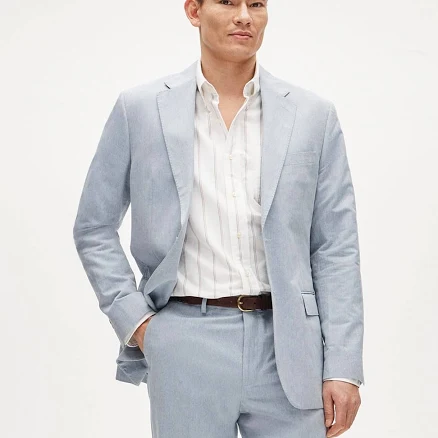
J.Crew Men's Crosby Classic-fit Suit Jacket in Baird McNutt
Classic wool suiting, no treatment markers suggest lower PFAS risk.
Made from heritage Baird McNutt wool and linen without water or stain resistance marketing. J.Crew hasn't disclosed anything about PFAS.
Still want this one anyway? Check the price on Amazon. We’d swap it.
Material
Wool (Baird McNutt linen/wool blend)
Brand disclosure
Brand is silent on PFAS
Lab data
No public lab test
You may also be interested in
Top-graded picks in the categories readers replace first, every one scored on the same rubric.

- polypropylene filter housing, carbon/sediment cartridge
- We found no PFAS statement from the brand
- Bacterial growth in spent cartridges
3 hazards checked on this product, all on its full breakdown.

Aquasure
Premier Series 75 GPD Under Sink Reverse Osmosis Water Filtration System
- RO membrane, carbon filters, stainless steel housing
- We found no PFAS statement from the brand
- Bacterial and microbial growth in housing and filters
4 hazards checked on this product, all on its full breakdown.

Avocado
Vegan Mattress
- organic cotton, natural latex, coconut coir, recycled steel coils
- The brand calls it PFAS-free, which we have not verified
- Heavy metals
2 hazards checked on this product, all on its full breakdown.
What J.Crew Men's Crosby Baird McNutt is made of, ingredients and materials
Baird McNutt is a Scottish mill specializing in linen and wool blends using relatively conservative finishing. This jacket is likely 65-80% wool, 20-35% linen based on typical Baird McNutt product lines. The blend is spun and woven without synthetic fibers, meaning no antimony (a concern in polyester) or microplastic risk. Wool naturally resists wrinkles and requires less chemical finish than synthetics, though the exact finishing process (shrinkage control, water repellency) determines residual chemical load.
What’s concerning
Category baseline
The starting point for this type of product, before anything specific to this product is counted.
No PFAS disclosure
No public statement from the brand about PFAS in this product.
Formaldehyde / VOCs
Wool blends sometimes receive light formaldehyde-based shrinkage treatments, though Baird McNutt's traditional methods typically avoid heavy application. No formaldehyde concerns documented for this brand, but not explicitly ruled out in public disclosures.
Source, ATSDR ↗Azo dyes (if dyed with synthetic colorants)
Baird McNutt uses both natural and synthetic dyes depending on color; some azo dyes can break down to banned amines under skin moisture or sweat. Standard industry practice suggests compliance with REACH restrictions, but no third-party certification visible for this specific product.
What’s reassuring
Base material not linked to PFAS
The main material recorded for this product is not one associated with PFAS.
Lead
No recalls or reports of heavy metal contamination in Baird McNutt or J.Crew wool suiting. Mills of this caliber operate under EU/UK dye residue limits, though no public test data available.
Source, ATSDR ↗Flame retardants
Wool is naturally fire-resistant and does not require synthetic flame retardant treatment. No flame retardants expected in this product.
Source, EPA ↗Microplastic shedding
Wool-linen blend produces no microplastics; natural fibers biodegrade. Synthetic buttons or zipper components may shed minimal microplastics, but hardware is incidental to fabric hazard.
How is this PFAS grade calculated?
The brand's record and disclosure
J.Crew does not publicly disclose fiber treatment details or chemical restrictions for most suiting lines. The brand has no known recalls or safety violations tied to wool jackets. J.Crew is not recognized as a leader in textile chemical transparency compared to certified sustainable brands (Oeko-Tex, GOTS), but also has no documented pattern of using prohibited substances in wool tailoring. Silent on PFAS does not indicate use; it reflects industry-wide lack of transparency rather than a red flag specific to J.Crew.
How it compares in its category
Wool tailoring from heritage mills like Baird McNutt has lower concern in menswear suiting. Synthetic-heavy suits (polyester blends) carry antimony and microplastic risks; ultra-budget fast-fashion suiting may use more aggressive dyes and formaldehyde resins. Natural fiber suiting from established mills typically uses gentler finishes because wool's innate properties reduce processing burden. Price point and mill reputation here are reliable proxies for chemical restraint.
If you buy it
Dry-clean only per label; institutional dry cleaning typically uses perchloroethylene (perc), which is not a product hazard but an environmental/worker concern outside your control. Inspect seams and collar stays for metal corrosion after first cleaning, as this can signal coating degradation. No need for special washing precautions at home if hand-washed (wool is durable). Store in breathable garment bag; avoid plastic enclosure, which traps moisture and can promote mildew or mold growth over months.
What is not known about PFAS in this product?
- Basis
- Model estimate, 72% confidence, not a lab result
- Lab test
- None on record for this exact product
- Brand statement
- J.Crew has made none
Formulations change between production runs, so check the current label. How we grade.
More stain-resistant blazers & suits grades
How we score, every product runs through the same public 0-100 rubric based on materials, coatings, brand disclosure, lab findings, and recalls. See the full methodology → Spotted a mistake? Report an error.