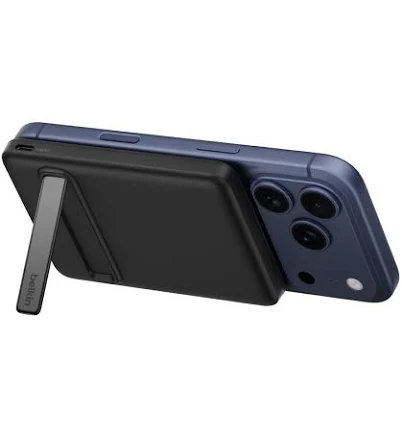
Belkin · Waterproof Phone Chargers & Cables
Belkin BoostCharge Slim Magnetic Power Bank
Power bank with no known PFAS risk; limited disclosure available.
Lithium-ion, aluminum alloy, and plastic without disclosed waterproofing or special coatings. No public lab testing or brand PFAS statements found.
We flunk more products than we pass. This one earned its grade. How we grade
Material
Lithium-ion battery, aluminum alloy, plastic housing
Brand disclosure
Brand is silent on PFAS
Lab data
No public lab test
You may also be interested in
Top-graded picks in the categories readers replace first, every one scored on the same rubric.

- polypropylene filter housing, carbon/sediment cartridge
- We found no PFAS statement from the brand
- Bacterial growth in spent cartridges
3 hazards checked on this product, all on its full breakdown.

Aquasure
Premier Series 75 GPD Under Sink Reverse Osmosis Water Filtration System
- RO membrane, carbon filters, stainless steel housing
- We found no PFAS statement from the brand
- Bacterial and microbial growth in housing and filters
4 hazards checked on this product, all on its full breakdown.

Avocado
Vegan Mattress
- organic cotton, natural latex, coconut coir, recycled steel coils
- The brand calls it PFAS-free, which we have not verified
- Heavy metals
2 hazards checked on this product, all on its full breakdown.
What Belkin BoostCharge Slim Power Bank is made of, ingredients and materials
The BoostCharge Slim uses a lithium-ion battery cell (standard for portable chargers), aluminum alloy casing, and plastic housing/connector components. Lithium-ion chemistry is stable at room temperature but sensitive to physical damage, overcharging, and heat. The aluminum alloy body is inert and does not leach into food or skin contact; plastic housings in consumer electronics typically use polycarbonate or ABS, neither of which are known to release significant chemicals during normal use at ambient temperatures.
What’s concerning
Category baseline
The starting point for this type of product, before anything specific to this product is counted.
No PFAS disclosure
No public statement from the brand about PFAS in this product.
Lithium-ion battery thermal runaway / fire risk
All lithium-ion power banks carry inherent risk if internally short-circuited by physical damage, manufacturing defect, or extreme heat. The BoostCharge Slim includes standard safety circuits, but damage to the aluminum casing or battery cell could bypass them. Risk is low with normal use and storage.
Battery electrolyte leakage
If the power bank is physically crushed or punctured, lithium-ion electrolyte (typically lithium salt in organic solvents) can leak. Contact with skin or eyes would cause irritation; inhalation of vapors is also irritant. Risk is low with intact housing and normal handling.
What’s reassuring
Base material not linked to PFAS
The main material recorded for this product is not one associated with PFAS.
Plastic housing off-gassing (VOCs)
No published testing or complaints document VOC emission from Belkin BoostCharge plastic components. Standard ABS or polycarbonate housings do not off-gas significantly at room temperature; any release would be negligible in a sealed consumer device.
Heavy metals
Belkin does not disclose detailed manufacturing specs for internal circuit board materials. Industry standard assumes lead-free solder (RoHS-compliant), but no third-party testing of this specific model is publicly available. Heavy metal contact is not a direct user exposure pathway in sealed electronics.
Source, FDA ↗Aluminum leaching
The aluminum alloy casing does not directly contact food, skin, or liquids during normal use. Anodized aluminum (commonly used in consumer electronics) does not leach into the environment under ambient conditions. No hazard is established for this product's material.
How is this PFAS grade calculated?
The brand's record and disclosure
Belkin has no publicized safety recalls specific to the BoostCharge line related to chemical leaching, off-gassing, or material degradation. The company provides standard battery safety warnings in product documentation but does not publicly detail material sourcing or third-party testing for volatile organic compounds (VOCs) or heavy metals. No major controversies regarding hazardous material content in Belkin power banks have been established in public records.
How it compares in its category
Lithium-ion power banks are the industry standard; the BoostCharge Slim's aluminum and plastic construction is typical and does not carry unusual material risk compared to competitors like Anker or RavPower. The 'Slim' form factor and magnetic mount design add no novel chemical hazards. Build quality and thermal management are comparable to mid-range competitors.
If you buy it
Avoid prolonged exposure to direct sunlight or heat sources above 45°C, as lithium-ion cells degrade faster in high temperatures. Do not submerge or expose to moisture; keep connector ports dry. Inspect the aluminum casing regularly for physical dents or punctures that could compromise the cell. Replace the unit if the battery no longer holds a charge after 2-3 years of regular use, or if the housing develops cracks.
What is not known about PFAS in this product?
- Basis
- Model estimate, 72% confidence, not a lab result
- Lab test
- None on record for this exact product
- Brand statement
- Belkin has made none
Formulations change between production runs, so check the current label. How we grade.
More waterproof phone chargers & cables grades
How we score, every product runs through the same public 0-100 rubric based on materials, coatings, brand disclosure, lab findings, and recalls. See the full methodology → Spotted a mistake? Report an error.