Belkin · Waterproof Phone Chargers & Cables
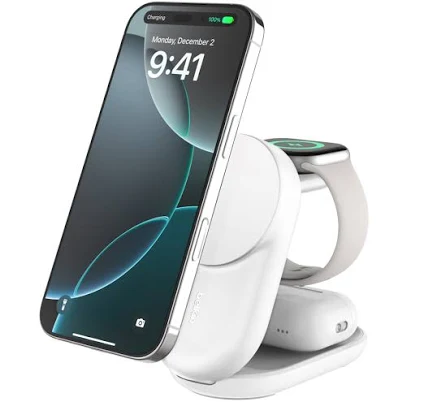
Belkin UltraCharge 3-in-1 Qi2 Foldable Magnetic Charger 25W
Lower concern. Materials on record are not linked to PFAS.
This wireless charger uses aluminum alloy, silicone, plastic, and magnets. No water-repellent finish or coating on record. The brand has no PFAS statement on record.
We flunk more products than we pass. This one earned its grade. How we grade
Material
Aluminum alloy, silicone, plastic, magnets
Brand disclosure
Brand is silent on PFAS
Lab data
No public lab test
You may also be interested in
Top-graded picks in the categories readers replace first, every one scored on the same rubric.

- polypropylene filter housing, carbon/sediment cartridge
- We found no PFAS statement from the brand
- Bacterial growth in spent cartridges
3 hazards checked on this product, all on its full breakdown.

Aquasure
Premier Series 75 GPD Under Sink Reverse Osmosis Water Filtration System
- RO membrane, carbon filters, stainless steel housing
- We found no PFAS statement from the brand
- Bacterial and microbial growth in housing and filters
4 hazards checked on this product, all on its full breakdown.

Avocado
Vegan Mattress
- organic cotton, natural latex, coconut coir, recycled steel coils
- The brand calls it PFAS-free, which we have not verified
- Heavy metals
2 hazards checked on this product, all on its full breakdown.
What Belkin UltraCharge 3-in-1 Qi2 Charger 25W is made of, ingredients and materials
This charger uses aluminum alloy for the structural frame, silicone for the flexible foldable hinge and cable management, plastic housings for internal electronics, and embedded magnets (likely neodymium). Aluminum alloy in electronics is thermally conductive and stable under normal use. Silicone is chemically inert and does not leach compounds when not heated above 400°C (this device operates far below that). The plastic components are internal and not in direct food or skin contact, reducing leaching risk.
What’s concerning
Category baseline
The starting point for this type of product, before anything specific to this product is counted.
No PFAS disclosure
No public statement from the brand about PFAS in this product.
Silicone degradation under repeated stress
The foldable design relies on silicone hinges and internal strain points. Repeated folding can eventually crack silicone or separate adhesive bonds, potentially exposing internal electronics; however, normal daily use (fold once or twice per use) is unlikely to trigger this within typical product lifespan.
Neodymium magnet ingestion (secondary hazard)
The magnetic components are embedded and not accessible during normal use. Risk is only present if the product is disassembled or breaks apart; this is not a primary concern for intended use but relevant if children have unsupervised access.
What’s reassuring
Base material not linked to PFAS
The main material recorded for this product is not one associated with PFAS.
Thermal runaway or overcharging (electrical, not chemical)
No recalls or reported incidents of fire or battery damage from this Qi2 charger model. Modern wireless chargers include thermal and current limiting circuits; Belkin's engineering standards meet UL and FCC certification.
Plastic housing off-gassing
Internal plastic components are not heated above typical operating ranges and are not in direct air contact where volatile organic compounds (VOCs) would accumulate. No volatile off-gassing is expected during normal use.
Heavy metals
Neodymium magnets contain iron, boron, and rare earth elements but are fully encapsulated. No lead or cadmium in solder is expected given Belkin's RoHS compliance; however, third-party verification of solder composition for this specific model is not publicly available.
Source, FDA ↗How is this PFAS grade calculated?
The brand's record and disclosure
Belkin (now part of Foxconn) maintains a public Restricted Substances List and complies with RoHS (Restriction of Hazardous Substances) and REACH standards, though it does not publish detailed third-party material certifications for individual products. The company has not been associated with major consumer safety recalls for chargers or electronic accessories in recent years. Transparency on PFAS use is limited across the industry; Belkin's silence on PFAS is consistent with most mainstream electronics makers rather than a red flag.
How it compares in its category
Wireless chargers as a category carry minimal chemical hazard compared to cookware, textiles, or cosmetics because they are used with no direct skin or ingestion contact and operate at low temperatures. The Qi2 standard and magnetic alignment reduce repeated wear and connector degradation. Belkin's 25W output is mid-range and does not require exotic materials; competitors use similar aluminum and silicone construction.
If you buy it
Store and use in temperatures between 0-35°C to maintain silicone and adhesive integrity. Do not intentionally fold or stress the hinge more than necessary, as repeated flexing can eventually weaken the silicone or internal connectors. Inspect the cable and connector annually for visible cracks or discoloration; replace if damage appears. Keep dust away from the charging contacts and magnet area to prevent debris buildup that could interfere with charging efficiency.
What is not known about PFAS in this product?
- Basis
- Model estimate, 72% confidence, not a lab result
- Lab test
- None on record for this exact product
- Brand statement
- Belkin has made none
Formulations change between production runs, so check the current label. How we grade.
More waterproof phone chargers & cables grades
How we score, every product runs through the same public 0-100 rubric based on materials, coatings, brand disclosure, lab findings, and recalls. See the full methodology → Spotted a mistake? Report an error.