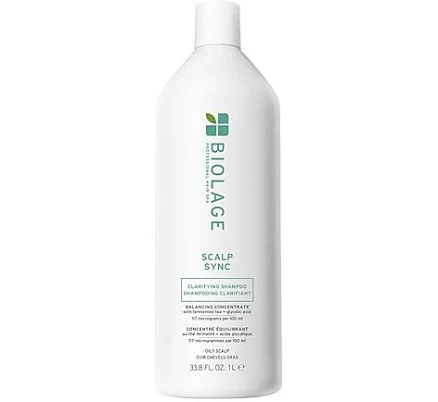
Biolage Scalp Sync Clarifying Shampoo
Lower PFAS concern; standard rinse-off shampoo with no known water-repellent coating or stain-resist treatment.
This conventional rinse-off shampoo contains no documented PFAS treatments like waterproofing, grease-resistance, or nonstick coatings. The brand makes no PFAS claims, and no public lab data exists.
We flunk more products than we pass. This one earned its grade. How we grade
Material
water-based shampoo, no special coatings
Brand disclosure
Brand is silent on PFAS
Lab data
No public lab test
You may also be interested in
Top-graded picks in the categories readers replace first, every one scored on the same rubric.

- polypropylene filter housing, carbon/sediment cartridge
- We found no PFAS statement from the brand
- Bacterial growth in spent cartridges
3 hazards checked on this product, all on its full breakdown.

Aquasure
Premier Series 75 GPD Under Sink Reverse Osmosis Water Filtration System
- RO membrane, carbon filters, stainless steel housing
- We found no PFAS statement from the brand
- Bacterial and microbial growth in housing and filters
4 hazards checked on this product, all on its full breakdown.

Avocado
Vegan Mattress
- organic cotton, natural latex, coconut coir, recycled steel coils
- The brand calls it PFAS-free, which we have not verified
- Heavy metals
2 hazards checked on this product, all on its full breakdown.
What Biolage Scalp Sync Clarifying Shampoo is made of, ingredients and materials
Biolage Scalp Sync Clarifying Shampoo is a water-based surfactant formulation designed to remove buildup from the scalp and hair. The product contains detergent actives (typically sodium lauryl sulfate or similar anionic surfactants) mixed with water, conditioning agents, and botanical extracts. Because it is a rinse-off product applied briefly to wet hair and then thoroughly washed away, dermal absorption and systemic exposure risk are minimal compared to leave-on treatments.
What’s concerning
Category baseline
The starting point for this type of product, before anything specific to this product is counted.
No PFAS disclosure
No public statement from the brand about PFAS in this product.
Fragrance allergens and sensitizers
Like most commercial shampoos, this product contains fragrance compounds (listed as 'fragrance' or 'parfum' on the label). Individuals with fragrance sensitivity or contact dermatitis may experience scalp irritation, itching, or rash; specific allergens are not disclosed on standard labels.
1,4-Dioxane residual contamination
1,4-dioxane is a process contaminant sometimes present in cosmetics containing ethoxylated ingredients (common in surfactant-based shampoos) at trace levels. Regulatory limits exist in many jurisdictions; Biolage does not publish testing data for this contaminant, so presence cannot be ruled out.
Scalp or skin irritation from surfactant strength
Clarifying shampoos are formulated to be more stripping than regular shampoos to remove product buildup. User reviews document occasional reports of scalp dryness, irritation, or tightness, particularly with frequent use or on sensitive skin; this is a known trade-off of the clarifying function, not a manufacturing defect.
What’s reassuring
Base material not linked to PFAS
The main material recorded for this product is not one associated with PFAS.
Formaldehyde / VOCs
No public information indicates the presence of formaldehyde releasers (such as DMDM hydantoin or imidazolidinyl urea) in this product. Standard preservatives used in rinse-off shampoos pose minimal hazard given brief contact time and immediate rinsing.
Source, ATSDR ↗Heavy metals
No recalls or published testing data identify heavy metal contamination in Biolage products. Water-based shampoos do not typically employ pigments that would introduce lead or cadmium; any minerals in botanical extracts are at cosmetic-use levels.
Source, FDA ↗How is this PFAS grade calculated?
The brand's record and disclosure
Biolage is owned by L'Oreal and operates under mainstream cosmetic manufacturing standards. The brand does not publish dedicated PFAS-free certification or detailed chemical disclosure beyond standard ingredient lists on packaging. No major safety recalls or controversies specific to this product line have been reported in public records. Standard cosmetic regulation (FDA compliance for the US; EU Cosmetics Regulation for Europe) applies.
How it compares in its category
Clarifying shampoos as a category rely on stronger surfactants to strip buildup, making them harsher than everyday shampoos but not chemically unusual. Biolage's formulation is typical for mass-market clarifying products and does not employ unusual preservatives, fragrance systems, or additives that would elevate hazard profile. Brands marketed as 'clean,' 'natural,' or 'sulfate-free' may use different surfactants but do not eliminate chemical hazard entirely.
If you buy it
Use on wet hair, lather briefly, and rinse thoroughly with water. Do not leave on skin or scalp for extended periods; clarifying shampoos are meant for occasional use (weekly or monthly) rather than daily application, as repeated use can dry or irritate sensitive scalp. Avoid contact with eyes. Store in a cool, dry place and do not ingest. If scalp irritation or allergic response develops, discontinue and consult a dermatologist.
What is not known about PFAS in this product?
- Basis
- Model estimate, 72% confidence, not a lab result
- Lab test
- None on record for this exact product
- Brand statement
- Biolage has made none
Formulations change between production runs, so check the current label. How we grade.
More shampoo grades
How we score, every product runs through the same public 0-100 rubric based on materials, coatings, brand disclosure, lab findings, and recalls. See the full methodology → Spotted a mistake? Report an error.