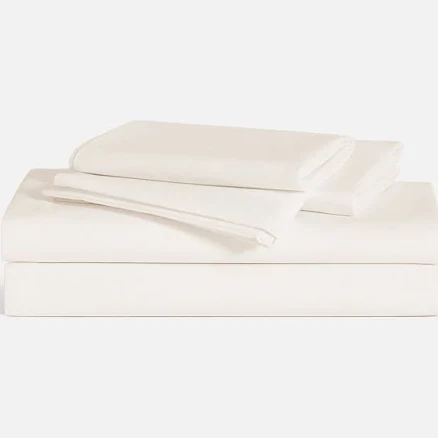
Brooklinen · Stain-Resistant Bed Sheets
Brooklinen Classic Percale Core Sheet Set
Lower concern; plain cotton percale sheets have minimal PFAS risk without treatments.
Classic Percale Core sheets are 100% cotton with a standard percale weave that requires no special chemical treatment. Percale poses lower PFAS risk than performance fabrics with stain or water coatings, and Brooklinen makes no fluorochemical claims here.
We flunk more products than we pass. This one earned its grade. How we grade
Material
100% cotton percale weave
Brand disclosure
Brand is silent on PFAS
Lab data
No public lab test
You may also be interested in
Top-graded picks in the categories readers replace first, every one scored on the same rubric.

- polypropylene filter housing, carbon/sediment cartridge
- We found no PFAS statement from the brand
- Bacterial growth in spent cartridges
3 hazards checked on this product, all on its full breakdown.

Aquasure
Premier Series 75 GPD Under Sink Reverse Osmosis Water Filtration System
- RO membrane, carbon filters, stainless steel housing
- We found no PFAS statement from the brand
- Bacterial and microbial growth in housing and filters
4 hazards checked on this product, all on its full breakdown.

Avocado
Vegan Mattress
- organic cotton, natural latex, coconut coir, recycled steel coils
- The brand calls it PFAS-free, which we have not verified
- Heavy metals
2 hazards checked on this product, all on its full breakdown.
What Brooklinen Classic Percale Core Sheet Set is made of, ingredients and materials
Brooklinen Classic Percale Core is 100% cotton in a percale weave, a tight plain-weave structure that creates durability without requiring heavy chemical finishes. Percale cotton sheets typically undergo standard cotton processing, scouring, bleaching, and dyeing, but do not rely on fluorinated water-repellent coatings or silicone finishes like sateen or microfiber alternatives. The weave itself, not a coating, provides the stain resistance claim, meaning chemical load is primarily from dyes and any residual processing agents rather than applied polymer films.
What’s concerning
Category baseline
The starting point for this type of product, before anything specific to this product is counted.
No PFAS disclosure
No public statement from the brand about PFAS in this product.
Formaldehyde / VOCs
Standard cotton percale may contain low-level formaldehyde-release resins from processing or wrinkle-resistance finishes. Brooklinen does not disclose finish chemistry; no test results are public. Initial washing significantly reduces any residual formaldehyde.
Source, ATSDR ↗Heavy metals
Colored percale sheets rely on synthetic dyes; banned azo dyes are unlikely in a brand-name US product, but non-banned azo variants and trace heavy metals (lead, cadmium) in dyes are not verified by independent testing for this product.
Source, FDA ↗Residual processing chemicals (scouring, bleaching agents)
Cotton processing uses sodium hydroxide, hydrogen peroxide, and surfactants; incomplete rinsing can leave traces. Brooklinen does not publish rinsing or residue limits. Pre-wash cycling removes most residual chemicals.
What’s reassuring
Base material not linked to PFAS
The main material recorded for this product is not one associated with PFAS.
Microplastic shedding
100% cotton percale does not shed synthetic microfibers. Natural cotton shedding is minimal with quality weave structure and is not a documented toxicological concern.
Antimony in polyester content
This product is 100% cotton with no polyester; antimony risk does not apply.
How is this PFAS grade calculated?
The brand's record and disclosure
Brooklinen has not published detailed chemical composition or third-party test reports (OEKO-TEX, GOTS certification) for this specific product line as of available public records. The brand maintains a general sustainability positioning but does not disclose specific formaldehyde levels, dye chemical testing, or heavy-metal screening in their marketing or technical specs. No recalls, regulatory warnings, or documented chemical incidents have been recorded for Brooklinen sheet products. The silent stance on PFAS and absence of eco-certifications reflects a gap in transparency rather than evidence of hazard.
How it compares in its category
Percale sheets inherently carry lower chemical risk than polyester blends, microfiber, or heavily treated sateen because they rely on fiber structure rather than coatings. Certified alternatives (GOTS, OEKO-TEX) offer verified dye and processing-chemical limits; Brooklinen does not pursue these, placing it in the middle-transparency tier of mainstream brands. Versus budget percale sheets, Brooklinen's premium positioning and reputation suggest tighter quality control, though this is not independently verified for chemical residues.
If you buy it
Wash sheets 2-3 times before first use to remove any residual dyes and processing agents; use warm water and unscented detergent for the first cycle. Avoid bleach and high-heat drying, which can degrade fibers and potentially concentrate any trace chemicals in repeat washings. Replace when pilling or weave integrity visibly declines (typically 2-3 years with normal use). Store in a breathable container; plastic bags can trap moisture and promote mildew.
What is not known about PFAS in this product?
- Basis
- Model estimate, 78% confidence, not a lab result
- Lab test
- None on record for this exact product
- Brand statement
- Brooklinen has made none
Formulations change between production runs, so check the current label. How we grade.
More stain-resistant bed sheets grades
How we score, every product runs through the same public 0-100 rubric based on materials, coatings, brand disclosure, lab findings, and recalls. See the full methodology → Spotted a mistake? Report an error.