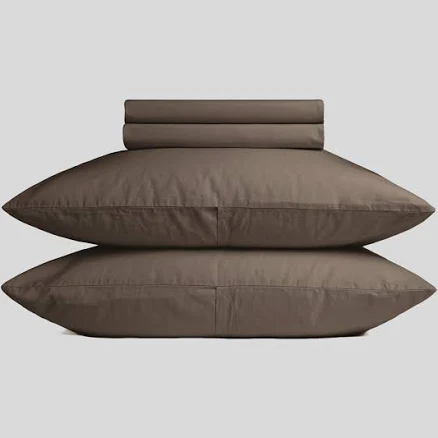
Parachute · Stain-Resistant Bed Sheets
Nordstrom Parachute Linen Sheet Set
Lower PFAS concern for untreated linen; no finish treatment indicated.
Parachute Linen sheets are woven from plain linen without disclosed chemical finishes, stain resistance, or water repellency. Untreated linen and cotton pose lower inherent PFAS risk.
We flunk more products than we pass. This one earned its grade. How we grade
Material
100% linen, no finish treatment specified
Brand disclosure
Brand is silent on PFAS
Lab data
No public lab test
You may also be interested in
Top-graded picks in the categories readers replace first, every one scored on the same rubric.

- polypropylene filter housing, carbon/sediment cartridge
- We found no PFAS statement from the brand
- Bacterial growth in spent cartridges
3 hazards checked on this product, all on its full breakdown.

Aquasure
Premier Series 75 GPD Under Sink Reverse Osmosis Water Filtration System
- RO membrane, carbon filters, stainless steel housing
- We found no PFAS statement from the brand
- Bacterial and microbial growth in housing and filters
4 hazards checked on this product, all on its full breakdown.

Avocado
Vegan Mattress
- organic cotton, natural latex, coconut coir, recycled steel coils
- The brand calls it PFAS-free, which we have not verified
- Heavy metals
2 hazards checked on this product, all on its full breakdown.
What Nordstrom Parachute Linen Sheet Set is made of, ingredients and materials
This is 100% linen with no finish treatment specified by the manufacturer. Linen is a cellulose fiber from flax plants and does not require synthetic coatings to function as bedding. The absence of a stain-resistant finish is significant because it means no water-repellent coating (water-repellent coating) chemicals like PFAS, fluorocarbons, or silicones are likely applied. Untreated linen naturally resists wrinkles and becomes softer with washing, which is why it does not need chemical finishing.
What’s concerning
Category baseline
The starting point for this type of product, before anything specific to this product is counted.
No PFAS disclosure
No public statement from the brand about PFAS in this product.
Formaldehyde / VOCs
Linen production sometimes uses formaldehyde-based resins during finishing or dye-setting steps. Parachute does not specify whether this product underwent such treatment. Off-gassing is typically minimal after manufacturing, but sensitive individuals may detect odor on new sheets; airing before first use reduces exposure.
Source, ATSDR ↗Azo dyes
Linen sheets are commonly dyed with azo dyes, which can release aromatic amines under degradation or in acidic conditions. No specific information on dye class is provided by Parachute. Certification (OEKO-TEX, GOTS) would rule this out; its absence leaves it unverified but not confirmed as a concern.
Heavy metals
Linen dyeing and finishing can introduce trace metals (lead, cadmium, chromium) as dye mordants or process byproducts. Parachute provides no testing data or third-party certification. Risk is low in untreated linen compared to coated textiles, but not ruled out without disclosure.
Source, FDA ↗What’s reassuring
Base material not linked to PFAS
The main material recorded for this product is not one associated with PFAS.
Fragrance or allergen sensitization from finishing chemicals
No reports of fragrance additives or allergen issues specific to Parachute linen sheets. However, brand does not disclose finishing chemical inventory, so unknown allergens cannot be excluded entirely.
Flame retardants
Linen sheets are not typically treated with flame retardants in the U.S. unless marketed as fire-resistant. No fire-resistance claim is made for this product, so flame retardant exposure is not expected.
Source, EPA ↗How is this PFAS grade calculated?
The brand's record and disclosure
Parachute does not publicly disclose detailed chemical processing steps or certifications (such as OEKO-TEX, GOTS, or similar) for this product line based on available information. The brand markets itself as a premium home textile company but maintains silence on chemical finishing treatments and PFAS stance. No recalls, safety violations, or regulatory actions are on record for Parachute linen sheets. Transparency on fiber sourcing and dyeing processes remains limited.
How it compares in its category
Most stain-resistant bed sheets on the market use PFAS-containing finishes or silicone-based water repellents to achieve their performance claims. This Parachute set avoids that entirely by being untreated linen, placing it in a lower-chemical-input category than competitors offering performance finishes. The trade-off is that linen will absorb liquids and stain more easily than treated alternatives, though it is highly washable and durable. For consumers prioritizing chemical minimalism over stain resistance, untreated linen sheets outperform most branded options.
If you buy it
Wash in warm or cool water (not hot, which degrades linen over time) and dry on low heat or air-dry to preserve fiber integrity and avoid shrinkage. Expect linen to soften and become more absorbent with repeated washing; this is normal and desirable. Treat spills immediately with water and mild soap to minimize staining, since the fabric has no built-in water resistance. Replace sheets when fibers thin visibly or pilling becomes persistent, typically after 3-5 years of regular use.
What is not known about PFAS in this product?
- Basis
- Model estimate, 78% confidence, not a lab result
- Lab test
- None on record for this exact product
- Brand statement
- Parachute has made none
Formulations change between production runs, so check the current label. How we grade.
More stain-resistant bed sheets grades
How we score, every product runs through the same public 0-100 rubric based on materials, coatings, brand disclosure, lab findings, and recalls. See the full methodology → Spotted a mistake? Report an error.