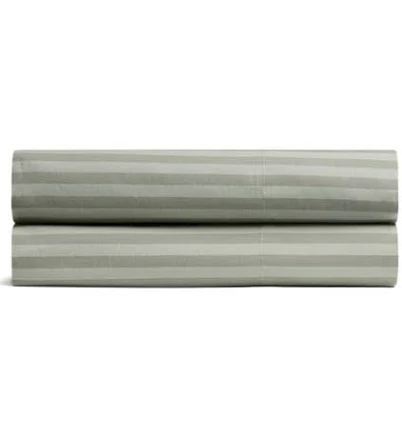
Parachute · Stain-Resistant Bed Sheets
Parachute Percale Fitted Sheet
Lower-concern choice; plain cotton percale typically avoids PFAS without brand proof needed.
Percale Fitted Sheet is 100% cotton in a plain-weave style that doesn't inherently require fluorochemical treatment. Standard cotton carries lower PFAS risk than water- or stain-resistant fabrics, though Parachute offers no public testing data.
We flunk more products than we pass. This one earned its grade. How we grade
Material
100% cotton percale (plain weave)
Brand disclosure
Brand is silent on PFAS
Lab data
No public lab test
You may also be interested in
Top-graded picks in the categories readers replace first, every one scored on the same rubric.

- polypropylene filter housing, carbon/sediment cartridge
- We found no PFAS statement from the brand
- Bacterial growth in spent cartridges
3 hazards checked on this product, all on its full breakdown.

Aquasure
Premier Series 75 GPD Under Sink Reverse Osmosis Water Filtration System
- RO membrane, carbon filters, stainless steel housing
- We found no PFAS statement from the brand
- Bacterial and microbial growth in housing and filters
4 hazards checked on this product, all on its full breakdown.

Avocado
Vegan Mattress
- organic cotton, natural latex, coconut coir, recycled steel coils
- The brand calls it PFAS-free, which we have not verified
- Heavy metals
2 hazards checked on this product, all on its full breakdown.
What Parachute Percale Fitted Sheet is made of, ingredients and materials
Parachute Percale Fitted Sheet is 100% cotton in a plain percale weave, which is a tight, flat-weave construction that does not inherently require chemical stiffeners or flame retardants. Percale weave relies on fiber density rather than coating for its crisp hand-feel and durability. Cotton fiber itself carries no known toxicity, though the hazard profile depends entirely on finishing processes applied after weaving, which the brand does not publicly disclose.
What’s concerning
Category baseline
The starting point for this type of product, before anything specific to this product is counted.
No PFAS disclosure
No public statement from the brand about PFAS in this product.
Formaldehyde / VOCs
Percale is sometimes finished with formaldehyde-free durable-press resin to enhance crispness. Parachute does not disclose whether such finishes are used; if present, pre-wash removal is effective. No recalls or complaints on record for this product.
Source, ATSDR ↗Reactive azo dyes (color fastness agents)
Cotton percale sheets are typically piece-dyed with reactive dyes, which are chemically stable after fixation and have lower concern for PFAS in the finished product. However, brands using non-restricted azo precursors or excess unfixed dye could theoretically pose migration risk; Parachute's dye sourcing is not disclosed.
Microfiber or particulate shedding
Poorly finished or low-quality percale can shed lint or pill excessively on first wash, releasing cotton fibers. Parachute's construction and finishing are reputable, but pre-wash and gentle initial handling reduce any microfiber exposure.
What’s reassuring
Base material not linked to PFAS
The main material recorded for this product is not one associated with PFAS.
Heavy metals
Modern cotton textiles rarely use metal-based mordants; modern reactive dyes are formulated to avoid cadmium and lead. No recalls or test failures reported for Parachute sheets.
Source, FDA ↗Flame retardants
Cotton percale sheets are not legally required to carry flame retardants (unlike mattresses or children's sleepwear). Parachute does not advertise flame-retardant treatment, and cotton alone meets flammability standards. Risk is minimal.
Source, EPA ↗How is this PFAS grade calculated?
The brand's record and disclosure
Parachute markets itself as a sustainable, minimalist bedding brand but provides no publicly available certifications (such as GOTS, Oeko-Tex, or EU Ecolabel) and does not disclose finishing chemistry, dye sources, or process controls on product pages. The brand has not faced major recalls or published controversies in bed sheet safety. This silence on chemical inputs is typical of luxury bedding brands and does not indicate a problem, but it also prevents independent verification of finish safety.
How it compares in its category
Percale sheets are inherently lower-chemical than sateen finishes, which often receive silicone or resin coatings. Parachute's price point places it in the mid-to-premium segment where certification and transparency vary widely; certified alternatives (e.g., GOTS-certified percale from other makers) offer stronger assurance of reduced chemical inputs. Untreated 100% cotton percale, whether from Parachute or a certified competitor, presents minimal hazard risk compared to blended or heavily finished sheet options.
If you buy it
Wash before first use to remove any residual processing dust or dyes. Use warm or cold water; percale tolerates standard laundering without special care. Avoid bleach and high heat (above 140°F drying temperature) to preserve fiber strength and prevent unnecessary chemical reactions. Replace when visible pilling or thinning occurs, typically 2-3 years of regular use. Do not dry-clean, as solvent exposure is unnecessary for cotton and adds chemical exposure with no benefit.
What is not known about PFAS in this product?
- Basis
- Model estimate, 78% confidence, not a lab result
- Lab test
- None on record for this exact product
- Brand statement
- Parachute has made none
Formulations change between production runs, so check the current label. How we grade.
More stain-resistant bed sheets grades
How we score, every product runs through the same public 0-100 rubric based on materials, coatings, brand disclosure, lab findings, and recalls. See the full methodology → Spotted a mistake? Report an error.