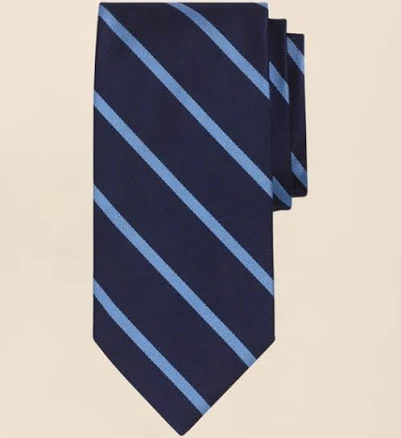
Brooks Brothers BB#3 Rep Tie
Lower PFAS concern; classic silk-wool tie with no water or stain treatment disclosed.
This traditional woven silk-and-wool necktie shows no apparent water-resistant, stain-guard, or nonstick coatings. The material composition itself suggests lower inherent PFAS risk.
The better-graded swap
Hermès
Mobilité Douce Twillbi Tie 7cm
85/100 safety
Same rubric that flunked this product. The swap earned Excellent.
Still want this one anyway? Check the price on Amazon. We’d swap it.
Material
silk and wool rep-weave tie, no coating disclosed
Brand disclosure
Brand is silent on PFAS
Lab data
No public lab test
You may also be interested in
Top-graded picks in the categories readers replace first, every one scored on the same rubric.

- polypropylene filter housing, carbon/sediment cartridge
- We found no PFAS statement from the brand
- Bacterial growth in spent cartridges
3 hazards checked on this product, all on its full breakdown.

Aquasure
Premier Series 75 GPD Under Sink Reverse Osmosis Water Filtration System
- RO membrane, carbon filters, stainless steel housing
- We found no PFAS statement from the brand
- Bacterial and microbial growth in housing and filters
4 hazards checked on this product, all on its full breakdown.

Avocado
Vegan Mattress
- organic cotton, natural latex, coconut coir, recycled steel coils
- The brand calls it PFAS-free, which we have not verified
- Heavy metals
2 hazards checked on this product, all on its full breakdown.
What Brooks Brothers BB#3 Rep Tie is made of, ingredients and materials
The BB#3 Rep Tie is constructed from a silk and wool blend in a rep-weave pattern, a tightly twisted ribbed weave that creates durability and texture without coating. Silk and wool are protein-based natural fibers that do not inherently leach chemicals during normal wear. The rep weave structure means the tie relies on fiber strength rather than synthetic finishes or water repellents to maintain its shape and appearance over time.
What’s concerning
Category baseline
The starting point for this type of product, before anything specific to this product is counted.
No PFAS disclosure
No public statement from the brand about PFAS in this product.
Formaldehyde / VOCs
Wool and silk neckties are sometimes treated with formaldehyde-based resins for wrinkle resistance or shape retention. Brooks Brothers does not disclose finishing chemistry for this tie, so exposure cannot be ruled out, though direct skin contact risk is low since ties rest on the outside of the neck.
Source, ATSDR ↗Microfiber shedding and inhalation
Worn wool and silk fibers can shed over time, particularly at stress points like the knot. For typical neck-wear, inhalation risk is minimal, but those with severe respiratory sensitivities may notice irritation if fibers are shed and airborne.
What’s reassuring
Base material not linked to PFAS
The main material recorded for this product is not one associated with PFAS.
Heavy metals
Natural fiber blends are often dyed with natural or disperse dyes; azo dyes and heavy metal contamination are primarily a concern in cheap polyester neckwear. No specific safety alerts exist for Brooks Brothers silk-wool ties.
Source, FDA ↗Antimony in polyester fiber
This hazard does not apply to this product since it is silk and wool, not polyester. Antimony trioxide is only used as a catalyst in polyester production.
How is this PFAS grade calculated?
The brand's record and disclosure
Brooks Brothers has not published detailed chemical composition or restricted substance lists for individual neckties, nor has the company publicly committed to textile safety certifications like OEKO-TEX or GOTS. The brand maintains a heritage positioning as a traditional menswear maker and does not disclose specific finishing chemicals used in their ties. No recalls or safety complaints specific to Brooks Brothers neckwear are on public record.
How it compares in its category
Silk-wool blend ties occupy a mid-to-premium tier in neckwear. Many mass-market polyester ties are treated with durable water repellents (often PFAS-based) and synthetic dyes; silk-wool blends typically avoid this. However, Brooks Brothers does not disclose whether formaldehyde-based resins are used in finishing, a practice that remains common in the industry for wrinkle resistance or dimensional stability. Without third-party testing or certification, this tie offers no formal assurance beyond material composition.
If you buy it
Dry clean according to care label; do not expose to high heat at home as wool and silk can scorch. Inspect the tie annually for wear at stress points (knot area, tip) and replace if threads fray or seams separate. Store on a clip or loosely rolled to avoid permanent creasing. The natural fibers are less prone to off-gassing than synthetics, making this a stable product for sensitive individuals.
What is not known about PFAS in this product?
- Basis
- Model estimate, 82% confidence, not a lab result
- Lab test
- None on record for this exact product
- Brand statement
- Brooks Brothers has made none
Formulations change between production runs, so check the current label. How we grade.
What are the PFAS-free alternatives to Brooks Brothers BB#3 Rep Tie?
- silk twill
- We found no PFAS statement from the brand
- Heavy metals
5 hazards checked on this product, all on its full breakdown.
- metal, twill textile blend
- We found no PFAS statement from the brand
- Metal hardware leaching (tie clip or bar)
2 hazards checked on this product, all on its full breakdown.
- Silk twill, 7cm width necktie
- We found no PFAS statement from the brand
- Dye migration or crocking during wear or washing
More neckties grades
How we score, every product runs through the same public 0-100 rubric based on materials, coatings, brand disclosure, lab findings, and recalls. See the full methodology → Spotted a mistake? Report an error.