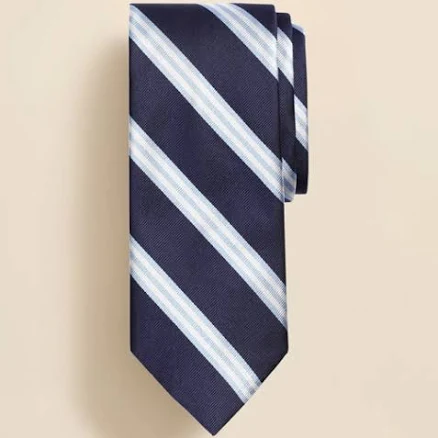
Brooks Brothers Men's Tie
Lower concern; standard necktie with no known PFAS-prone treatments.
This silk or silk-polyester blend necktie lacks special waterproofing, stain-resistant, or nonstick coatings tied to PFAS. Brooks Brothers makes no PFAS claims or certifications.
The better-graded swap
Hermès
H-mors Twillbi Tie 7cm
85/100 safety
Same rubric that flunked this product. The swap earned Excellent.
Still want this one anyway? Check the price on Amazon. We’d swap it.
Material
silk/polyester blend, no special coating
Brand disclosure
Brand is silent on PFAS
Lab data
No public lab test
You may also be interested in
Top-graded picks in the categories readers replace first, every one scored on the same rubric.

- polypropylene filter housing, carbon/sediment cartridge
- We found no PFAS statement from the brand
- Bacterial growth in spent cartridges
3 hazards checked on this product, all on its full breakdown.

Aquasure
Premier Series 75 GPD Under Sink Reverse Osmosis Water Filtration System
- RO membrane, carbon filters, stainless steel housing
- We found no PFAS statement from the brand
- Bacterial and microbial growth in housing and filters
4 hazards checked on this product, all on its full breakdown.

Avocado
Vegan Mattress
- organic cotton, natural latex, coconut coir, recycled steel coils
- The brand calls it PFAS-free, which we have not verified
- Heavy metals
2 hazards checked on this product, all on its full breakdown.
What Brooks Brothers Men's Tie is made of, ingredients and materials
Brooks Brothers ties are typically a silk-polyester blend, with silk providing the lustrous finish and polyester adding durability and wrinkle resistance. Neither material inherently poses acute toxicity risks in neckwear form since the tie contacts skin briefly and is not heated, ingested, or worn against sensitive mucous membranes for extended periods. The blend is standard for mid-to-premium neckwear and avoids the brittleness of 100 percent silk while maintaining aesthetic appeal.
What’s concerning
Category baseline
The starting point for this type of product, before anything specific to this product is counted.
No PFAS disclosure
No public statement from the brand about PFAS in this product.
Azo dyes and residual colorants
Standard silk-polyester blend ties may contain azo dyes, which can release aromatic amines under abrasion or sweat exposure in rare cases. Risk is low for neckwear because contact is brief and non-occlusive; no specific testing of Brooks Brothers ties is publicly available.
Formaldehyde / VOCs
Polyester blends often use formaldehyde-based resins to maintain crease and finish. Initial off-gassing may occur but is minimal in a non-heated, loosely worn garment; a single cool wash reduces residue significantly.
Source, ATSDR ↗Skin irritation from dyes or finishes
Individuals with sensitive skin or dye allergies may experience mild irritation from direct neck contact, particularly before the first wash. This is not brand-specific but a general textile concern; pre-washing mitigates risk.
What’s reassuring
Base material not linked to PFAS
The main material recorded for this product is not one associated with PFAS.
Antimony in polyester fiber
Antimony is used as a catalyst in polyester manufacturing but remains bound in the polymer chain; neckwear does not expose skin to loose antimony particles, and no contamination recalls for Brooks Brothers ties exist.
Lead
Most commercial dye suppliers avoid cadmium and lead in consumer textiles due to regulations and reputation risk. No specific evidence of heavy metal contamination in Brooks Brothers neckwear is on record.
Source, ATSDR ↗How is this PFAS grade calculated?
The brand's record and disclosure
Brooks Brothers is a 200-year-old American heritage brand with established retail and manufacturing standards, though the company does not publicly emphasize textile chemical transparency or publish detailed safety certifications for neckwear lines. No major recalls or safety controversies specific to their tie products are on public record. The brand maintains general quality control but does not appear to voluntarily disclose dye chemistry, formaldehyde-resin finish specifications, or supply-chain auditing for this category.
How it compares in its category
Mass-market neckties (polyester dominant) carry slightly higher potential for residual azo dyes and formaldehyde resins due to cheaper finishing; Brooks Brothers silk-blend ties sit in the middle-to-premium segment where dye standards are typically tighter. Most neckties, including Brooks Brothers, are not independently certified for chemical safety (e.g., Oeko-Tex), so direct comparison relies on material composition and brand reputation rather than third-party testing. High-end silk or organic cotton blends marketed with certifications may offer modestly lower chemical risk, though evidence of harm from standard neckwear is minimal.
If you buy it
Wash new ties in cool water before first wear to reduce any residual dyes or finishes; this is standard practice for all neckwear. Neckties experience minimal stress during normal wear and do not require special storage or heat treatment. Replace if the silk becomes brittle, frayed, or the knot permanently deforms; these indicate material fatigue, not safety failure. Store in a cool, dry place away from direct sunlight to preserve color and prevent mold growth, especially in humid climates.
What is not known about PFAS in this product?
- Basis
- Model estimate, 72% confidence, not a lab result
- Lab test
- None on record for this exact product
- Brand statement
- Brooks Brothers has made none
Formulations change between production runs, so check the current label. How we grade.
What are the PFAS-free alternatives to Brooks Brothers Men's Tie?
- silk twill
- We found no PFAS statement from the brand
- Heavy metals
5 hazards checked on this product, all on its full breakdown.
- metal, twill textile blend
- We found no PFAS statement from the brand
- Metal hardware leaching (tie clip or bar)
2 hazards checked on this product, all on its full breakdown.
- Silk twill, 7cm width necktie
- We found no PFAS statement from the brand
- Dye migration or crocking during wear or washing
More neckties grades
How we score, every product runs through the same public 0-100 rubric based on materials, coatings, brand disclosure, lab findings, and recalls. See the full methodology → Spotted a mistake? Report an error.