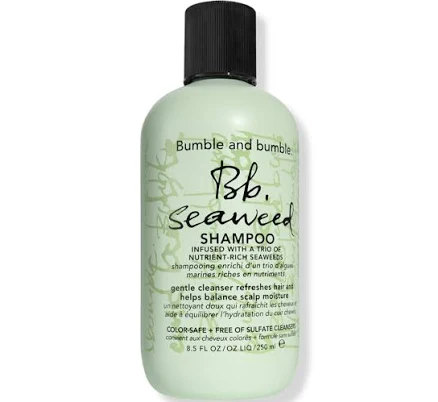
Bumble and Bumble Seaweed Shampoo
Lower concern. Water-based shampoo formulation is not a material linked to PFAS.
Material as recorded is water-based shampoo with seaweed extract, not a material linked to PFAS. No water-repellent finish or coating on record. Brand has no PFAS statement on record and no lab data exists for this product.
We flunk more products than we pass. This one earned its grade. How we grade
Material
Water-based shampoo with seaweed extract
Brand disclosure
Brand is silent on PFAS
Lab data
No public lab test
You may also be interested in
Top-graded picks in the categories readers replace first, every one scored on the same rubric.

- polypropylene filter housing, carbon/sediment cartridge
- We found no PFAS statement from the brand
- Bacterial growth in spent cartridges
3 hazards checked on this product, all on its full breakdown.

Aquasure
Premier Series 75 GPD Under Sink Reverse Osmosis Water Filtration System
- RO membrane, carbon filters, stainless steel housing
- We found no PFAS statement from the brand
- Bacterial and microbial growth in housing and filters
4 hazards checked on this product, all on its full breakdown.

Avocado
Vegan Mattress
- organic cotton, natural latex, coconut coir, recycled steel coils
- The brand calls it PFAS-free, which we have not verified
- Heavy metals
2 hazards checked on this product, all on its full breakdown.
What Bumble and Bumble Seaweed Shampoo is made of, ingredients and materials
Bumble and Bumble Seaweed Shampoo is a water-based liquid cleanser formulated with seaweed extract as its active botanical ingredient, plus standard detergent surfactants, preservatives, and fragrance. The seaweed content is primarily a conditioning and mineral-replenishment agent; it does not pose intrinsic toxicity risks at the concentrations used in rinse-off products. Liquid shampoos generally avoid the coating and adhesion hazards common in solid personal-care products, making ingredient volatilization or migration during storage minimal.
What’s concerning
Category baseline
The starting point for this type of product, before anything specific to this product is counted.
No PFAS disclosure
No public statement from the brand about PFAS in this product.
Fragrance allergens (undisclosed components)
Bumble and Bumble lists 'fragrance' as a single ingredient without component transparency. Fragrance blends in shampoos commonly contain limonene, linalool, or geraniol, which are established contact allergens; individual sensitivity varies widely and is not predictable from label.
Heavy metals
Seaweed can bioaccumulate lead, cadmium, and arsenic from marine environments. Cosmetic-grade seaweed extracts are not subject to heavy-metal limits in the US, and Bumble and Bumble does not disclose supplier sourcing or testing for this ingredient.
Source, FDA ↗What’s reassuring
Base material not linked to PFAS
The main material recorded for this product is not one associated with PFAS.
Formaldehyde / VOCs
No published analysis confirms the use of formaldehyde-releasing preservatives (e.g., DMDM hydantoin) in this product. Standard rinse-off shampoo formulas typically use non-releasing systems, but ingredient lists do not always specify preservative type.
Source, ATSDR ↗1,4-dioxane (manufacturing contaminant)
This product formulation does not list ingredients that are direct sources of 1,4-dioxane (e.g., ethoxylated surfactants or PEG compounds are typical vectors). Without independent third-party testing disclosure, presence cannot be ruled out.
Microplastic microbeads
Bumble and Bumble Seaweed Shampoo is a liquid formula with no visible exfoliating particles; it is not formulated with plastic microbeads and complies with the US microbead ban.
How is this PFAS grade calculated?
The brand's record and disclosure
Bumble and Bumble (owned by Estee Lauder) does not publish detailed PFAS testing data or transparent ingredient sourcing statements in publicly available materials; this silence is notable given the brand's premium positioning. The company is not known to have faced safety recalls or formal regulatory violations tied to this product. Estee Lauder has committed to phasing PFAS in some product lines, but product-level verification for this shampoo is absent from published sources.
How it compares in its category
Most mainstream and luxury shampoos carry similar hazard profiles, fragrance sensitivizers and preservative systems are standard across the category. Bumble and Bumble's seaweed variant does not stand apart as having notably lower or higher concern than mass-market botanical alternatives. The brand's price point reflects formulation quality and marketing rather than documented superior safety testing.
If you buy it
Shampoo is a rinse-off product with minimal skin-contact time, so hazard exposure is low regardless of formulation. Store in a cool, dry place to preserve preservative efficacy and avoid microbial growth. Discontinue use only if irritation develops; fragrance sensitivity is the primary individual-level risk. No special maintenance or replacement triggers apply beyond normal product degradation after opening (typically 6-12 months).
What is not known about PFAS in this product?
- Basis
- Model estimate, 78% confidence, not a lab result
- Lab test
- None on record for this exact product
- Brand statement
- Bumble and bumble has made none
Formulations change between production runs, so check the current label. How we grade.
More shampoo grades
How we score, every product runs through the same public 0-100 rubric based on materials, coatings, brand disclosure, lab findings, and recalls. See the full methodology → Spotted a mistake? Report an error.