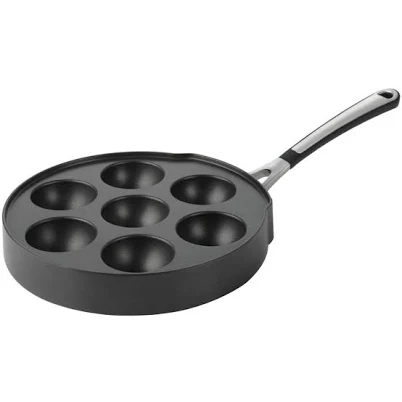
Calphalon Simply Nonstick Puff Pancake Pan, Is It Non-Toxic?
Nonstick coating chemistry is not stated, preventing PFAS assessment.
This hard-anodized aluminum pan has a nonstick coating whose chemistry is not disclosed. Calphalon has no PFAS statement on record for this product, and no third-party testing or certification is available.
The better-graded swap
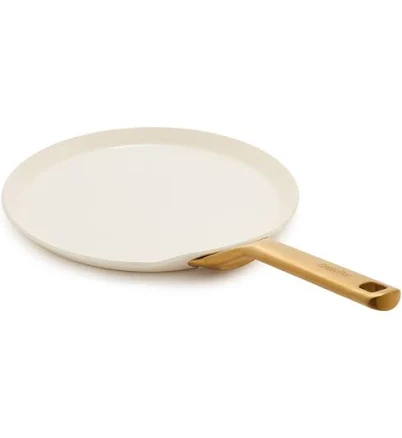
GreenPan
GreenPan Reserve Pro Crepe Frypan
70/100 safety
Same rubric that flunked this product. The swap earned Good.
Still want this one anyway? Check the price on Amazon. We’d swap it.
Material
Hard-anodized aluminum with nonstick coating (type unspecified)
Lab data
No public lab test
You may also be interested in
Top-graded picks in the categories readers replace first, every one scored on the same rubric.

- polypropylene filter housing, carbon/sediment cartridge
- We found no PFAS statement from the brand
- Bacterial growth in spent cartridges
3 hazards checked on this product, all on its full breakdown.

Aquasure
Premier Series 75 GPD Under Sink Reverse Osmosis Water Filtration System
- RO membrane, carbon filters, stainless steel housing
- We found no PFAS statement from the brand
- Bacterial and microbial growth in housing and filters
4 hazards checked on this product, all on its full breakdown.

Avocado
Vegan Mattress
- organic cotton, natural latex, coconut coir, recycled steel coils
- The brand calls it PFAS-free, which we have not verified
- Heavy metals
2 hazards checked on this product, all on its full breakdown.
Is Calphalon Simply Nonstick Puff Pancake Pan non-toxic? What it is made of
This pan is hard-anodized aluminum with a nonstick coating of unspecified chemistry. Hard anodization creates a dense oxide layer that reduces aluminum leaching compared to bare aluminum, but the nonstick coating itself is the critical unknown. Calphalon has not publicly disclosed whether this coating is Teflon-type coating-based (traditional Teflon) or a newer alternative. Without that clarity, the actual PFAS burden cannot be assessed.
What’s concerning
Category baseline
The starting point for this type of product, before anything specific to this product is counted.
No PFAS disclosure
No public statement from the brand about PFAS in this product.
Non-stick, chemistry undisclosed
Marketed as non-stick without stating the coating chemistry.
Teflon-type coating fume risk (thermal decomposition)
If the coating is Teflon-type coating-based, overheating above 400-500°F triggers polymer fume fever in humans and is lethal to pet birds. Calphalon's silence on coating type means users cannot rule this out; improper stovetop use significantly elevates risk.
Coating degradation and particulate ingestion
Scratched or peeling nonstick coatings may shed microscopic particles into food over time. While the toxicity of nonstick polymers at low doses is not definitively established, prolonged exposure from a deteriorating pan is undesirable and reduces functionality.
PFAS
Calphalon's refusal to specify nonstick coating chemistry alongside industry-wide PFAS prevalence in traditional nonstick cookware strongly suggests PFOA, Teflon-type coating, or related fluorinated compounds are present, though no independent testing of this specific model has been published.
Source, ATSDR ↗What’s reassuring
Aluminum leaching
Hard anodization substantially reduces aluminum migration into food compared to bare aluminum cookware. No recalls or documented cases specific to Calphalon hard-anodized pans have been reported, and the oxide layer is considered a reliable barrier under normal cooking conditions.
Lead
Hard anodization does not involve lead or cadmium glazes typical of ceramic cookware. No recalls or regulatory actions against Calphalon for heavy metal contamination in anodized cookware exist in public records.
Source, ATSDR ↗How is this PFAS grade calculated?
The brand's record and disclosure
Calphalon is owned by Groupe SEB and has faced no major recalls for this specific model. However, the brand has maintained deliberate silence on nonstick chemistry across its product lines, which is increasingly atypical as competitors shift toward PFAS-free options or transparent labeling. This opacity suggests either legacy Teflon-type coating formulations or reluctance to market a premium switch. No third-party certifications (e.g., GreenGuard, OEKO-TEX) are visible for this product.
How it compares in its category
Crepe and pancake pans in this price range typically use either Teflon-type coating (Calphalon's likely choice) or ceramic nonstick (often lower concern for some hazards but less durable). Cast iron or stainless steel alternatives avoid nonstick coatings entirely but require seasoning and manual maintenance. Hard-anodized aluminum pans occupy the middle ground, better nonstick performance than bare metal, faster heating than cast iron, but durability and PFAS exposure depend entirely on coating quality and user discipline.
If you buy it
Never exceed medium heat; Teflon-type coating-based coatings begin degrading above 400-500°F and emit harmful fumes if overheated. Hand-wash only with soft sponges to preserve coating integrity. Inspect regularly for scratches, discoloration, or peeling; replace immediately if damage is visible. Store separately to avoid contact with metal utensils or sharp objects that accelerate coating degradation. Plan for replacement in 3-5 years depending on frequency of use.
What is not known about PFAS in this product?
- Basis
- Model estimate, 35% confidence, not a lab result
- Lab test
- None on record for this exact product
- Brand statement
- Calphalon has made a specific claim
Formulations change between production runs, so check the current label. How we grade.
What are the PFAS-free alternatives to Calphalon Simply Nonstick Puff Pancake Pan?
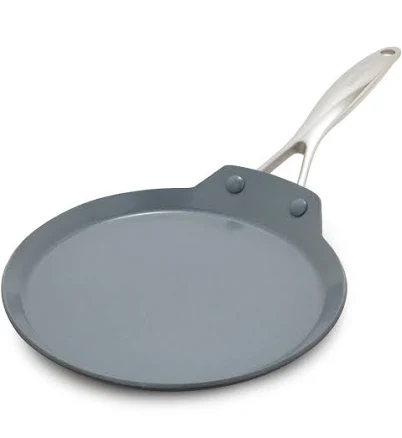
- Ceramic nonstick coating
- The brand calls it PFAS-free, which we have not verified
- Ceramic coating degradation over time
3 hazards checked on this product, all on its full breakdown.
- Thermolon™ ceramic nonstick coating (proprietary plant-derived composition)
- The brand calls it PFAS-free, which we have not verified
- Aluminum leaching
3 hazards checked on this product, all on its full breakdown.
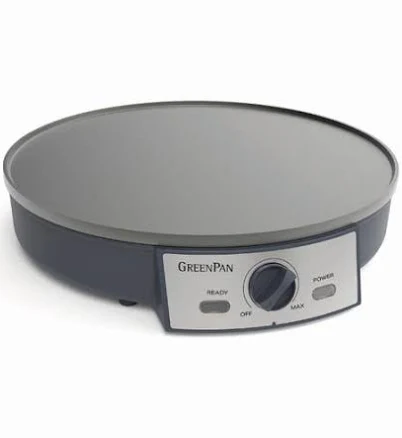
- Nonstick coating (unspecified type)
- The brand calls it PFAS-free, which we have not verified
- Teflon-type coating fume risk (if coating contains Teflon-type coating)
5 hazards checked on this product, all on its full breakdown.
Find an alternative on AmazonMore crepe pans grades
How we score, every product runs through the same public 0-100 rubric based on materials, coatings, brand disclosure, lab findings, and recalls. See the full methodology → Spotted a mistake? Report an error.