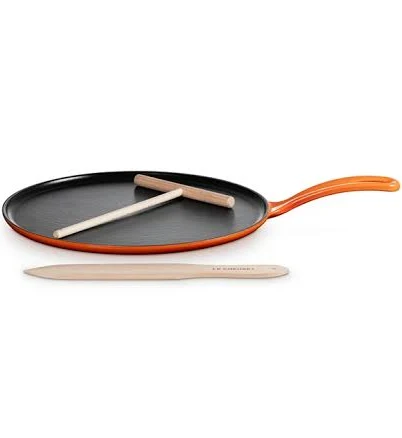
Traditional Round Crepe Pan, Is It Non-Toxic?
Low risk. Cast iron enamel avoids PFAS-prone Teflon-family coating coatings.
This pan features cast iron with vitreous enamel coating, not typically associated with PFAS. The enamel-on-cast-iron construction is inherently lower-risk than synthetic nonsticks.
The better-graded swap
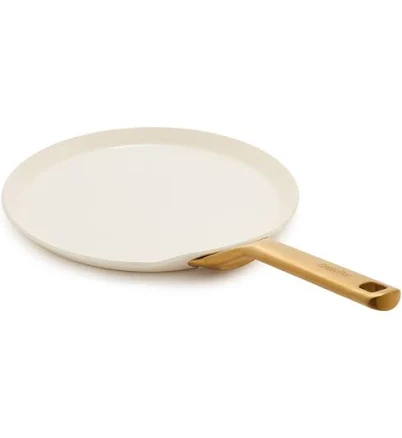
GreenPan
GreenPan Reserve Pro Crepe Frypan
70/100 safety
Same rubric that flunked this product. The swap earned Good.
Still want this one anyway? Check the price on Amazon. We’d swap it.
Material
Cast iron with enamel coating
Lab data
No public lab test
You may also be interested in
Top-graded picks in the categories readers replace first, every one scored on the same rubric.

- polypropylene filter housing, carbon/sediment cartridge
- We found no PFAS statement from the brand
- Bacterial growth in spent cartridges
3 hazards checked on this product, all on its full breakdown.

Aquasure
Premier Series 75 GPD Under Sink Reverse Osmosis Water Filtration System
- RO membrane, carbon filters, stainless steel housing
- We found no PFAS statement from the brand
- Bacterial and microbial growth in housing and filters
4 hazards checked on this product, all on its full breakdown.

Avocado
Vegan Mattress
- organic cotton, natural latex, coconut coir, recycled steel coils
- The brand calls it PFAS-free, which we have not verified
- Heavy metals
2 hazards checked on this product, all on its full breakdown.
Is Traditional Round Crepe Pan non-toxic? What it is made of
Le Creuset's crepe pan is cast iron with a vitreous enamel (glass-like) coating fused to the surface at high temperature. Unlike nonstick-coated cookware, this enamel layer does not contain Teflon-type coating or other Teflon-family coating. The enamel serves as a barrier between the cast iron and food, preventing direct iron leaching under normal use, though the integrity of this coating degrades over time with thermal stress and mechanical wear.
What’s concerning
No PFAS disclosure
No public statement from the brand about PFAS in this product.
Category baseline
The starting point for this type of product, before anything specific to this product is counted.
Lead
Le Creuset does not publicly disclose heavy metal test results or certifications for enamel composition. Vintage or imported enameled cookware has occasionally tested positive for lead above safety thresholds; modern production is less documented. Use of this pan for long-term storage of acidic foods increases theoretical leaching risk if glaze quality is substandard, though brand reputation sugge
Source, ATSDR ↗Enamel coating degradation and spalling
Enamel chips and flakes with age, thermal shock (sudden temperature changes), and mechanical damage. Once the protective layer is breached, underlying cast iron directly contacts food; users should discard or cease using the pan. Some consumers report enamel damage after 5-10 years of regular use, though careful handling extends life significantly.
Iron leaching from exposed cast iron
If enamel coating is compromised, cast iron beneath leaches iron into food, especially acidic foods like tomato-based crepes or lemon batters. While iron is an essential nutrient, excessive leaching can impart metallic taste and raise intake above recommended levels for some populations over prolonged use.
Lead
Le Creuset cookware often features colored enamel on the exterior and handle details. Paints and decorative glazes on handles or logos are not transparently disclosed for heavy metal content. Risk is low during food contact but present if flaking paint or decals are ingested; exterior surfaces should be kept intact.
Source, ATSDR ↗What’s reassuring
Base material not linked to PFAS
The main material recorded for this product is not one associated with PFAS.
Teflon-type coating fume risk (nonstick release)
This product does not use Teflon-type coating or Teflon-family coating nonstick coatings, so overheating will not produce perfluorooctanoic acid fumes. The enamel surface is stable at typical crepe-pan temperatures (below 500F) and does not off-gas toxic compounds under normal use.
How is this PFAS grade calculated?
The brand's record and disclosure
Le Creuset does not publicly disclose detailed chemical composition or third-party testing for heavy metals in enamel glazes, which is common across premium cookware makers. No major recalls or safety controversies are on record for this product line. The brand has maintained reputation for durability and food safety over decades, but lacks transparent PFAS or lead/cadmium commitment statements typical of some competitors.
How it compares in its category
Enameled cast iron crepe pans like this avoid the Teflon-type coating fume and microplastic risks of nonstick aluminum or steel alternatives. They outperform bare cast iron in terms of ease of use and reduced iron leaching. Compared to ceramic-coated or carbon steel crepe pans, enamel is more durable but less heat-responsive; compared to pure nonstick, it trades some nonstick performance for material stability and PFAS avoidance.
If you buy it
Use on low-to-medium heat and avoid rapid temperature swings (cold water on hot surface), which cause enamel cracking. Once enamel chips or flakes, stop using it or replace it, as exposed cast iron will leach iron more readily and lose the protective barrier. Hand-wash with gentle soap; dishwasher cycling accelerates enamel wear. Store dry to prevent discoloration and surface corrosion at chip edges.
What is not known about PFAS in this product?
- Basis
- Model estimate, 82% confidence, not a lab result
- Lab test
- None on record for this exact product
- Brand statement
- Le Creuset has made a specific claim
Formulations change between production runs, so check the current label. How we grade.
What are the PFAS-free alternatives to Traditional Round Crepe Pan?
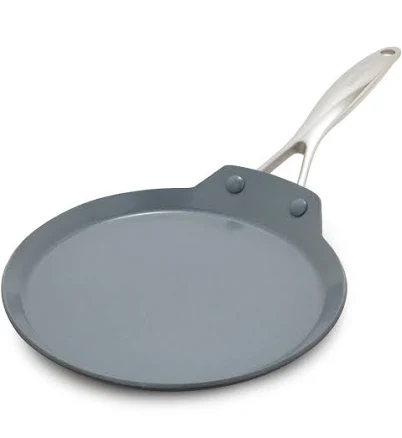
- Ceramic nonstick coating
- The brand calls it PFAS-free, which we have not verified
- Ceramic coating degradation over time
3 hazards checked on this product, all on its full breakdown.
- Thermolon™ ceramic nonstick coating (proprietary plant-derived composition)
- The brand calls it PFAS-free, which we have not verified
- Aluminum leaching
3 hazards checked on this product, all on its full breakdown.
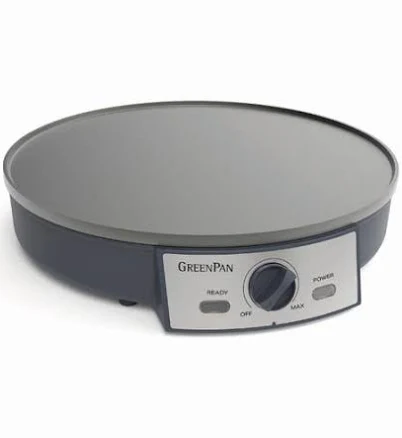
- Nonstick coating (unspecified type)
- The brand calls it PFAS-free, which we have not verified
- Teflon-type coating fume risk (if coating contains Teflon-type coating)
5 hazards checked on this product, all on its full breakdown.
Find an alternative on AmazonMore crepe pans grades
How we score, every product runs through the same public 0-100 rubric based on materials, coatings, brand disclosure, lab findings, and recalls. See the full methodology → Spotted a mistake? Report an error.