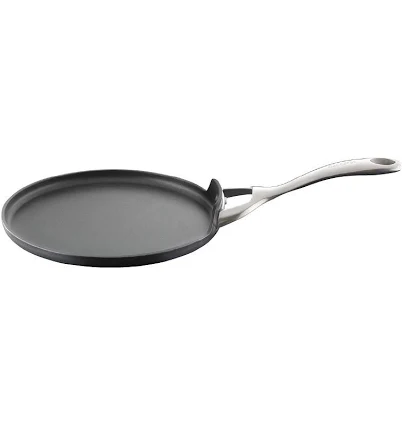
Cuisine, pro ID3 Hard Anodized Cast Crepe Pan, Is It Non-Toxic?
Lower concern because hard anodized aluminum bypasses Teflon-type coating nonstick, but the brand provides no PFAS commitment.
This hard anodized aluminum pan uses mechanical hardening rather than Teflon-family coating nonstick, which reduces PFAS exposure. The brand does not publicly address PFAS concerns for this product line.
The better-graded swap
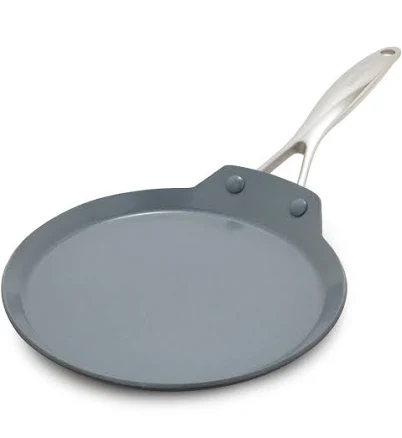
GreenPan
GreenPan Valencia Pro Ceramic Nonstick Crepe Pan
70/100 safety
Same rubric that flunked this product. The swap earned Good.
Still want this one anyway? Check the price on Amazon. We’d swap it.
Material
Hard anodized aluminum
Lab data
No public lab test
You may also be interested in
Top-graded picks in the categories readers replace first, every one scored on the same rubric.

- polypropylene filter housing, carbon/sediment cartridge
- We found no PFAS statement from the brand
- Bacterial growth in spent cartridges
3 hazards checked on this product, all on its full breakdown.

Aquasure
Premier Series 75 GPD Under Sink Reverse Osmosis Water Filtration System
- RO membrane, carbon filters, stainless steel housing
- We found no PFAS statement from the brand
- Bacterial and microbial growth in housing and filters
4 hazards checked on this product, all on its full breakdown.

Avocado
Vegan Mattress
- organic cotton, natural latex, coconut coir, recycled steel coils
- The brand calls it PFAS-free, which we have not verified
- Heavy metals
2 hazards checked on this product, all on its full breakdown.
Is Cuisine, pro ID3 Hard Cast Crepe Pan non-toxic? What it is made of
This pan is cast aluminum that has been hard anodized, an electrochemical process that creates a dense oxide layer on the surface. Hard anodizing differs critically from Teflon-type coating nonstick coatings (like Teflon) because it does not release Teflon-family coating when heated. The anodized layer serves as both the nonstick surface and a barrier against direct aluminum contact with food, though this barrier can degrade with use, particularly with acidic foods or aggressive scrubbing.
What’s concerning
Category baseline
The starting point for this type of product, before anything specific to this product is counted.
No PFAS disclosure
No public statement from the brand about PFAS in this product.
Aluminum leaching
Hard anodized coating acts as a barrier, but once breached by wear, scratching, or high-heat exposure, underlying aluminum can leach into food, particularly with acidic recipes. The brand provides no data on residual aluminum migration rates for this specific model.
Coating degradation and flaking
Hard anodized coatings naturally degrade with time and use. Flaking coatings can introduce both bare aluminum exposure and ingested coating particles; no independent durability testing data is publicly available for the ID3 line.
What’s reassuring
Base material not linked to PFAS
The main material recorded for this product is not one associated with PFAS.
Lead
Hard anodized aluminum does not use ceramic glazes or enamels that traditionally carry lead/cadmium risk. No recalls or reports of heavy metal contamination in hard anodized cookware have been documented.
Source, ATSDR ↗Teflon-type coating fume inhalation risk
Hard anodization bypasses Teflon-type coating polymers entirely, eliminating the fume inhalation hazard associated with overheated nonstick cookware. This is a material advantage of this product class.
Handle safety and heat transfer
No specific hazards documented for the handle or heat distribution on this model; standard cookware safety guidelines (use pot holders, avoid direct contact with hot surfaces) apply.
How is this PFAS grade calculated?
The brand's record and disclosure
The brand has not issued public PFAS commitments or sustainability disclosures specific to their cookware line, but the brand has maintained a longstanding presence in North American cookware markets without major safety recalls tied to heavy metal leaching or coating failure in their hard anodized products. The company offers standard consumer care guides but does not provide material test reports or third-party certification for this pan model. No established controversies or product recalls for this specific model have been documented in public safety databases.
How it compares in its category
Hard anodized crepe pans are a middle-ground option, they avoid Teflon-type coating off-gassing risk that traditional nonstick pans carry, but they lack the durability reputation of stainless steel or cast iron, which do not require any coating. Ceramic-coated alternatives exist but may introduce other coating adhesion risks. Hard anodized aluminum is lighter and heats more evenly than traditional cast iron, making it practical for crepes, though the nonstick layer is finite and may need replacement within 3-5 years of regular use.
If you buy it
Use wooden or silicone utensils only; metal utensils will accelerate coating wear and expose underlying aluminum. Avoid high heat (keep below 400F); hard anodized surfaces can degrade faster at sustained high temperatures. Hand wash rather than dishwasher to extend coating life, and do not use abrasive scrubbers. Monitor for visible coating flaking or dark spots; once the anodized layer is significantly compromised, the pan should be replaced to prevent potential aluminum leaching into acidic or salt-containing foods.
What is not known about PFAS in this product?
- Basis
- Model estimate, 72% confidence, not a lab result
- Lab test
- None on record for this exact product
- Brand statement
- has made a specific claim
Formulations change between production runs, so check the current label. How we grade.
What are the PFAS-free alternatives to Cuisine, pro ID3 Hard Anodized Cast Crepe Pan?
- Ceramic nonstick coating
- The brand calls it PFAS-free, which we have not verified
- Ceramic coating degradation over time
3 hazards checked on this product, all on its full breakdown.
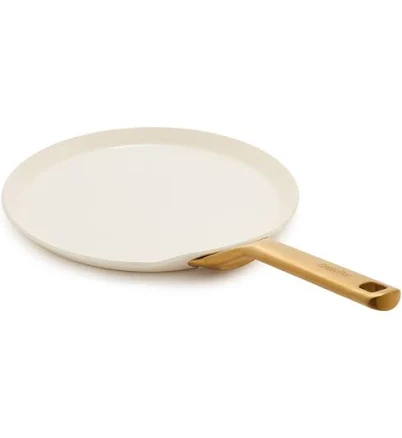
- Thermolon™ ceramic nonstick coating (proprietary plant-derived composition)
- The brand calls it PFAS-free, which we have not verified
- Aluminum leaching
3 hazards checked on this product, all on its full breakdown.
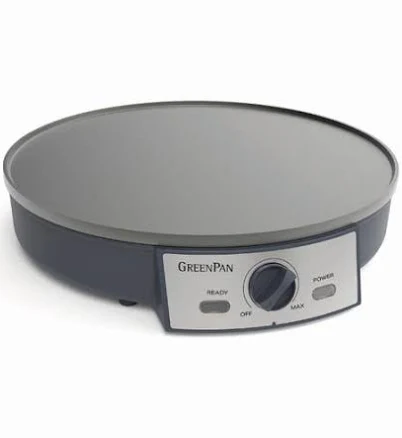
- Nonstick coating (unspecified type)
- The brand calls it PFAS-free, which we have not verified
- Teflon-type coating fume risk (if coating contains Teflon-type coating)
5 hazards checked on this product, all on its full breakdown.
Find an alternative on AmazonMore crepe pans grades
How we score, every product runs through the same public 0-100 rubric based on materials, coatings, brand disclosure, lab findings, and recalls. See the full methodology → Spotted a mistake? Report an error.