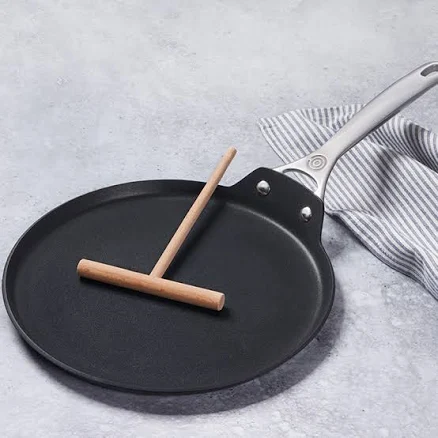
Le Creuset Toughened Nonstick PRO Crepe Pan, Is It Non-Toxic?
Teflon-type coating non-stick coating, disclosed by the brand.
Le Creuset discloses that its Toughened Non-stick PRO coating contains Teflon-type coating, FEP and PFA, which are Teflon-family coating in the PFAS family.
The better-graded swap
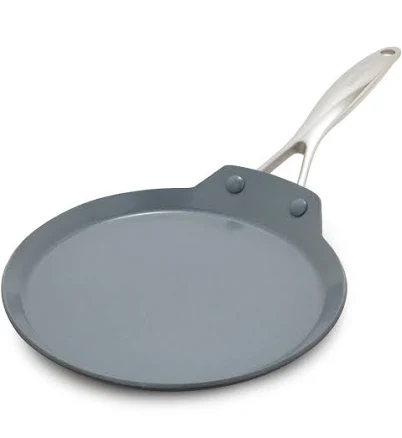
GreenPan
GreenPan Valencia Pro Ceramic Nonstick Crepe Pan
70/100 safety
Same rubric that flunked this product. The swap earned Good.
Still want this one anyway? Check the price on Amazon. We’d swap it.
Material
Teflon-type coating non-stick coating, with FEP and PFA, as disclosed by Le Creuset
Lab data
No public lab test
You may also be interested in
Top-graded picks in the categories readers replace first, every one scored on the same rubric.

- polypropylene filter housing, carbon/sediment cartridge
- We found no PFAS statement from the brand
- Bacterial growth in spent cartridges
3 hazards checked on this product, all on its full breakdown.

Aquasure
Premier Series 75 GPD Under Sink Reverse Osmosis Water Filtration System
- RO membrane, carbon filters, stainless steel housing
- We found no PFAS statement from the brand
- Bacterial and microbial growth in housing and filters
4 hazards checked on this product, all on its full breakdown.

Avocado
Vegan Mattress
- organic cotton, natural latex, coconut coir, recycled steel coils
- The brand calls it PFAS-free, which we have not verified
- Heavy metals
2 hazards checked on this product, all on its full breakdown.
Is Le Creuset Toughened PRO Crepe Pan non-toxic? What it is made of
This crepe pan features a Teflon-type coating-based non-stick coating containing FEP and PFA, as disclosed by Le Creuset on product documentation. Teflon-type coating is widely used in non-stick cookware but degrades and releases volatile organic compounds when heated above approximately 500°F (260°C). The underlying cookware material (aluminum or steel) is not specified in readily available product descriptions, which affects whether metal leaching is a secondary concern under repeated heating and acidic foods.
What’s concerning
No PFAS disclosure
No PFAS-free statement from the brand for this product.
PTFE / Teflon confirmed
The brand discloses a Teflon-type coating.
Category baseline
The starting point for this type of product, before anything specific to this product is counted.
Teflon-type coating thermal decomposition and fume release
Heating Teflon-type coating non-stick coatings above 500°F releases perfluorooctanoic acid (PFOA) and other volatile perfluorinated compounds. Crepe pan use at normal temperatures (350-400°F) is below this threshold, but accidental preheating or stovetop neglect can trigger fume release within minutes.
Coating degradation and flaking
All Teflon-type coating coatings degrade over time with use, thermal cycling, and mechanical wear. Peeling or flaking coating particles may be ingested with food; the underlying substrate leachability is not disclosed for this product.
Underlying substrate leaching (aluminum or steel)
Le Creuset does not disclose the substrate material (aluminum, steel, or composite) in readily accessible product information. If aluminum, acidic foods or prolonged contact could leach aluminum salts after the Teflon-type coating is compromised; if steel, risk is minimal.
Susceptibility to dishwasher damage accelerating coating failure
Teflon-type coating coatings are not dishwasher-safe and degrade faster with alkaline detergents and thermal shock. Hand-washing significantly extends coating life, but the pan's documented care requirements assume user compliance.
What’s reassuring
Lead
No published recalls or test results show lead or cadmium contamination in Le Creuset cookware enamels or finishes. The brand has maintained this record across decades of production, though direct third-party testing of this specific model is not on public record.
Source, ATSDR ↗How is this PFAS grade calculated?
The brand's record and disclosure
Le Creuset explicitly names Teflon-type coating, FEP, and PFA in published product specifications, demonstrating transparency about the non-stick chemistry. The brand does not publish statements on PFAS phase-out plans or alternatives being developed. No significant safety recalls or complaints specific to this crepe pan model appear in public records, though Teflon-type coating fume incidents are documented broadly across non-stick cookware categories when misused.
How it compares in its category
Most non-stick crepe pans in the mid-to-premium range use Teflon-type coating-family coatings; ceramic or uncoated cast iron alternatives exist but require more skill and oil use. Le Creuset's toughened formulation may resist scratching longer than budget non-stick, but does not eliminate the fume risk or PFAS loading that defines the material class. Ceramic non-stick or seasoned cast iron crepe pans avoid Teflon-type coating entirely, though they perform differently for crêpe release.
If you buy it
Never heat this pan above 500°F (260°C); crepe-making temperatures (typically 350-400°F) are lower concern, but preheating or searing at high heat risks coating breakdown and fume release. Hand-wash only; dishwasher exposure and metal utensils accelerate coating wear and leaching from the underlying substrate. Replace the pan if the non-stick coating visibly peels, chips, or flakes into food. Store in a cool, dry place to slow coating degradation between uses.
What is not known about PFAS in this product?
- Basis
- Model estimate, 35% confidence, not a lab result
- Lab test
- None on record for this exact product
- Brand statement
- Le Creuset has made a specific claim
Formulations change between production runs, so check the current label. How we grade.
What are the PFAS-free alternatives to Le Creuset Toughened Nonstick PRO Crepe Pan?
- Ceramic nonstick coating
- The brand calls it PFAS-free, which we have not verified
- Ceramic coating degradation over time
3 hazards checked on this product, all on its full breakdown.
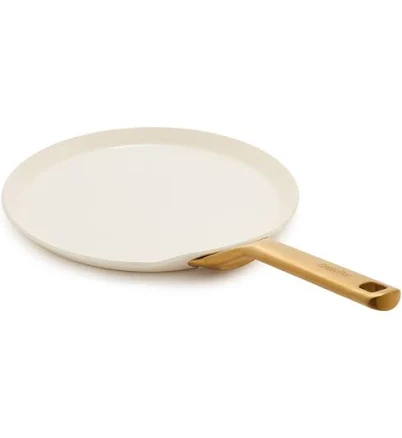
- Thermolon™ ceramic nonstick coating (proprietary plant-derived composition)
- The brand calls it PFAS-free, which we have not verified
- Aluminum leaching
3 hazards checked on this product, all on its full breakdown.
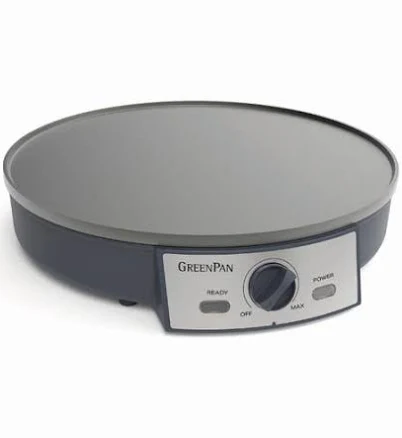
- Nonstick coating (unspecified type)
- The brand calls it PFAS-free, which we have not verified
- Teflon-type coating fume risk (if coating contains Teflon-type coating)
5 hazards checked on this product, all on its full breakdown.
Find an alternative on AmazonMore crepe pans grades
How we score, every product runs through the same public 0-100 rubric based on materials, coatings, brand disclosure, lab findings, and recalls. See the full methodology → Spotted a mistake? Report an error.