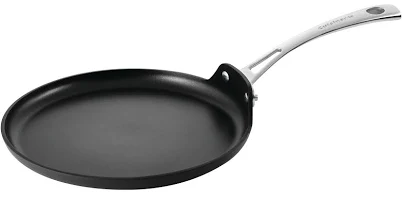
Cuisinart Crepe Pan 26cm, Is It Non-Toxic?
Avoid until Cuisinart discloses coating type or switch to uncoated stainless steel.
Cuisinart will not say whether this crepe pan contains Teflon-type coating, PFOA, or other Teflon-family coating in its nonstick layer. No PFAS-free claim or independent lab work exists to verify safety.
The better-graded swap
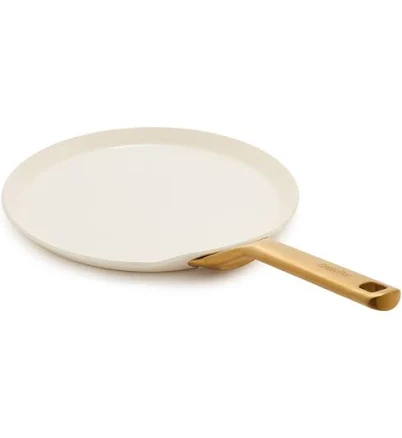
GreenPan
GreenPan Reserve Pro Crepe Frypan
70/100 safety
Same rubric that flunked this product. The swap earned Good.
Still want this one anyway? Check the price on Amazon. We’d swap it.
Material
Non-stick coating (Teflon-type coating status unspecified by brand)
Lab data
No public lab test
You may also be interested in
Top-graded picks in the categories readers replace first, every one scored on the same rubric.

- polypropylene filter housing, carbon/sediment cartridge
- We found no PFAS statement from the brand
- Bacterial growth in spent cartridges
3 hazards checked on this product, all on its full breakdown.

Aquasure
Premier Series 75 GPD Under Sink Reverse Osmosis Water Filtration System
- RO membrane, carbon filters, stainless steel housing
- We found no PFAS statement from the brand
- Bacterial and microbial growth in housing and filters
4 hazards checked on this product, all on its full breakdown.

Avocado
Vegan Mattress
- organic cotton, natural latex, coconut coir, recycled steel coils
- The brand calls it PFAS-free, which we have not verified
- Heavy metals
2 hazards checked on this product, all on its full breakdown.
Is Cuisinart Crepe Pan 26cm non-toxic? What it is made of
This crepe pan features a non-stick coating over what is typically aluminum or aluminum-clad steel construction. Cuisinart does not publicly specify whether the coating is Teflon-type coating (Teflon) or a Teflon-type coating-free alternative, which is a significant gap given established concerns about Teflon-type coating degradation at high temperatures. The base metal and coating durability directly affect leaching risk and fume release during normal crepe cooking, which typically involves moderate heat (around 180-200C for pan seasoning).
What’s concerning
Category baseline
The starting point for this type of product, before anything specific to this product is counted.
No PFAS disclosure
No public statement from the brand about PFAS in this product.
Non-stick, chemistry undisclosed
Marketed as non-stick without stating the coating chemistry.
Teflon-type coating thermal decomposition / fume risk
If the coating is Teflon-type coating, exceeding 250C (or unattended heating above 200C) may release Teflon-type coating fumes, particularly if the pan is preheated empty. Cuisinart does not disclose maximum safe temperature or coating type, limiting user ability to avoid this hazard.
Coating degradation and aluminum leaching
Scratched or peeling non-stick coatings expose the underlying aluminum to acidic foods (common in crepe batters with eggs and milk). Long-term aluminum leaching into food has been associated with elevated intake, though evidence of harm at typical exposure levels remains contested.
Microabrasion from utensils and dishwashing
Non-stick crepe pans experience frequent scratching from metal crepe spreaders and spatulas, as well as abrasive dishwashing. This accelerates coating breakdown and increases the surface area for potential leaching or fume release.
Volatile organic compounds (VOC) off-gassing
Non-stick coatings and any adhesive layers may off-gas low levels of VOCs when new or heated. Cuisinart does not publish off-gassing data or certifications limiting VOC emissions.
What’s reassuring
Lead
No public information suggests this pan uses ceramic or enamel coatings; it is advertised as non-stick, likely Teflon-type coating-based. This hazard is not applicable unless Cuisinart has released a ceramic version of this model.
Source, ATSDR ↗How is this PFAS grade calculated?
The brand's record and disclosure
Cuisinart has not issued public statements clarifying non-stick coating chemistry across its cookware line, including this model. The brand holds no known third-party certifications for non-stick safety (such as GREENGUARD or similar). No recalls specifically tied to coating degradation or chemical release have been widely documented for this pan, though the lack of transparency makes independent verification difficult.
How it compares in its category
Among 26cm crepe pans, Cuisinart's product sits in the mid-market segment. Competitors like Le Creuset (enameled cast iron, no Teflon-type coating) and All-Clad (transparent about Teflon-type coating use) offer greater disclosure. Budget non-stick crepe pans from unknown brands carry similar or higher Teflon-type coating uncertainty; uncoated stainless steel or carbon steel crepe pans eliminate non-stick coating hazards entirely but require seasoning and skill.
If you buy it
Keep the pan below 250C (well under Teflon-type coating decomposition threshold of 370C) to prevent fume release; hand-wash rather than machine-wash to preserve coating. Inspect the surface before each use for scratches, peeling, or discoloration that signal degradation. Replace the pan if coating visibly flakes or if cooking odors change. Store with a protective cloth to avoid contact damage.
What is not known about PFAS in this product?
- Basis
- Model estimate, 35% confidence, not a lab result
- Lab test
- None on record for this exact product
- Brand statement
- Cuisinart has made a specific claim
Formulations change between production runs, so check the current label. How we grade.
What are the PFAS-free alternatives to Cuisinart Crepe Pan 26cm?
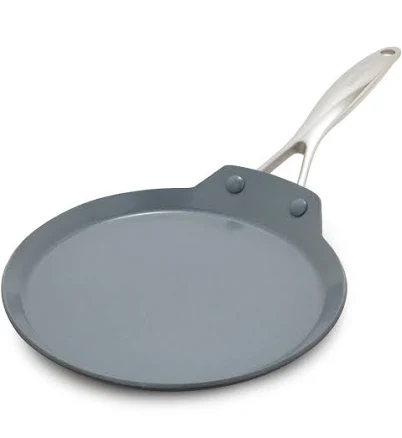
- Ceramic nonstick coating
- The brand calls it PFAS-free, which we have not verified
- Ceramic coating degradation over time
3 hazards checked on this product, all on its full breakdown.
- Thermolon™ ceramic nonstick coating (proprietary plant-derived composition)
- The brand calls it PFAS-free, which we have not verified
- Aluminum leaching
3 hazards checked on this product, all on its full breakdown.
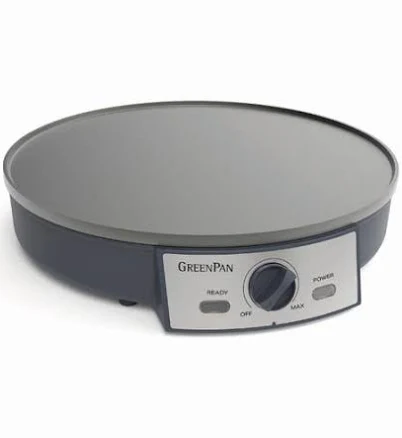
- Nonstick coating (unspecified type)
- The brand calls it PFAS-free, which we have not verified
- Teflon-type coating fume risk (if coating contains Teflon-type coating)
5 hazards checked on this product, all on its full breakdown.
Find an alternative on AmazonMore crepe pans grades
How we score, every product runs through the same public 0-100 rubric based on materials, coatings, brand disclosure, lab findings, and recalls. See the full methodology → Spotted a mistake? Report an error.