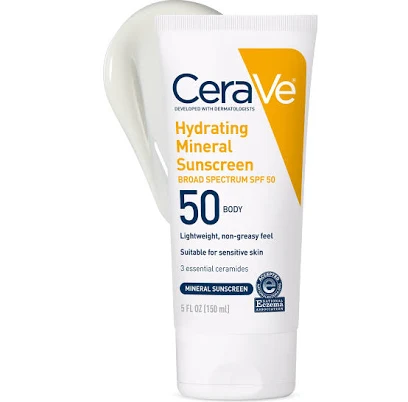
CeraVe Hydrating Mineral Body Sunscreen SPF 50
Mineral sunscreen with no waterproof claim on record.
This mineral sunscreen uses zinc oxide and titanium dioxide as active ingredients. The brand has no PFAS statement on record. Mineral sunscreen bases are not materials linked to PFAS.
We flunk more products than we pass. This one earned its grade. How we grade
Material
mineral sunscreen (zinc oxide/titanium dioxide base)
Lab data
No public lab test
You may also be interested in
Top-graded picks in the categories readers replace first, every one scored on the same rubric.

- polypropylene filter housing, carbon/sediment cartridge
- We found no PFAS statement from the brand
- Bacterial growth in spent cartridges
3 hazards checked on this product, all on its full breakdown.

Aquasure
Premier Series 75 GPD Under Sink Reverse Osmosis Water Filtration System
- RO membrane, carbon filters, stainless steel housing
- We found no PFAS statement from the brand
- Bacterial and microbial growth in housing and filters
4 hazards checked on this product, all on its full breakdown.

Avocado
Vegan Mattress
- organic cotton, natural latex, coconut coir, recycled steel coils
- The brand calls it PFAS-free, which we have not verified
- Heavy metals
2 hazards checked on this product, all on its full breakdown.
What CeraVe Hydrating Mineral Sunscreen SPF is made of, ingredients and materials
This product uses zinc oxide and titanium dioxide as UV-blocking minerals, which sit on the skin surface rather than absorbing into it. Neither compound is systemically toxic at cosmetic concentrations. The 'hydrating' formulation likely contains glycerin, ceramides, and humectants to offset the occlusive feel typical of mineral sunscreens. Absence of chemical UV absorbers (avobenzone, oxybenzone, octinoxate) eliminates that class of endocrine-active compounds.
What’s concerning
Category baseline
The starting point for this type of product, before anything specific to this product is counted.
No PFAS disclosure
No public statement from the brand about PFAS in this product.
Fragrance allergens
CeraVe mineral sunscreens typically include fragrance compounds to mask the metallic odor of minerals. While the brand avoids known allergens like balsam of Peru, fragrance mixtures carry inherent sensitization risk in roughly 1-2% of users. Check full ingredient list for specific fragrance components if you have history of cosmetic contact dermatitis.
1,4-dioxane from non-ionic surfactants or emulsifiers
Mineral sunscreen emulsions typically require non-ionic emulsifiers (polysorbates, PEG compounds). Manufacturing impurities may introduce trace 1,4-dioxane. CeraVe does not publicly disclose testing for this contaminant, consistent with industry norm; levels in finished products are usually below 10 ppm if present.
Skin irritation from mineral particle size
Micronized zinc oxide and titanium dioxide can irritate sensitive or compromised skin in rare cases. This is not a toxicity hazard but a physical irritation risk. Patch test before full-face use if you have active eczema or barrier damage.
What’s reassuring
Base material not linked to PFAS
The main material recorded for this product is not one associated with PFAS.
Heavy metals
Pharmaceutical-grade zinc oxide and titanium dioxide used in cosmetics are tightly controlled for lead and cadmium contamination. No recalls or published detection of elevated heavy metals in CeraVe mineral sunscreens on record.
Source, FDA ↗Inhalation risk if product aerosolized (spray formulations only)
This is a lotion or cream; inhalation risk is not applicable. If product were reformulated as a powder or spray, zinc oxide and titanium dioxide inhalation would warrant caution, but no such variant is noted.
How is this PFAS grade calculated?
The brand's record and disclosure
CeraVe is owned by L'Oreal and publishes ingredient lists transparently on packaging and website. The brand has faced no major safety recalls for this product line and maintains a routine disclosure posture on safety testing. However, CeraVe has not publicly disclosed PFAS testing or committed to PFAS-free claims, consistent with most mainstream sunscreen makers. No established controversies regarding formaldehyde, heavy metals in pigments, or banned colorants.
How it compares in its category
Mineral sunscreens like this rank among the lower-risk category because they avoid chemical absorbers and their bioaccumulation risk. This product's lack of waterproofing claims (compared to sport formulas) suggests minimal fluorinated silicone or wax additives that could introduce trace PFAS. Compared to drugstore mineral competitors, CeraVe's ceramide blend is a neutral differentiator; it does not reduce safety but adds marginal skin-barrier benefit.
If you buy it
Store in a cool, dry place away from direct heat; zinc oxide and titanium dioxide degrade negligibly over 2-3 years if kept dry. Shake well before use to ensure even pigment distribution. Discontinue use only if you develop contact irritation; mineral UV blockers rarely sensitize. No special precautions needed for children or pregnancy; mineral sunscreens are recommended for both.
What is not known about PFAS in this product?
- Basis
- Model estimate, 72% confidence, not a lab result
- Lab test
- None on record for this exact product
- Brand statement
- CeraVe has made a specific claim
Formulations change between production runs, so check the current label. How we grade.
What are the PFAS-free alternatives to CeraVe Hydrating Mineral Body Sunscreen SPF 50?
- Mineral sunscreen, zinc oxide base
- A third party reports verifying it as PFAS-free
- 1,4-dioxane (non-intentional contaminant from surfactants/emulsifiers)
2 hazards checked on this product, all on its full breakdown.
- mineral sunscreen (zinc oxide or titanium dioxide base)
- The brand calls it PFAS-free, which we have not verified
- Synthetic fragrance allergens
More sunscreen grades
How we score, every product runs through the same public 0-100 rubric based on materials, coatings, brand disclosure, lab findings, and recalls. See the full methodology → Spotted a mistake? Report an error.