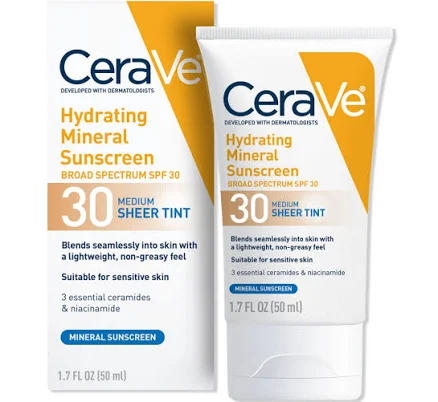
CeraVe Hydrating Mineral Sunscreen SPF 30
Lower concern since mineral sunscreens don't require PFAS coatings.
Zinc oxide and titanium dioxide formulation lacks typical PFAS applications like water-resistance or nonstick coatings. CeraVe makes no disclosure.
We flunk more products than we pass. This one earned its grade. How we grade
Material
mineral sunscreen (zinc oxide, titanium dioxide)
Lab data
No public lab test
You may also be interested in
Top-graded picks in the categories readers replace first, every one scored on the same rubric.

- polypropylene filter housing, carbon/sediment cartridge
- We found no PFAS statement from the brand
- Bacterial growth in spent cartridges
3 hazards checked on this product, all on its full breakdown.

Aquasure
Premier Series 75 GPD Under Sink Reverse Osmosis Water Filtration System
- RO membrane, carbon filters, stainless steel housing
- We found no PFAS statement from the brand
- Bacterial and microbial growth in housing and filters
4 hazards checked on this product, all on its full breakdown.

Avocado
Vegan Mattress
- organic cotton, natural latex, coconut coir, recycled steel coils
- The brand calls it PFAS-free, which we have not verified
- Heavy metals
2 hazards checked on this product, all on its full breakdown.
What CeraVe Hydrating Mineral Sunscreen SPF 30 is made of, ingredients and materials
CeraVe Hydrating Mineral Sunscreen uses zinc oxide and titanium dioxide as active UV filters, both inorganic minerals that sit on skin rather than absorbing into it. These are considered lower concern alternatives to chemical sunscreens because they do not metabolize systemically and do not require skin penetration to work. The formulation also includes ceramides and hyaluronic acid as hydrating agents, which are well-tolerated moisturizing compounds with no established toxicity concerns at cosmetic-use levels.
What’s concerning
Category baseline
The starting point for this type of product, before anything specific to this product is counted.
No PFAS disclosure
No public statement from the brand about PFAS in this product.
Fragrance allergens and sensitizers
CeraVe Hydrating Mineral Sunscreen is labeled fragrance-free, reducing risk of contact dermatitis from fragrance compounds. However, preservatives (typically phenoxyethanol or parabens, not listed on all public product cards) could trigger reactions in severely sensitized individuals. Patch test recommended for atopic or compromised skin barriers.
Skin barrier disruption or irritation from mineral oxides
Some individuals report irritation, itching, or photosensitivity reactions to high-concentration mineral sunscreens, though true allergy is rare. CeraVe's formulation includes barrier-supporting ceramides, which mitigates this risk. Reactions are more likely in those with severely compromised or inflamed skin at baseline.
What’s reassuring
Base material not linked to PFAS
The main material recorded for this product is not one associated with PFAS.
Heavy metals
Zinc oxide and titanium dioxide used in cosmetics are pharmaceutical-grade and regulated for heavy metal content (lead, cadmium, arsenic). No contamination has been reported in CeraVe sunscreen products. Skin contact with properly manufactured mineral sunscreens does not pose measurable systemic metal exposure risk.
Source, FDA ↗Formaldehyde / VOCs
Standard cosmetic preservative systems in CeraVe products do not include known formaldehyde-releasing agents (DMDM hydantoin, diazolidinyl urea) based on publicly available ingredient lists. No safety alerts or recalls involving preservative-related reactions have been issued for this product.
Source, ATSDR ↗Respiratory exposure from powder form or inhalation
CeraVe Hydrating Mineral Sunscreen is a cream or lotion formulation, not a powder, so inhalation of fine mineral particles during application is not a primary concern. No occupational or consumer respiratory hazards have been documented for this product format.
How is this PFAS grade calculated?
The brand's record and disclosure
CeraVe is owned by L'Oreal and markets itself as dermatologist-recommended for sensitive skin. The brand does not make explicit PFAS-free claims on this product, though mineral sunscreens are inherently unlikely to contain PFAS-based water repellents. CeraVe has no documented recalls or safety controversies specific to this product line. The company does not publish detailed ingredient sourcing transparency reports, but uses standard cosmetic-grade mineral oxides from established suppliers.
How it compares in its category
Mineral sunscreens as a class (zinc oxide and titanium dioxide) have the lowest systemic absorption risk among sunscreens and are preferred by regulatory bodies like the AAD for sensitive or pediatric use. CeraVe's formulation is typical for this segment, it adds emollients to improve spreadability, since mineral sunscreens are notoriously thick and white-cast prone. Compared to chemical alternatives (oxybenzone, avobenzone), this product avoids endocrine-concern ingredients, though it may be more cosmetically inconvenient for daily use.
If you buy it
Apply liberally (at least one quarter-teaspoon for face) and reapply every two hours or after swimming. Store in a cool, dry place; mineral sunscreens are stable and do not degrade significantly with normal indoor temperature fluctuation. Shake well before use, as zinc oxide and titanium dioxide are insoluble and will settle. Discontinue if skin irritation occurs, though true allergies to these minerals are rare; most reactions are to fragrance or preservatives in the formula.
What is not known about PFAS in this product?
- Basis
- Model estimate, 72% confidence, not a lab result
- Lab test
- None on record for this exact product
- Brand statement
- CeraVe has made a specific claim
Formulations change between production runs, so check the current label. How we grade.
What are the PFAS-free alternatives to CeraVe Hydrating Mineral Sunscreen SPF 30?
- Mineral sunscreen, zinc oxide base
- A third party reports verifying it as PFAS-free
- 1,4-dioxane (non-intentional contaminant from surfactants/emulsifiers)
2 hazards checked on this product, all on its full breakdown.
- mineral sunscreen (zinc oxide or titanium dioxide base)
- The brand calls it PFAS-free, which we have not verified
- Synthetic fragrance allergens
More sunscreen grades
How we score, every product runs through the same public 0-100 rubric based on materials, coatings, brand disclosure, lab findings, and recalls. See the full methodology → Spotted a mistake? Report an error.