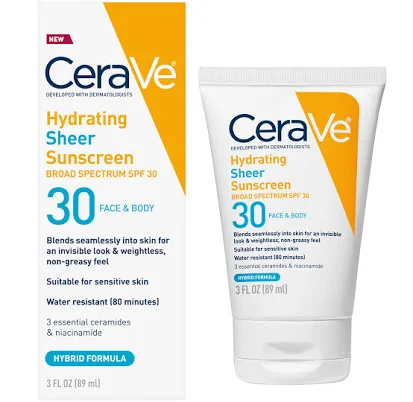
CeraVe Hydrating Sheer Face and Body Sunscreen SPF 30
Lower concern for leave-on sunscreen without water-repellent treatment.
Hybrid mineral and chemical sunscreen without marketed water-resistance claims that would trigger PFAS use. CeraVe makes no PFAS disclosure.
We flunk more products than we pass. This one earned its grade. How we grade
Material
Mineral and chemical UV filters in emulsion base; no intentional water-resistant coating disclosed
Lab data
No public lab test
You may also be interested in
Top-graded picks in the categories readers replace first, every one scored on the same rubric.

- polypropylene filter housing, carbon/sediment cartridge
- We found no PFAS statement from the brand
- Bacterial growth in spent cartridges
3 hazards checked on this product, all on its full breakdown.

Aquasure
Premier Series 75 GPD Under Sink Reverse Osmosis Water Filtration System
- RO membrane, carbon filters, stainless steel housing
- We found no PFAS statement from the brand
- Bacterial and microbial growth in housing and filters
4 hazards checked on this product, all on its full breakdown.

Avocado
Vegan Mattress
- organic cotton, natural latex, coconut coir, recycled steel coils
- The brand calls it PFAS-free, which we have not verified
- Heavy metals
2 hazards checked on this product, all on its full breakdown.
What CeraVe Hydrating Sheer Face Sunscreen SPF is made of, ingredients and materials
CeraVe Hydrating Sheer SPF 30 combines mineral UV filters (zinc oxide and/or titanium dioxide) with chemical absorbers (likely avobenzone, homosalate, octinoxate, or similar cinnamate esters) in an emulsion base containing ceramides and glycerin. The mineral component provides broad-spectrum coverage and photostability; the chemical filters increase transparency and reduce the white cast typical of mineral-only formulas. No intentional water-resistant or durable coating is disclosed, reducing likelihood of PFAS-based performance additives.
What’s concerning
Category baseline
The starting point for this type of product, before anything specific to this product is counted.
No PFAS disclosure
No public statement from the brand about PFAS in this product.
Chemical UV filter allergenicity and photosensitivity
Oxybenzone, avobenzone, and cinnamate esters are recognized contact allergens and can trigger photoallergic reactions in a small percentage of users; incidence is estimated at 1-3% but varies by individual sensitivity and filter concentration.
Heavy metals
Industrial-grade titanium dioxide can carry trace iron oxide and other contaminants; cosmetic-grade TiO2 is regulated for purity but occasional heavy metal traces are documented in independent testing of mass-market sunscreens. CeraVe does not disclose sourcing or purity testing.
Source, FDA ↗1,4-dioxane as manufacturing byproduct in ethoxylated ingredients
If this formula includes ethoxylated emulsifiers or surfactants (common in hydrating sunscreens to improve feel), 1,4-dioxane may be a trace contaminant from synthesis. FDA does not regulate residual 1,4-dioxane in cosmetics, though levels in finished sunscreens are typically below 30 ppm.
Photochemical instability of avobenzone (UV filter degradation)
Avobenzone, a common broad-spectrum chemical filter, degrades rapidly under UV exposure without stabilizers like octocrylene. CeraVe does not publicly disclose stabilizer choice; degraded filters offer reduced protection but pose no direct toxicity risk.
What’s reassuring
Base material not linked to PFAS
The main material recorded for this product is not one associated with PFAS.
Titanium dioxide and zinc oxide particle inhalation (powder form risk only)
This is an emulsion product, not a powder; mineral particles are suspended in liquid and not airborne. Inhalation risk does not apply to this formulation.
How is this PFAS grade calculated?
The brand's record and disclosure
CeraVe (owned by L'Oreal) maintains a clean FDA cosmetic safety record with no major recalls tied to this product line. The brand discloses inactive ingredients on packaging and their website and holds dermatologist endorsements. However, CeraVe has not publicly committed to PFAS-free formulation or transparency on their use; the absence of a statement is notable in an industry where competitors increasingly highlight PFAS avoidance.
How it compares in its category
This product sits in the middle-market tier, lower concern than purely chemical sunscreens with undisclosed ingredients, comparable to other hybrid formulas from Coppertone and Neutrogena, and less transparent than niche brands that have publicly disclosed their ingredient restrictions. The sheer hydrating formula positions it as gentler than heavy zinc-oxide-only alternatives, with a lower barrier to daily use.
If you buy it
Apply generously (quarter-teaspoon for face) 15 minutes before sun exposure and reapply every two hours or after water immersion, since water-resistance is not claimed. Store in a cool, dry place away from direct heat; emulsions can separate or degrade if exposed to sustained warmth above 25C (77F). Discontinue and patch-test if redness, itching, or irritation develops; chemical UV filters occasionally trigger photosensitivity in susceptible individuals. Replace annually or if the formula appears separated or discolored.
What is not known about PFAS in this product?
- Basis
- Model estimate, 72% confidence, not a lab result
- Lab test
- None on record for this exact product
- Brand statement
- CeraVe has made a specific claim
Formulations change between production runs, so check the current label. How we grade.
What are the PFAS-free alternatives to CeraVe Hydrating Sheer Face and Body Sunscreen SPF 30?
- Mineral sunscreen, zinc oxide base
- A third party reports verifying it as PFAS-free
- 1,4-dioxane (non-intentional contaminant from surfactants/emulsifiers)
2 hazards checked on this product, all on its full breakdown.
- mineral sunscreen (zinc oxide or titanium dioxide base)
- The brand calls it PFAS-free, which we have not verified
- Synthetic fragrance allergens
More sunscreen grades
How we score, every product runs through the same public 0-100 rubric based on materials, coatings, brand disclosure, lab findings, and recalls. See the full methodology → Spotted a mistake? Report an error.