Clorox · Fabric Stain Guard Sprays
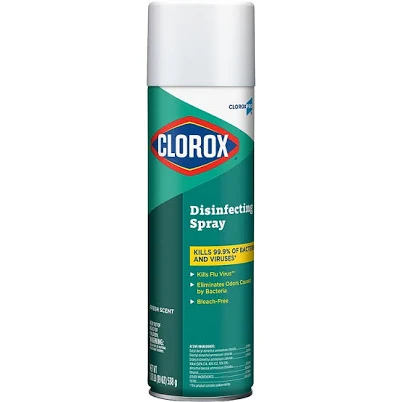
CLOROX Disinfectant Spray
Lower concern; liquid disinfectant unlikely to contain PFAS.
Aqueous bleach-based liquid product with no known PFAS triggers. Clorox does not publicly disclose PFAS testing or commitments despite typical formulations lacking PFAS.
We flunk more products than we pass. This one earned its grade. How we grade
Material
Aqueous bleach solution with surfactants
Lab data
No public lab test
You may also be interested in
Top-graded picks in the categories readers replace first, every one scored on the same rubric.

- polypropylene filter housing, carbon/sediment cartridge
- We found no PFAS statement from the brand
- Bacterial growth in spent cartridges
3 hazards checked on this product, all on its full breakdown.

Aquasure
Premier Series 75 GPD Under Sink Reverse Osmosis Water Filtration System
- RO membrane, carbon filters, stainless steel housing
- We found no PFAS statement from the brand
- Bacterial and microbial growth in housing and filters
4 hazards checked on this product, all on its full breakdown.

Avocado
Vegan Mattress
- organic cotton, natural latex, coconut coir, recycled steel coils
- The brand calls it PFAS-free, which we have not verified
- Heavy metals
2 hazards checked on this product, all on its full breakdown.
What CLOROX Disinfectant Spray is made of, ingredients and materials
Clorox Disinfectant Spray is primarily sodium hypochlorite (bleach) dissolved in water with surfactants and inert ingredients. This formulation is designed for hard surfaces and kills pathogens on contact. The active bleach component is volatile and dissipates after use, leaving minimal residue; surfactants improve wetting and penetration but are not known to accumulate in the product itself over shelf life.
What’s concerning
No PFAS disclosure
No public statement from the brand about PFAS in this product.
Category baseline
The starting point for this type of product, before anything specific to this product is counted.
Sodium hypochlorite vapor inhalation
Bleach spray releases chlorine gas volatiles when applied indoors. This is an acute irritant to respiratory tract, eyes, and mucous membranes; risk is proportional to application area and ventilation. No special material defect; inherent to the chemistry.
Surface damage and off-gassing from treated materials
Bleach can damage upholstery, wood sealants, and certain plastics, causing them to degrade or release off-gases (formaldehyde from adhesives in particle board, VOCs from finishes). Not a defect in the spray itself, but foreseeable interaction with common furniture substrates.
Surfactant skin and eye contact risk
Surfactants in this formulation are not identified as allergens or sensitizers in published SDS, but direct contact with skin or eyes poses mild to moderate irritation. Risk is user-dependent (accidental splash during application).
Corrosion of metal hardware or finishes
Bleach solutions can corrode brass, copper, or mild steel furniture fittings and legs if the spray contacts them and is not wiped away promptly. Not a chemical hazard to the user, but a material compatibility issue worth noting.
What’s reassuring
Base material not linked to PFAS
The main material recorded for this product is not one associated with PFAS.
Residue chemical sensitivity in susceptible populations
No documented cases of delayed sensitization or dermatitis from residual Clorox Disinfectant Spray on furniture post-drying have been reported. Sodium hypochlorite breaks down to salt and water; minimal residue remains after evaporation.
How is this PFAS grade calculated?
The brand's record and disclosure
Clorox publishes Safety Data Sheets (SDS) for all products and lists ingredients transparently on packaging and online. The company has no major historical recalls tied to hidden toxins in this product line. Clorox does not market PFAS-free claims (likely because aqueous bleach sprays do not require PFAS for water resistance), but also has no known PFAS allegations in regulatory or third-party testing for this category.
How it compares in its category
Bleach-based disinfectants are among the most straightforward chemically in the furniture-care space. This spray format is comparable to other sodium hypochlorite disinfectants (store brands, Lysol equivalents) in hazard profile. Non-bleach alternatives (quaternary ammonium compounds, hydrogen peroxide sprays) may pose different inhalation or residue risks; bleach's volatility is actually a safety advantage for ventilation.
If you buy it
Use only on hard, non-porous surfaces (glass, tile, plastic frames) and avoid upholstered furniture or natural fabrics where bleach causes discoloration and fiber damage. Always ventilate the room during and immediately after application; do not mix with ammonia or other cleaners. Store in a cool, dark place away from children; the spray bottle should remain sealed. Allow sprayed surfaces 10 minutes contact time before wiping to ensure disinfection efficacy.
What is not known about PFAS in this product?
- Basis
- Model estimate, 78% confidence, not a lab result
- Lab test
- None on record for this exact product
- Brand statement
- Clorox has made a specific claim
Formulations change between production runs, so check the current label. How we grade.
More fabric stain guard sprays grades
How we score, every product runs through the same public 0-100 rubric based on materials, coatings, brand disclosure, lab findings, and recalls. See the full methodology → Spotted a mistake? Report an error.