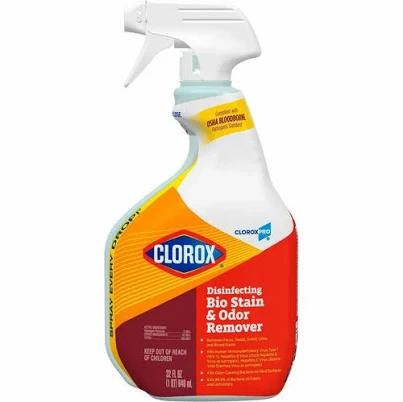
Clorox · Fabric Stain Guard Sprays
Clorox Disinfecting Bio Stain and Odor Remover
Liquid cleaner, lower PFAS concern than coatings or textiles.
Clorox disinfecting cleaner is a liquid enzymatic and surfactant formulation without known PFAS ingredients. Brand makes no PFAS claims; no third-party verification available.
We flunk more products than we pass. This one earned its grade. How we grade
Material
aqueous enzymatic and surfactant cleaner solution
Lab data
No public lab test
You may also be interested in
Top-graded picks in the categories readers replace first, every one scored on the same rubric.

- polypropylene filter housing, carbon/sediment cartridge
- We found no PFAS statement from the brand
- Bacterial growth in spent cartridges
3 hazards checked on this product, all on its full breakdown.

Aquasure
Premier Series 75 GPD Under Sink Reverse Osmosis Water Filtration System
- RO membrane, carbon filters, stainless steel housing
- We found no PFAS statement from the brand
- Bacterial and microbial growth in housing and filters
4 hazards checked on this product, all on its full breakdown.

Avocado
Vegan Mattress
- organic cotton, natural latex, coconut coir, recycled steel coils
- The brand calls it PFAS-free, which we have not verified
- Heavy metals
2 hazards checked on this product, all on its full breakdown.
What Clorox Disinfecting Bio Stain Odor Remover is made of, ingredients and materials
This product is an aqueous solution combining proteolytic enzymes (designed to break down protein-based stains) with surfactants and stabilizers. The enzyme approach targets biological matter (blood, grass, food) rather than relying on harsh oxidizers or caustics, which lowers acute toxicity risk. The surfactants enable soil suspension so stains lift from fibers; these are typically non-ionic or anionic types, both commonly used in laundry products with established safety profiles.
What’s concerning
Category baseline
The starting point for this type of product, before anything specific to this product is counted.
No PFAS disclosure
No public statement from the brand about PFAS in this product.
Eye and mucous membrane irritation
Surfactants in aqueous cleaners can cause irritation if splashed or aerosolized; Clorox product labels carry standard eye-contact warnings. Risk is manageable with normal precautions (gloves, ventilation, eye protection if needed).
Proteolytic enzyme sensitization (occupational/frequent exposure)
Protease enzymes have documented potential to cause respiratory or allergic sensitization in industrial workers with chronic inhalation; consumer use via laundry pre-treatment is low-dose and typically non-aerosolized, but sensitive individuals should avoid inhaling spray mist.
Preservative or fragrance allergen content
Aqueous cleaners require preservatives (commonly methylisothiazolinone or similar) and often contain fragrance; no specific allergen audit of this SKU is on public record, but such additives are standard. Check label for fragrance or biocide sensitivities before use.
Bacterial or mold growth in container
Enzyme-based aqueous solutions are nutrient-rich and can support microbial colonization if contaminated during use (e.g., wet applicator cap) or stored in warm, damp conditions. Clouding, odor change, or visible discoloration signals spoilage; discard and replace.
What’s reassuring
Base material not linked to PFAS
The main material recorded for this product is not one associated with PFAS.
Residual surfactant on fabric
No recalls or widespread reports of surfactant buildup or skin irritation from residues when the product is rinsed per instructions. Thorough rinsing and normal washing cycles remove solubilized compounds.
How is this PFAS grade calculated?
The brand's record and disclosure
Clorox maintains ingredient disclosure on product labels and safety data sheets but has historically not volunteered transparency on emerging contaminants (including PFAS in other product lines). This specific bio-cleaner carries no known EPA recalls or serious adverse event clusters in consumer databases. Clorox's overall safety stance is conventional regulatory compliance rather than proactive third-party certification or zero-chemical positioning.
How it compares in its category
Enzymatic stain removers occupy a lower-toxicity niche compared to chlorine bleach or oxygen-based pre-soaks. This product is gentler on skin and fabrics than alkali-heavy formulations, though less aggressive on set-in stains. Most enzyme cleaners in this segment share similar ingredient patterns (protease, amylase, sometimes lipase, plus standard surfactants), so competitive differentiation is mainly marketing and enzyme efficacy rather than safety profile.
If you buy it
Use as directed on label, pre-treat or soak stains, do not ingest, avoid contact with eyes. Store away from extreme heat (enzymes denature above ~50C/122F, reducing effectiveness); keep sealed to prevent bacterial contamination of the solution over time. The product shows lower hazard concern for most fabrics when used as instructed, but always spot-test on hidden areas first, especially delicate materials. Replace if the solution becomes cloudy or smells off, which indicates microbial growth or enzyme breakdown.
What is not known about PFAS in this product?
- Basis
- Model estimate, 72% confidence, not a lab result
- Lab test
- None on record for this exact product
- Brand statement
- Clorox has made a specific claim
Formulations change between production runs, so check the current label. How we grade.
More fabric stain guard sprays grades
How we score, every product runs through the same public 0-100 rubric based on materials, coatings, brand disclosure, lab findings, and recalls. See the full methodology → Spotted a mistake? Report an error.