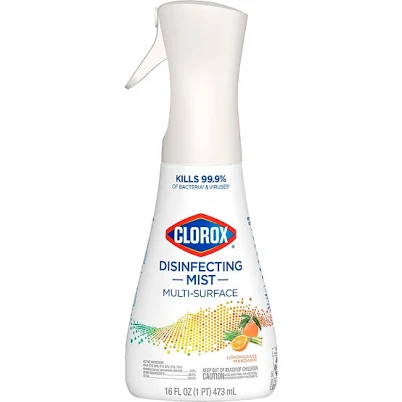
Clorox · Fabric Stain Guard Sprays
Clorox Eucalyptus Peppermint Disinfectant Liquid All-Purpose Cleaner
Standard liquid cleaner. Lower PFAS concern overall.
This liquid cleaner concentrate uses water-based chemistry without known PFAS-prone components like water-repellent coatings or fluorinated surfactants.
We flunk more products than we pass. This one earned its grade. How we grade
Material
Aqueous liquid cleaner concentrate
Lab data
No public lab test
You may also be interested in
Top-graded picks in the categories readers replace first, every one scored on the same rubric.

- polypropylene filter housing, carbon/sediment cartridge
- We found no PFAS statement from the brand
- Bacterial growth in spent cartridges
3 hazards checked on this product, all on its full breakdown.

Aquasure
Premier Series 75 GPD Under Sink Reverse Osmosis Water Filtration System
- RO membrane, carbon filters, stainless steel housing
- We found no PFAS statement from the brand
- Bacterial and microbial growth in housing and filters
4 hazards checked on this product, all on its full breakdown.

Avocado
Vegan Mattress
- organic cotton, natural latex, coconut coir, recycled steel coils
- The brand calls it PFAS-free, which we have not verified
- Heavy metals
2 hazards checked on this product, all on its full breakdown.
What Clorox Eucalyptus Peppermint Cleaner is made of, ingredients and materials
This is an aqueous (water-based) liquid concentrate containing surfactants, eucalyptus and peppermint essential oils or fragrance compounds, and likely sodium hypochlorite or other chlorine-releasing disinfectant agents. The aqueous base itself does not pose polymer leaching or microplastic risks common to solid cookware or textiles. However, the fragrance and disinfectant components require proper dilution and ventilation to minimize inhalation or skin contact hazards.
What’s concerning
Category baseline
The starting point for this type of product, before anything specific to this product is counted.
No PFAS disclosure
No public statement from the brand about PFAS in this product.
Fragrance allergens and respiratory irritants
Eucalyptus and peppermint essential oils or synthetic fragrance compounds can trigger contact dermatitis, asthma, or allergic rhinitis in sensitive individuals. No recall history on record for this formulation, but fragrance sensitivity is common and product labeling does not typically enumerate all fragrance components.
Sodium hypochlorite or chlorine-releasing agent corrosivity
Clorox disinfectants contain active chlorine agents that can cause skin burns, eye damage, or respiratory irritation if undiluted or used in poor ventilation. This is intrinsic to the disinfectant function and well-documented in product SDS; label warnings address this directly.
Fabric or fiber damage from bleach
Chlorine-based disinfectants can cause color loss, weakening, or yellowing of natural and synthetic fibers, especially if concentrated or used repeatedly without dilution. This is a functional risk rather than a toxicological hazard, but material degradation should be expected on some textiles.
Inhalation of disinfectant and fragrance vapors
Spray application or use in enclosed spaces without adequate air exchange can lead to acute or chronic inhalation exposure. Individuals with asthma, chronic obstructive pulmonary disease, or chemical sensitivity may experience bronchospasm or exacerbation; no product-specific epidemiologic data on record, but mechanism and risk are well-established for chlorine disinfectants.
Skin and eye contact hazard
Undiluted concentrate poses chemical burn risk to skin and eyes. Product SDS requires protective gloves and eye protection; users should follow label precautions strictly and rinse immediately if contact occurs.
What’s reassuring
Base material not linked to PFAS
The main material recorded for this product is not one associated with PFAS.
How is this PFAS grade calculated?
The brand's record and disclosure
Clorox publishes Safety Data Sheets (SDS) for this product and maintains a general transparency stance on ingredient disclosure. The company has not faced major recalls specific to this formulation. However, Clorox has faced criticism in past years over environmental claims and ingredient opacity; the brand's PFAS stance is noted as silent, meaning no proactive commitment to PFAS-free claims has been publicly documented. Standard SDS review is recommended before use.
How it compares in its category
Liquid all-purpose disinfectants with botanical fragrances are common market entries. This product's essential-oil-based scent may lower synthetic fragrance allergen concern relative to heavily perfumed competitors, though essential oils themselves can trigger contact dermatitis or respiratory sensitivity in susceptible users. Clorox-brand liquid cleaners are generally consistent with industry-standard formulations; no independent testing differentiates this variant significantly from unbranded or store-label equivalents in hazard profile.
If you buy it
Always dilute according to label instructions before use on fabric or upholstery; undiluted concentrates pose higher burn or irritation risk. Use in well-ventilated spaces and avoid inhalation of spray or vapors. Keep away from children and pets. Patch-test on hidden fabric areas first, as bleach-based disinfectants can cause color loss or fiber damage. Do not mix with ammonia or other cleaners, as this produces toxic chlorine gas.
What is not known about PFAS in this product?
- Basis
- Model estimate, 72% confidence, not a lab result
- Lab test
- None on record for this exact product
- Brand statement
- Clorox has made a specific claim
Formulations change between production runs, so check the current label. How we grade.
More fabric stain guard sprays grades
How we score, every product runs through the same public 0-100 rubric based on materials, coatings, brand disclosure, lab findings, and recalls. See the full methodology → Spotted a mistake? Report an error.