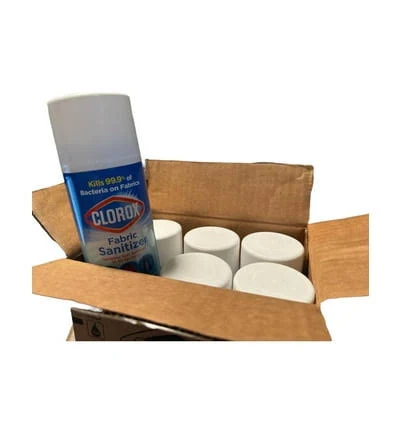
Clorox · Fabric Stain Guard Sprays
Clorox Fabric Sanitizer Lavender Scent 14 oz (Pack of 6)
Lower risk; liquid fabric sanitizer unlikely to contain PFAS, though Clorox provides no transparency.
Clorox Fabric Sanitizer uses quaternary ammonium and hypochlorite to disinfect, not surface coatings or textile treatments that typically require PFAS. Clorox offers no public PFAS disclosure.
We flunk more products than we pass. This one earned its grade. How we grade
Material
aqueous fabric sanitizer solution (quaternary ammonium compounds, hypochlorite, water, surfactants)
Lab data
No public lab test
You may also be interested in
Top-graded picks in the categories readers replace first, every one scored on the same rubric.

- polypropylene filter housing, carbon/sediment cartridge
- We found no PFAS statement from the brand
- Bacterial growth in spent cartridges
3 hazards checked on this product, all on its full breakdown.

Aquasure
Premier Series 75 GPD Under Sink Reverse Osmosis Water Filtration System
- RO membrane, carbon filters, stainless steel housing
- We found no PFAS statement from the brand
- Bacterial and microbial growth in housing and filters
4 hazards checked on this product, all on its full breakdown.

Avocado
Vegan Mattress
- organic cotton, natural latex, coconut coir, recycled steel coils
- The brand calls it PFAS-free, which we have not verified
- Heavy metals
2 hazards checked on this product, all on its full breakdown.
What Clorox Fabric Sanitizer Lavender Scent 6) is made of, ingredients and materials
Clorox Fabric Sanitizer is a water-based spray containing quaternary ammonium compounds (likely alkyl dimethyl benzyl ammonium saccharinate or similar) as the active antimicrobial agent, hypochlorite for sanitizing action, surfactants for spreading, and lavender fragrance. The formula is designed to kill bacteria and viruses on soft surfaces without requiring rinsing. Unlike bleach-based cleaners, the hypochlorite concentration in fabric sprays is lower and formulated to minimize fabric damage when used as directed.
What’s concerning
Category baseline
The starting point for this type of product, before anything specific to this product is counted.
No PFAS disclosure
No public statement from the brand about PFAS in this product.
Fragrance allergens
Lavender scent formulation may contain limonene, linalool, or other volatile fragrance compounds that can trigger contact dermatitis or respiratory irritation in sensitive individuals. Direct skin contact with undiluted spray should be avoided.
Fabric degradation and discoloration
Quaternary ammonium compounds and hypochlorite can weaken or bleach delicate fibers, natural dyes, or sensitive fabrics if applied in excess or not air-dried properly. Risk is use-dependent and increases with repeated application to the same fabric.
Eye and respiratory irritation
Aerosolized hypochlorite and quaternary ammonium compounds may irritate eyes, nose, or lungs if inhaled in enclosed spaces or sprayed near the face. Clorox labels recommend ventilation during use.
Aquatic toxicity from rinse-off
Hypochlorite and quaternary ammonium residues in wash water can be toxic to freshwater ecosystems if fabrics treated with this product are laundered and wastewater is released untreated. This is an environmental concern rather than a direct consumer safety issue but affects responsible disposal.
What’s reassuring
Base material not linked to PFAS
The main material recorded for this product is not one associated with PFAS.
Formaldehyde / VOCs
No formaldehyde-releasing preservatives are documented in Clorox Fabric Sanitizer's published ingredients. The product relies on hypochlorite's inherent antimicrobial action to prevent microbial growth in the bottle.
Source, ATSDR ↗How is this PFAS grade calculated?
The brand's record and disclosure
Clorox maintains product safety data sheets and has established a long track record with household disinfectants; the company is regulated by EPA as a sanitizer registrant and must meet strict antimicrobial efficacy and safety standards. Clorox does not publicly volunteer extended chemical disclosures beyond regulatory requirements, and provides no transparency statement on PFAS avoidance in this product line. No major recalls or safety warnings specific to Clorox Fabric Sanitizer are on record in public databases.
How it compares in its category
Fabric sanitizer sprays occupy a middle ground between general disinfectants and laundry treatments. This product is less aggressive than bleach-based fabric treatments but more chemically active than enzyme-based alternatives. Quaternary ammonium compounds are industry standard for fabric-safe antimicrobial action and carry a well-established safety history in household products. Comparable brands (Lysol, Febreze Antimicrobial) use similar active ingredients.
If you buy it
Spray lightly on fabrics until damp, not soaked; allow to air dry completely before contact with skin or pets. Test on hidden seams or inconspicuous areas first, especially on delicate, dyed, or vintage fabrics, as the solution may cause discoloration or weaken fibers over time. Store in a cool, dry place away from direct sunlight to prevent degradation of active ingredients. Replace when the spray mechanism fails or after 12 months of opening, even if product remains.
What is not known about PFAS in this product?
- Basis
- Model estimate, 72% confidence, not a lab result
- Lab test
- None on record for this exact product
- Brand statement
- Clorox has made a specific claim
Formulations change between production runs, so check the current label. How we grade.
More fabric stain guard sprays grades
How we score, every product runs through the same public 0-100 rubric based on materials, coatings, brand disclosure, lab findings, and recalls. See the full methodology → Spotted a mistake? Report an error.