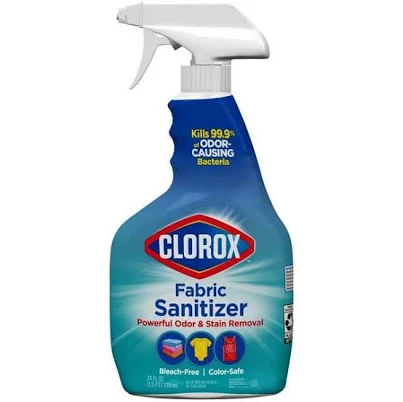
Clorox · Fabric Stain Guard Sprays
Clorox Fabric Sanitizer Trigger Spray Bottle Active Clean Clear 6 PK
Lower PFAS risk for the liquid; spray bottle plastic remains unspecified by brand.
Clorox Fabric Sanitizer is water-based disinfectant in plastic trigger bottles. Clorox does not disclose bottle material composition, though standard rigid plastics carry lower risk.
We flunk more products than we pass. This one earned its grade. How we grade
Material
Aqueous disinfectant solution in plastic trigger spray bottles
Lab data
No public lab test
You may also be interested in
Top-graded picks in the categories readers replace first, every one scored on the same rubric.

- polypropylene filter housing, carbon/sediment cartridge
- We found no PFAS statement from the brand
- Bacterial growth in spent cartridges
3 hazards checked on this product, all on its full breakdown.

Aquasure
Premier Series 75 GPD Under Sink Reverse Osmosis Water Filtration System
- RO membrane, carbon filters, stainless steel housing
- We found no PFAS statement from the brand
- Bacterial and microbial growth in housing and filters
4 hazards checked on this product, all on its full breakdown.

Avocado
Vegan Mattress
- organic cotton, natural latex, coconut coir, recycled steel coils
- The brand calls it PFAS-free, which we have not verified
- Heavy metals
2 hazards checked on this product, all on its full breakdown.
What Clorox Fabric Sanitizer Trigger Spray PK is made of, ingredients and materials
Clorox Fabric Sanitizer is an aqueous (water-based) disinfectant solution, typically containing sodium hypochlorite or quaternary ammonium compounds as active ingredients, packaged in a plastic trigger spray bottle. The liquid itself poses minimal leaching risk compared to food-contact containers because it is not stored long-term in contact with skin or ingested. The plastic bottle material (HDPE or similar) is the primary point of concern, though spray-bottle polymers rarely leach into a bleach solution that would be immediately applied to fabric rather than consumed.
What’s concerning
Category baseline
The starting point for this type of product, before anything specific to this product is counted.
No PFAS disclosure
No public statement from the brand about PFAS in this product.
Plastic bottle leachables (unspecified polymer composition)
Clorox does not publicly specify the plastic grade or whether water-repellent treatments (which may contain PFAS or other chemicals) are applied to the spray-bottle exterior or interior. Typical HDPE or polypropylene bottles in this category carry minimal risk, but transparency is absent.
Sodium hypochlorite or quaternary ammonium vapors
The active disinfectant ingredient can emit irritant fumes if applied in enclosed spaces or to large fabric areas without ventilation. This is a labeling hazard, not a product defect, but users should avoid inhalation exposure, especially for people with asthma or reactive airway disease.
Accidental skin or eye contact
Sodium hypochlorite (bleach-based formulations) or quats cause irritation or damage to skin and eyes; Clorox labels this clearly, but spray bottles increase risk of misdirection. Ensure children and pets do not access the bottle.
Fabric damage or discoloration
Bleach-based sanitizers can weaken or bleach delicate fabrics if applied undiluted or concentrated. This is a performance issue rather than a health hazard, but users should test on inconspicuous areas first.
Trigger bottle integrity over time
Plastic trigger mechanisms and nozzles degrade with repeated use or exposure to the chemical solution itself. Cracked or leaking bottles increase direct contact with the product and should be replaced to prevent spills or skin contact.
What’s reassuring
Base material not linked to PFAS
The main material recorded for this product is not one associated with PFAS.
How is this PFAS grade calculated?
The brand's record and disclosure
Clorox is a major disinfectant manufacturer with a long history of safety communication on product labels. The company does not publicly disclose PFAS content or water-repellent treatment of its spray-bottle plastics, which is typical for the cleaning-product industry but leaves bottle composition opaque. No major recalls or safety controversies specific to this fabric sanitizer product line are on record. Clorox has responded to PFAS inquiries from advocacy groups in limited fashion, indicating some awareness but no transparent commitment to PFAS elimination in packaging.
How it compares in its category
Fabric sanitizer sprays are a relatively low-hazard category because they are applied topically to textiles and rinsed or air-dried, not ingested or worn against skin for hours. Clorox's offering is broadly comparable to Lysol fabric sanitizer and store-brand equivalents in formulation risk. This product avoids some concerns of personal-care sprays (no fragrance allergens, no heavy-metal pigments) and food-contact containers (no BPA exposure). The main differentiator remains the unspecified plastic bottle composition and whether it receives water-repellent or stain-resistant treatment that might contain PFAS.
If you buy it
Follow label instructions, spray lightly on fabric, allow to air dry, do not saturate or use on delicate materials without testing first. Store the bottle upright in a cool, dry place away from sunlight to prevent plastic degradation and any potential leaching into the solution. Do not use on skin, eyes, or in confined spaces without ventilation due to sodium hypochlorite or quat fumes. Replace the bottle if the trigger or nozzle becomes cracked or degraded, as this increases plastic-solution contact.
What is not known about PFAS in this product?
- Basis
- Model estimate, 72% confidence, not a lab result
- Lab test
- None on record for this exact product
- Brand statement
- Clorox has made a specific claim
Formulations change between production runs, so check the current label. How we grade.
More fabric stain guard sprays grades
How we score, every product runs through the same public 0-100 rubric based on materials, coatings, brand disclosure, lab findings, and recalls. See the full methodology → Spotted a mistake? Report an error.