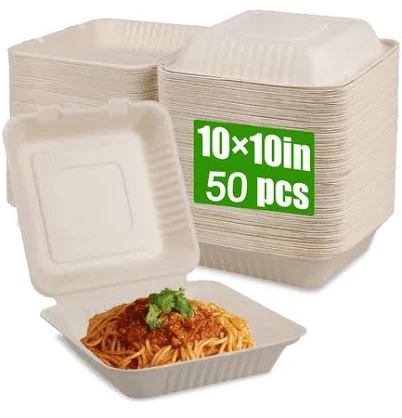
50 Pack Compostable Clamshell To Go Food Containers with lids, 10 inchx10 inchx3 inch Disposable Take Out Food Container
Lower concern. Plant-fiber material not linked to PFAS, no coating on record.
This clamshell is molded from plant-based fiber. No water-repellent or grease-resistant finish is recorded, and the base material is not associated with PFAS. The brand has no PFAS statement on record.
We flunk more products than we pass. This one earned its grade. How we grade
Material
plant-based fiber/pulp clamshell
Brand disclosure
Brand is silent on PFAS
Lab data
No public lab test
What 50 Pack Compostable Clamshell To Go Food is made of, ingredients and materials
This product is a molded plant-based fiber (pulp) clamshell, typically made from sugarcane bagasse, recycled paper, or similar cellulose sources. Unlike polystyrene foam or polypropylene containers, plant-fiber shells do not leach styrene or plastic polymers into food. The pulp is formed under heat and pressure, then often treated with a water-resistant coating to prevent grease penetration during use. Because the base material is cellulose rather than synthetic polymer, classical plastic migration risks (BPA, phthalates) are eliminated by design.
What’s concerning
Category baseline
The starting point for this type of product, before anything specific to this product is counted.
No PFAS disclosure
No public statement from the brand about PFAS in this product.
Coating composition / food-contact substance safety
Plant-fiber clamshells typically use polymer or wax-based coatings for water and grease resistance. Brand does not publicly disclose coating chemistry. If coating includes urea-formaldehyde or other adhesives, migration is theoretically possible at elevated temperatures, though no incidents are documented for this brand.
Mold and bacterial growth
Cellulose-based materials absorb moisture. If containers are stored damp or in humid conditions before use, mold or bacterial biofilm can develop on interior surfaces. This is a storage and handling issue rather than a manufacturing defect. Inspect containers before filling with food.
PFAS
Plant-fiber clamshells marketed as 'compostable' and without explicit grease-barrier claims are less likely to contain aqueous film-forming foams (AFFF) or fluorinated polymers than polystyrene or coated paper containers. However, coating chemistry is not disclosed by the brand, so PFAS presence cannot be ruled out. Lower likelihood compared to plastic alternatives.
Source, ATSDR ↗What’s reassuring
Base material not linked to PFAS
The main material recorded for this product is not one associated with PFAS.
Microplastic or pulp particle shedding
Plant-fiber containers are less prone to microplastic shedding than plastic polymers. However, mechanical damage, grinding, or extended moisture exposure can cause small pulp fibers to shed into food. No reported cases for brand; risk is low under normal single-use conditions.
Heavy metals
Plant-fiber pulping and bleaching can theoretically introduce trace chlorine or heavy metal residues if uncontrolled. No testing or incidents are on record for brand. Regulatory compliance with FDA food-contact substance rules is assumed but not independently verified by third parties.
Source, FDA ↗The full breakdown
The brand's record and disclosure
Brand does not publish detailed material sourcing or third-party testing certifications on publicly available channels. No recalls, safety warnings, or documented contamination incidents are on record for this brand or product line. The brand claims compostability but has not made transparent claims about coating composition or PFAS testing. Absence of disclosure does not indicate a safety failure, only a lack of proactive transparency common in the disposable foodware market.
How it compares in its category
Plant-fiber clamshells occupy a middle ground between single-use plastic (polystyrene, polypropylene) and glass or ceramic reusables. Compared to polystyrene foam containers, they eliminate styrene off-gassing and microplastic shedding. Compared to reusables, they avoid repeated washing and chemical degradation but generate waste. Within the disposable plant-fiber category, this product is typical; competitors (Footprint, Vegware, local suppliers) share similar material profiles and lack comprehensive PFAS or contaminant testing disclosure.
If you buy it
Plant-fiber clamshells are designed for room-temperature to warm foods (up to approximately 160-180 degrees Fahrenheit); do not use in microwave or oven at high heat, as the coating may degrade and pulp structure can soften. Store in a dry location; moisture can weaken the shell and promote mold growth if stacked damp. Discard after single use as intended; do not reuse for hot foods. Compost or recycle according to local facilities; verify your area accepts compostable foodware, as some facilities reject them.
What we don’t know
- Basis
- Model estimate, 72% confidence, not a lab result
- Lab test
- None on record for this exact product
- Brand statement
- has made none
Formulations change between production runs, so check the current label. How we grade.
Better-graded alternatives in Disposable Food Containers
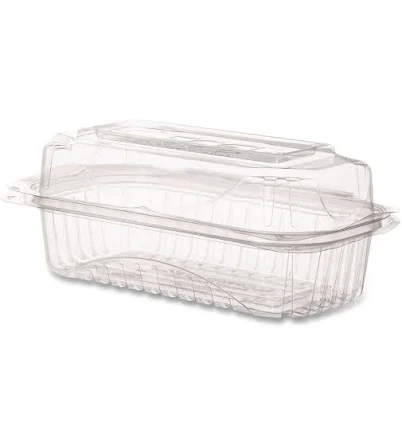
Eco-Products
Compostable Clear Clamshell Hinged Food
- Compostable resin (PLA/PBAT blend, plant-based)
- A third party reports verifying it as PFAS-free
- Thermal degradation and chemical release at use temperatures
More disposable food containers grades
How we score, every product runs through the same public 0-100 rubric based on materials, coatings, brand disclosure, lab findings, and recalls. See the full methodology → Spotted a mistake? Report an error.