Solo · Disposable Food Containers
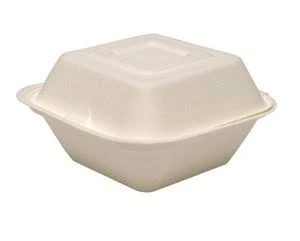
6" Solo Bare Sugarcane Biodegradable Take Out Container Hinged Clamshell, Compostable, Ivory
Lower risk because bare plant fiber avoids PFAS coatings.
Solo's sugarcane clamshell is uncoated plant fiber with no known grease-resistant treatment. No PFAS disclosures exist, but the bare material carries lower risk than Teflon-family coating-coated packaging.
We flunk more products than we pass. This one earned its grade. How we grade
Material
Sugarcane-based bagasse (fiber pulp)
Brand disclosure
Brand is silent on PFAS
Lab data
No public lab test
What 6" Solo Bare Sugarcane Biodegradable Take is made of, ingredients and materials
This container is molded from bagasse, the fibrous residue left after sugarcane juice extraction. Unlike plastic clamshells, bagasse is a plant-based cellulose pulp with no synthetic polymer matrix, which eliminates BPA, BPS, and phthalate leaching pathways. The 'bare' designation confirms no plastic lining or chemical coating is applied to the interior food-contact surface, reducing chemical migration risk during storage and heating of typical take-out foods.
What’s concerning
Category baseline
The starting point for this type of product, before anything specific to this product is counted.
No PFAS disclosure
No public statement from the brand about PFAS in this product.
Mold and microbial growth during storage
Bagasse fiber is hygroscopic and biodegradable; if stored in humid conditions before use or after food contact in warm environments, mold colonization is possible. This is a hygiene concern, not a direct chemical hazard.
Fiber fragmentation and ingestion
Over time or under thermal stress, molded bagasse can degrade and shed small fiber particles into food. While unlikely to cause acute harm, this is a physical contaminant concern rather than chemical toxicity.
What’s reassuring
Base material not linked to PFAS
The main material recorded for this product is not one associated with PFAS.
Residual agricultural chemicals in bagasse
Bagasse is an agricultural byproduct and may theoretically retain pesticide residues or processing chemicals; no documented testing or recalls for Solo bagasse containers establish this as a concern in food-contact use.
Bleach residues or processing byproducts
Bagasse pulp may be whitened or processed with chlorine bleach or other agents during molding; Solo does not disclose processing chemistry, and no testing results are publicly available for residual bleach or its byproducts in this product.
Formaldehyde / VOCs
Molded bagasse typically uses minimal adhesives, but some commercial processes employ formaldehyde-based resins to improve moisture resistance. Solo's manufacturing process is not disclosed; no independent testing confirms formaldehyde presence or absence in this line.
Source, ATSDR ↗The full breakdown
The brand's record and disclosure
Solo (a Dart Container subsidiary) does not publish detailed chemical composition or third-party certification for this bagasse line on consumer-facing channels. The product carries compostability certifications (typically ASTM D6868 or similar), which verify breakdown in industrial composting but do not constitute safety testing for food contact. No recalls or adverse event reports specific to this product are documented in public databases.
How it compares in its category
Bagasse containers occupy a lower-hazard tier than polystyrene foam or polypropylene clamshells because they lack synthetic coatings and dyes. They are functionally equivalent to unbleached paper or molded fiber alternatives; the trade-off is lower moisture barrier (increases food degradation, not chemical leaching). Compared to PLA bioplastic containers, bagasse avoids the risk of BPA additives in bioresins, though both lack long-term human safety data.
If you buy it
Use as intended for room-temperature or warm foods (under 140 degrees F typical temperature limit for bagasse; check product label). Avoid prolonged storage of acidic, fatty, or hot foods, which can accelerate fiber breakdown and surface erosion. These containers are single-use; do not reuse for storage. Compost in certified facilities; standard curbside bins may not reach required temperatures for complete breakdown.
What we don’t know
- Basis
- Model estimate, 78% confidence, not a lab result
- Lab test
- None on record for this exact product
- Brand statement
- Solo has made none
Formulations change between production runs, so check the current label. How we grade.
Better-graded alternatives in Disposable Food Containers
Eco-Products
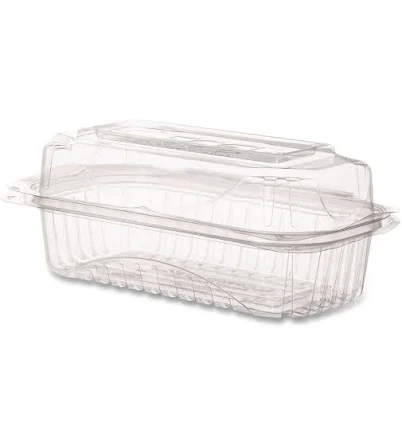
Compostable Clear Clamshell Hinged Food
- Compostable resin (PLA/PBAT blend, plant-based)
- A third party reports verifying it as PFAS-free
- Thermal degradation and chemical release at use temperatures
More disposable food containers grades
How we score, every product runs through the same public 0-100 rubric based on materials, coatings, brand disclosure, lab findings, and recalls. See the full methodology → Spotted a mistake? Report an error.