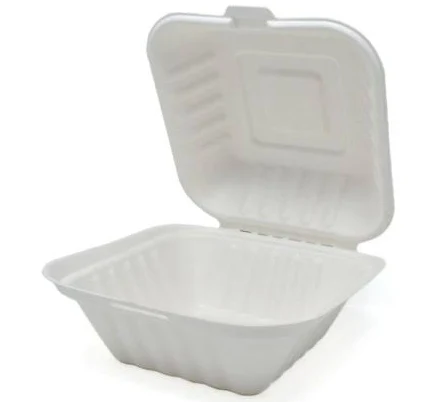
Sugarcane Clamshell Takeout Container
Lower concern. Sugarcane pulp with no coating on record.
This clamshell is molded from sugarcane pulp fiber with no coating specified. Sugarcane pulp is not a material linked to PFAS. The brand has no PFAS statement on record.
We flunk more products than we pass. This one earned its grade. How we grade
Material
Sugarcane pulp fiber (bagasse), molded, no coating specified
Brand disclosure
Brand is silent on PFAS
Lab data
No public lab test
What Sugarcane Clamshell Takeout Container is made of, ingredients and materials
Sugarcane bagasse is the fibrous pulp left after juice extraction, molded into food containers without added plastic resin or chemical binders. This material is inherently free of BPA, BPS, and phthalates because it contains no synthetic polymers. The key safety advantage is that uncoated molded-fiber containers do not require fluorinated water-repellent coatings (PFAS) to function, unlike some competitor products in the same category.
What’s concerning
Category baseline
The starting point for this type of product, before anything specific to this product is counted.
No PFAS disclosure
No public statement from the brand about PFAS in this product.
Microplastics
Molded bagasse fibers can fragment during use, especially if container degrades or is damaged. While these are cellulose-based (not synthetic plastic), ingestion of loose fibers is undesirable; risk increases if container is reused beyond its intended lifespan.
Source, EPA ↗Mold and bacterial growth
Uncoated sugarcane pulp is hygroscopic and absorbs moisture readily. If stored in humid conditions or not dried after washing, it can develop mold colonies or harbor pathogens; this is a use/storage risk rather than a manufacturing defect.
Thermal degradation and food contact at elevated temperature
Uncoated bagasse may release volatile organic compounds (VOCs) or woody flavors if exposed to temperatures above 180 F for extended periods; this is primarily a food quality issue rather than a toxicological one, but warrants care with hot-fill or steam applications.
What’s reassuring
Base material not linked to PFAS
The main material recorded for this product is not one associated with PFAS.
Ink or printing contaminants
No recalls or safety alerts are on record for clamshells related to food-contact inks. However, if the product features printed branding on interior surfaces, standard food-grade ink regulations apply; confirm product labeling specifies compliance with FDA food-contact rules.
Pesticide residue
Sugarcane is a heavily sprayed crop in many growing regions. Molded-fiber processing does not remove agrochemical residues, but no documented contamination events are known for products. Industry standard assumes bagasse suppliers follow commodity pesticide limits.
Source, EPA ↗The full breakdown
The brand's record and disclosure
The brand maintains minimal public disclosures on food-contact material safety testing or certifications; no known safety recalls or contamination incidents are recorded for this product line. The brand does not prominently advertise chemical-free or toxicity testing claims, which is typical for smaller compostable-packaging manufacturers. Absence of disclosure does not indicate hazard, but limits independent verification of processing controls.
How it compares in its category
Sugarcane clamshells occupy a middle ground, molded fiber containers have lower concern for oligomer leaching under heat compared to polystyrene foam or PET plastic clamshells, though rigid polypropylene alternatives have more testing data available. Uncoated bagasse avoids PFAS entirely, whereas many compostable or 'eco' clamshells use coatings that may contain legacy PFAS residues or replacements. The trade-off is that molded fiber is more fragile and absorbent, which some manufacturers compensate for with coatings, always check if yours is coated.
If you buy it
Keep containers below 180 F (82 C) for prolonged contact with fatty or acidic foods; bagasse softens and can shed fiber fragments under sustained heat. Do not microwave unless the package explicitly states microwave-safe; uncoated fiber can char. Replace if you notice visible breakdown, mold spots, or persistent odors, sugarcane fiber absorbs moisture and can support microbial growth in humid storage. Compost rather than landfill to realize the environmental benefit.
What we don’t know
- Basis
- Model estimate, 75% confidence, not a lab result
- Lab test
- None on record for this exact product
- Brand statement
- has made none
Formulations change between production runs, so check the current label. How we grade.
Better-graded alternatives in Disposable Food Containers
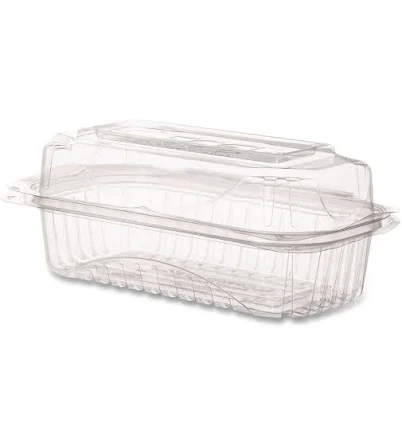
Eco-Products
Compostable Clear Clamshell Hinged Food
- Compostable resin (PLA/PBAT blend, plant-based)
- A third party reports verifying it as PFAS-free
- Thermal degradation and chemical release at use temperatures
More disposable food containers grades
How we score, every product runs through the same public 0-100 rubric based on materials, coatings, brand disclosure, lab findings, and recalls. See the full methodology → Spotted a mistake? Report an error.