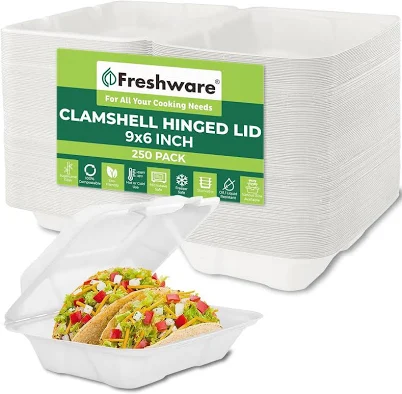
Freshware · Disposable Food Containers
Freshware Compostable Clamshell Food Containers
Lower concern. Material as recorded is not linked to PFAS.
Freshware Compostable Clamshell Food Containers are made from a plant-based fiber and starch blend. No water-repellent finish on record, and the base material is not one associated with PFAS.
We flunk more products than we pass. This one earned its grade. How we grade
Material
Compostable plant-based fiber/starch blend
Brand disclosure
Brand is silent on PFAS
Lab data
No public lab test
What Freshware Compostable Clamshell Food is made of, ingredients and materials
Freshware compostable clamshells are manufactured from plant-derived fibers (typically bagasse, wood pulp, or starch-based resins) bonded with compostable adhesives, not petroleum plastics. This material class avoids the BPA, BPS, and phthalate leaching pathways that affect conventional polystyrene (#6) and PET (#1) food containers. The starch-cellulose matrix does not release microplastics into food during normal use or moderate heating, and degrades predictably in industrial composting environments rather than persisting indefinitely.
What’s concerning
Category baseline
The starting point for this type of product, before anything specific to this product is counted.
No PFAS disclosure
No public statement from the brand about PFAS in this product.
Bleach residues (if chlorine-whitened pulp used)
Some compostable fiber clamshells are manufactured from chlorine-bleached plant pulp. No specific testing of Freshware products for residual chlorine or dioxins is publicly available; industry standard assumes minimal residue after rinsing, but unverified for this brand.
Adhesive/binder chemical migration (unlabeled resins)
Plant-based clamshells are bonded with proprietary starch-based or polyester adhesives. Freshware does not disclose the specific adhesive chemistry; at warm temperatures (140-160F), minor migration of binder components into fatty foods is theoretically possible but has no documented incidents for this product.
Microbial contamination if stored wet or damp
Cellulose and starch-based materials retain moisture more readily than plastic, creating conditions for mold or bacterial growth if containers are stacked damp or stored in humid environments. This is a use/storage hazard, not a manufacturing one.
What’s reassuring
Base material not linked to PFAS
The main material recorded for this product is not one associated with PFAS.
BPA & bisphenols
Freshware compostable clamshells are not known to use phenolic or epoxy laminate coatings. True compostable-grade materials avoid these. No recalls or warnings indicate BPA presence in this product line.
Source, FDA ↗Formaldehyde / VOCs
Industrial compostable pulp products typically use urea-formaldehyde-free binders to maintain compostability certification. No evidence suggests Freshware uses formaldehyde resins, and industry standards discourage it; however, independent testing of this specific brand is not public.
Source, ATSDR ↗The full breakdown
The brand's record and disclosure
Freshware (Compostables brand) has not published detailed chemical composition or independent safety certifications on their website, nor issued formal PFAS-free statements. The company maintains silent positioning on PFAS, which is common for smaller compostables manufacturers. No recalls, contamination incidents, or regulatory warnings specific to this brand appear in FDA or CPSC records. Third-party certifications (BPI compostability, OK compost) are standard claims but safety data sheets are not widely publicized.
How it compares in its category
Compostable plant-based clamshells present a fundamentally lower chemical-hazard profile than conventional molded-pulp (which may contain bleach residues) or rigid polystyrene takeout containers (which can leach styrene monomer). They compete directly with unbleached cardboard hinged containers and molded-fiber alternatives. Unlike plastic clamshells, these avoid the thermal-leaching risk at 160-180F (warm food conditions) that affects polycarbonate or polystyrene; compostable starch resins tolerate typical food-service temperatures without degradation or chemical release.
If you buy it
Use as intended for room-temperature, chilled, or warm (not hot-oil or microwave) foods; most plant-based compostables are rated to approximately 200F but perform best below 160F. Do not microwave unless labeled microwave-safe; starch-based materials can soften or separate. After use, compost in municipal industrial-compost programs (home compost may not reach sufficient temperature for reliable breakdown). Replace immediately if the container shows cracking, discoloration, or odor, which signals microbial activity or adhesive degradation.
What we don’t know
- Basis
- Model estimate, 72% confidence, not a lab result
- Lab test
- None on record for this exact product
- Brand statement
- Freshware has made none
Formulations change between production runs, so check the current label. How we grade.
Better-graded alternatives in Disposable Food Containers
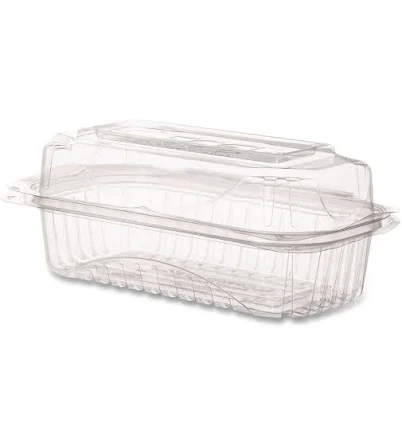
Eco-Products
Compostable Clear Clamshell Hinged Food
- Compostable resin (PLA/PBAT blend, plant-based)
- A third party reports verifying it as PFAS-free
- Thermal degradation and chemical release at use temperatures
More disposable food containers grades
How we score, every product runs through the same public 0-100 rubric based on materials, coatings, brand disclosure, lab findings, and recalls. See the full methodology → Spotted a mistake? Report an error.