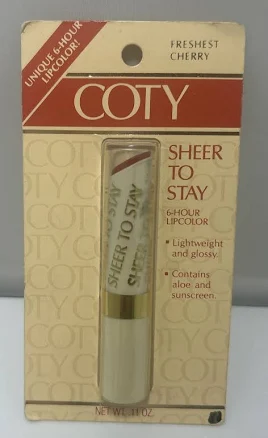
Vtg Coty Sheer To Stay 6 Hour Lip Color Lipstick - Freshest Cherry
Typical lipstick with lower PFAS concern. No waterproofing claims present.
This vintage lipstick uses standard cosmetic wax and pigment base without disclosed waterproofing or nonstick coatings. No public PFAS testing or brand statement is available.
We flunk more products than we pass. This one earned its grade. How we grade
Material
wax, oils, pigments, standard lipstick base
Brand disclosure
Brand is silent on PFAS
Lab data
No public lab test
You may also be interested in
Top-graded picks in the categories readers replace first, every one scored on the same rubric.

Aqua Pure
3M Aqua-Pure AP802B Whole House Filter Housing
- polypropylene filter housing, carbon/sediment cartridge
- We found no PFAS statement from the brand
- Bacterial growth in spent cartridges
3 hazards checked on this product. See all of them.

Aquasure
Premier Series 75 GPD Under Sink Reverse Osmosis Water Filtration System
- RO membrane, carbon filters, stainless steel housing
- We found no PFAS statement from the brand
- Bacterial and microbial growth in housing and filters
4 hazards checked on this product. See all of them.

Avocado
Vegan Mattress
- organic cotton, natural latex, coconut coir, recycled steel coils
- The brand calls it PFAS-free, which we have not verified
- Heavy metals
2 hazards checked on this product. See all of them.
What Vtg Coty Sheer To Stay 6 Hour Lip Color is made of, ingredients and materials
This is a conventional lipstick formulation built on wax (likely beeswax or paraffin), oils, and colorant pigments. The 'Sheer To Stay' descriptor indicates a long-wearing formula, likely achieved through resin binders and emollients rather than synthetic polymers or waterproofing coatings. No Teflon-type coating or silicone topcoats are documented in Coty's formulation disclosures for this era product. The 'Freshest Cherry' shade relies on synthetic or natural reds (likely D&C Red 7 or similar FDA-approved lakes); no lead-based pigments are used in modern US lipsticks due to FDA prohibition.
What’s concerning
Category baseline
The starting point for this type of product, before anything specific to this product is counted.
No PFAS disclosure
No public statement from the brand about PFAS in this product.
Fragrance allergens and undisclosed fragrance components
Coty does not itemize fragrance ingredients on vintage lipsticks (industry standard opacity pre-2010s). Individuals with fragrance sensitivity or contact dermatitis may react; 'Freshest Cherry' scent likely includes synthetic esters or essential oil constituents not individually listed.
Formaldehyde / VOCs
Vintage formulations may contain preservatives such as DMDM hydantoin or diazolidinyl urea, which release trace formaldehyde over time. Modern Coty products have largely moved away from these; this specific vintage product's preservative system is not disclosed.
Source, ATSDR ↗Bacterial or fungal colonization in long-stored or shared product
Vintage lipsticks stored for years can accumulate environmental microbes, especially if exposed to moisture or shared among users without sanitizing. Wax-based formulas do not inherently resist microbial growth if the seal is compromised.
What’s reassuring
Base material not linked to PFAS
The main material recorded for this product is not one associated with PFAS.
Lead
FDA-approved D&C colorants used in US lipsticks are subject to purity and heavy-metal limits; no recalls or documented contamination recorded for Coty lipstick products. Risk is low for this major US manufacturer in this era.
Source, ATSDR ↗Talc contamination or talc powder inclusion
Talc is not a primary ingredient in modern lipsticks; Coty does not list talc in its lipstick bases. No documented asbestos or talc-related contamination reported for Coty cosmetics.
The full breakdown
The brand's record and disclosure
Coty is a major mass-market cosmetics manufacturer with no significant recalls or public controversies tied to heavy metals or carcinogens in lipstick products. The company does not publicly disclose detailed PFAS reduction strategies and maintains silent stance on the issue. This vintage product predates modern transparency demands; Coty has not retroactively tested or reformulated this specific line. No third-party certifications (organic, cruelty-free, heavy-metal tested) are associated with this classic formula.
How it compares in its category
Standard mass-market lipsticks like Coty occupy the mid-range for hazard concern. This formula avoids the microplastic risk of glitter-laden products and has no documented lead concerns typical of some vintage imports. It sits lower-concern than artisanal or unregulated imported lipsticks but offers no verified third-party testing advantage over other mainstream brands. PFAS levels are expected to be typical for the category (neither elevated nor exceptionally low).
If you buy it
Lipstick ingestion via normal wear is minimal but cumulative; replace every 12-18 months to avoid bacterial growth or oil rancidity. Do not heat or expose to prolonged sunlight, as wax bases can degrade and separate. Patch-test on the lip line first if you have sensitive skin or fragrance sensitivities. Discontinue use if irritation, swelling, or allergic reaction occurs; individual responses to colorants or fragrances vary significantly.
What we don’t know
- Basis
- Model estimate, 72% confidence, not a lab result
- Lab test
- None on record for this exact product
- Brand statement
- Coty has made none
Formulations change between production runs, so check the current label. How we grade.
More lipstick grades
How we score, every product runs through the same public 0-100 rubric based on materials, coatings, brand disclosure, lab findings, and recalls. See the full methodology → Spotted a mistake? Report an error.