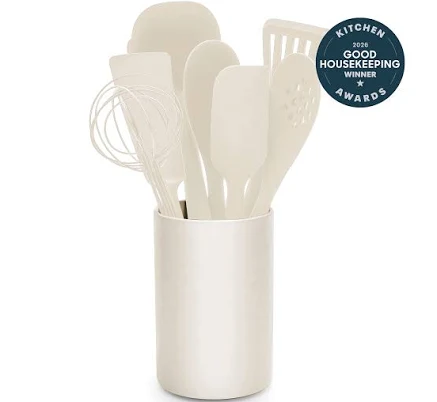
GreenPan · Non-Stick Kitchen Gadgets
Greenpan Premiere Silicone Tools
No coating of concern recorded, and no PFAS statement from the brand.
The brand has published no PFAS statement for this product that we could find.
The better-graded swap
Our Place
Our Place Essential Utensil Set
90/100 safety
Same rubric that flunked this product. The swap earned Excellent.
Still want this one anyway? Check the price on Amazon. We’d swap it.
Material
silicone kitchen tools
Lab data
No public lab test
Are Greenpan Premiere Silicone Tools non-toxic? What it is made of
GreenPan Premiere Silicone Tools are molded food-grade silicone, not coated metal or ceramic. Silicone is a synthetic polymer (Si-O backbone) that does not rely on non-stick coatings like Teflon-type coating or ceramic layers prone to degradation. The absence of a surface coating means no flaking hazard or fume risk from high-heat breakdown. Silicone itself is chemically inert across typical kitchen temperatures and does not leach monomers or plasticizers under normal use.
What’s concerning
No PFAS disclosure
No public statement from the brand about PFAS in this product.
Category baseline
The starting point for this type of product, before anything specific to this product is counted.
Silicone monomer/oligomer leaching
Food-grade silicone is generally low-migration, but uncrosslinked oligomers or residual curing agents may leach in small amounts at high heat or prolonged contact with fatty foods. No specific migration data for this product is publicly available.
Thermal degradation and off-gassing
Sustained use above recommended temperature limits can cause silicone polymer chains to break down, potentially releasing volatile organic compounds. GreenPan has not published maximum-use temperature limits for these tools.
Mold or bacterial growth in cracks or crevices
Silicone tools with textured or joined areas can trap moisture if not dried thoroughly. This is a hygiene concern rather than a chemical hazard, but is relevant to product longevity and food contact safety.
What’s reassuring
Base material not linked to PFAS
The main material recorded for this product is not one associated with PFAS.
Heavy metals
GreenPan Premiere tools appear to be standard food-grade silicone without declared dyes or pigments. No record of heavy-metal contamination in silicone colorants for this brand's kitchen tools.
Source, FDA ↗Teflon-type coating or ceramic coating (not applicable)
These are solid silicone tools, not cookware with applied non-stick coatings. No Teflon-type coating fume risk or ceramic flaking hazard is relevant to this product category.
The full breakdown
The brand's record and disclosure
GreenPan markets itself as a health-conscious cookware brand and has published PFAS commitments for some product lines, but has made no specific public statement about silicone tools or their material sourcing. The brand does not list third-party certifications (such as FDA food-contact compliance or migration testing) on the product marketing publicly available. No recalls or safety violations specific to these silicone tools are on record. Transparency on silicone curing agents or vulcanization methods is not disclosed.
How it compares in its category
Silicone kitchen tools (spatulas, whisks, tongs) avoid the primary hazards that affect traditional non-stick cookware, Teflon-type coating fume risk and ceramic-coating flaking. Compared to rubber or wooden alternatives, silicone resists bacterial colonization and does not absorb flavors or odors. Metal utensils pose a scratch risk to cookware surfaces but offer no inherent chemical safety advantage. Silicone tools are broadly mid-tier in terms of material hazard profile within kitchen gadgets.
If you buy it
Keep silicone tools away from direct flame and extremely high sustained heat above 400-450F to avoid gradual polymer degradation and possible off-gassing of residual oligomers. Hand-wash or use low heat on dishwasher cycles; high dishwasher temperatures may accelerate aging. Inspect for visible cracks, discoloration, or tacky residue annually; discard if surface integrity is compromised. Do not use with oil-based marinades or solvents for extended periods, as silicone can absorb some compounds.
What we don’t know
- Basis
- Model estimate, 78% confidence, not a lab result
- Lab test
- None on record for this exact product
- Brand statement
- GreenPan has made a specific claim
Formulations change between production runs, so check the current label. How we grade.
Better-graded alternatives in Non-Stick Kitchen Gadgets
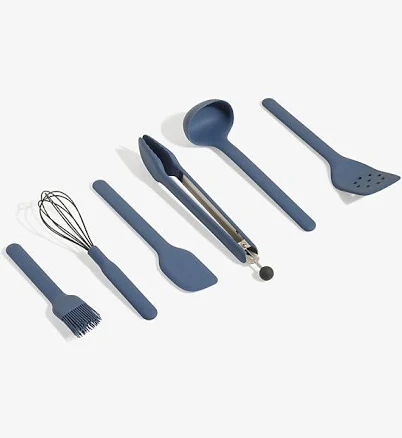
Our Place
Utensil Essentials 6-Piece Silicone Utensil Set
- Silicone utensils, no coating
- The brand calls it PFAS-free, which we have not verified
- Microplastic generation
2 hazards checked on this product. See all of them.
Our Place
Essential Utensil Set
- Stainless steel utensils
- The brand calls it PFAS-free, which we have not verified
- Nickel leaching from stainless steel
2 hazards checked on this product. See all of them.
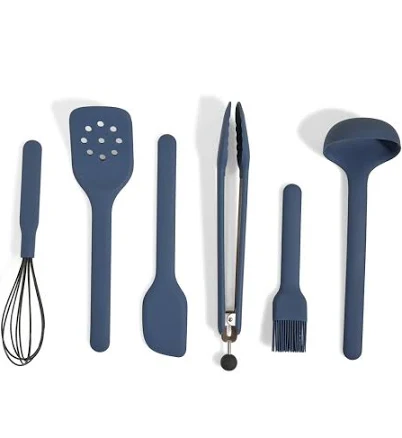
Our Place
Utensil Essentials Set
- Stainless steel utensils, material unclear
- The brand calls it PFAS-free, which we have not verified
- Handle material degradation (if present)
2 hazards checked on this product. See all of them.
More non-stick kitchen gadgets grades
How we score, every product runs through the same public 0-100 rubric based on materials, coatings, brand disclosure, lab findings, and recalls. See the full methodology → Spotted a mistake? Report an error.