Cuisinart · Non-Stick Kitchen Gadgets
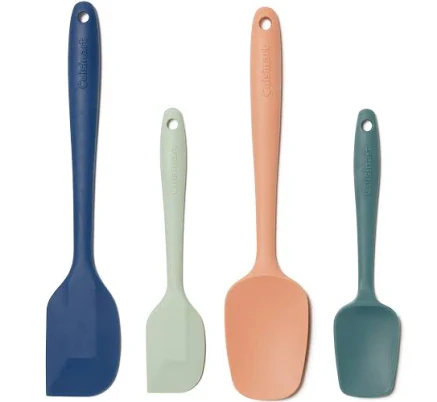
Cuisinart High Heat Resistant Spatulas (Set of 4)
Silicone with no coating described, and no PFAS statement from the brand.
The product information we reviewed describes silicone or nylon spatulas, with no applied coating named. Silicone releases food on its own, so a non-stick claim on a silicone product describes the material rather than a coating. The brand has published no PFAS statement for it.
The better-graded swap
Our Place
Our Place Essential Utensil Set
90/100 safety
Same rubric that flunked this product. The swap earned Excellent.
Still want this one anyway? Check the price on Amazon. We’d swap it.
Material
Silicone or nylon spatulas
Lab data
No public lab test
Is Cuisinart High Heat Resistant Spatulas non-toxic? What it is made of
These Cuisinart spatulas are silicone or nylon implements without a non-stick coating layer, meaning they lack the Teflon-type coating (Teflon) fume risk that coated metal or ceramic cookware carries. Silicone itself is a synthetic polymer with high heat stability and low leaching risk under normal kitchen use. Nylon variants have similar safety profiles but may degrade faster at sustained high temperatures, which is why the product specifies heat resistance, likely silicone dominates this line.
What’s concerning
Category baseline
The starting point for this type of product, before anything specific to this product is counted.
No PFAS disclosure
No public statement from the brand about PFAS in this product.
Silicone leaching or off-gassing
Food-grade silicone is generally recognized as low concern for food contact, but cheaper or improperly formulated silicone can leach trace organics, especially if exposed to prolonged high heat or acidic foods. At normal kitchen temperatures and durations, risk is minimal; boiling water or oil contact should not trigger significant leaching.
Microplastics
If nylon variants are included in this set, mechanical stress and heat can cause the material to shed microscopic fibers into food over time. This risk increases with worn surfaces or use above recommended heat limits. Silicone spatulas do not shed microplastics to the same degree.
Source, EPA ↗Heat degradation and particulate shedding
Silicone exposed to sustained temperatures beyond its rated limit can discolor, become sticky, or shed particles. Cuisinart's emphasis on heat resistance suggests the product is formulated to tolerate typical stovetop use, but overheating will accelerate breakdown. Visual inspection for cracks or stickiness is the primary user-level check.
Bacterial growth in crevices
Any textured or multi-piece spatula handle design can trap moisture and harbor bacteria if not dried thoroughly after washing. This is a hygiene concern rather than a chemical one, but silicone seams are common points of contamination. Ensure complete drying before storage.
What’s reassuring
Base material not linked to PFAS
The main material recorded for this product is not one associated with PFAS.
Teflon-type coating/Teflon fume risk
Silicone spatulas do not use Teflon-type coating non-stick coatings, eliminating the overheating fume hazard associated with traditional non-stick cookware. No fume risk is present with this material.
The full breakdown
The brand's record and disclosure
Cuisinart does not publish explicit PFAS or chemical transparency statements for this product line, which is typical for kitchen gadget manufacturers. The brand has no major safety recalls or chemical contamination incidents on record for spatula products. Absence of disclosure is not a red flag for silicone kitchen tools, as the material class itself carries minimal chemical regulatory concern compared to non-stick cookware.
How it compares in its category
Silicone spatulas show lower concern in the kitchen gadget category compared to metal or nylon blends that may shed particles or leach trace metals under stress. They compare favorably to bamboo or wood alternatives, which can harbor bacteria if not dried properly, and they avoid the edge-case concerns of plastic utensils that may off-gas or degrade in heat. A four-pack from a mainstream brand like Cuisinart implies consistent material sourcing and likely meets basic FDA food-contact standards.
If you buy it
Respect the stated heat limit, as silicone can soften or warp above 400-500°F depending on formulation; do not use over an open flame or broiler element. Hand wash or use the top rack of the dishwasher to extend lifespan and avoid concentrated heat exposure. Replace if the surface becomes sticky, discolored, or visibly degraded, as silicone can degrade over years of use and minor particles may enter food. Store away from direct sunlight to slow polymer aging.
What we don’t know
- Basis
- Model estimate, 45% confidence, not a lab result
- Lab test
- None on record for this exact product
- Brand statement
- Cuisinart has made a specific claim
Formulations change between production runs, so check the current label. How we grade.
Better-graded alternatives in Non-Stick Kitchen Gadgets
Our Place
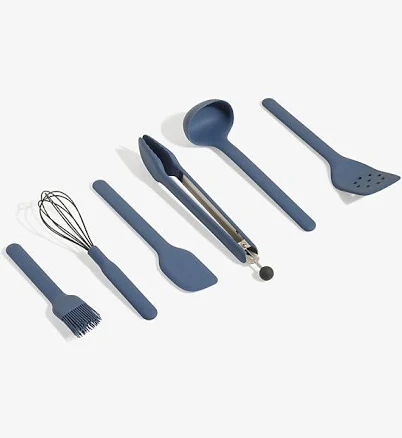
Utensil Essentials 6-Piece Silicone Utensil Set
- Silicone utensils, no coating
- The brand calls it PFAS-free, which we have not verified
- Microplastic generation
2 hazards checked on this product. See all of them.
Our Place
Essential Utensil Set
- Stainless steel utensils
- The brand calls it PFAS-free, which we have not verified
- Nickel leaching from stainless steel
2 hazards checked on this product. See all of them.
Our Place
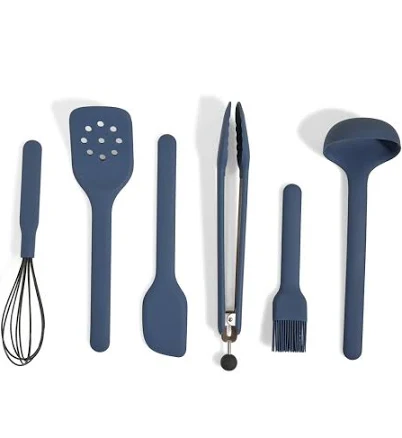
Utensil Essentials Set
- Stainless steel utensils, material unclear
- The brand calls it PFAS-free, which we have not verified
- Handle material degradation (if present)
2 hazards checked on this product. See all of them.
More non-stick kitchen gadgets grades
How we score, every product runs through the same public 0-100 rubric based on materials, coatings, brand disclosure, lab findings, and recalls. See the full methodology → Spotted a mistake? Report an error.