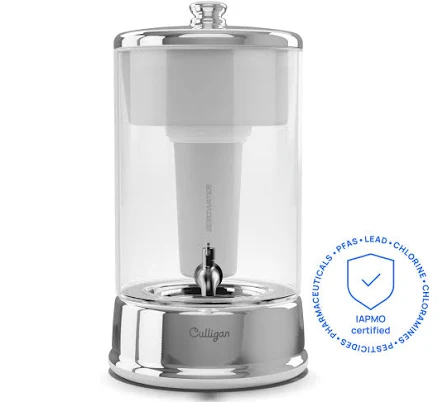
Culligan ZeroWater 40 Cup Glass Dispenser
Lower concern for the glass body; filter cartridge PFAS risk unknown.
The ZeroWater 40 Cup dispenser's primary structure is borosilicate glass, a lower-concern material. The replaceable filter cartridge uses carbon and ion-exchange resin, but Culligan provides no public disclosure about PFAS-containing media or coatings.
We flunk more products than we pass. This one earned its grade. How we grade
Material
Borosilicate glass dispenser; carbon/ion-exchange filter cartridge
Lab data
No public lab test
You may also be interested in
Top-graded picks in the categories readers replace first, every one scored on the same rubric.

Aqua Pure
3M Aqua-Pure AP802B Whole House Filter Housing
- polypropylene filter housing, carbon/sediment cartridge
- We found no PFAS statement from the brand
- Bacterial growth in spent cartridges
3 hazards checked on this product. See all of them.

Aquasure
Premier Series 75 GPD Under Sink Reverse Osmosis Water Filtration System
- RO membrane, carbon filters, stainless steel housing
- We found no PFAS statement from the brand
- Bacterial and microbial growth in housing and filters
4 hazards checked on this product. See all of them.

Avocado
Vegan Mattress
- organic cotton, natural latex, coconut coir, recycled steel coils
- The brand calls it PFAS-free, which we have not verified
- Heavy metals
2 hazards checked on this product. See all of them.
What Culligan ZeroWater 40 Cup Glass Dispenser is made of, ingredients and materials
The 40-cup dispenser body is borosilicate glass, a thermal and chemically resistant material that does not leach minerals, heavy metals, or organic compounds into water under normal use. The filter cartridge contains granular activated carbon and ion-exchange resin beads, standard media for removing dissolved solids and some contaminants. Borosilicate is not a material linked to PFAS and withstands repeated filling and refrigeration without degradation.
What’s concerning
No PFAS disclosure
No public statement from the brand about PFAS in this product.
Bacterial or microbial growth in filter cartridge
Pitcher filters with carbon media can develop biofilm if cartridges are not replaced on schedule or if the dispenser is left standing unused for extended periods. This is a use-maintenance issue, not a manufacturing defect, and applies broadly to this product category.
PFAS
Culligan has not published PFAS removal testing or disclosed whether ion-exchange resin may leach PFAS precursors. This gap is typical across pitcher-filter manufacturers and represents unknown rather than known risk.
Source, ATSDR ↗Glass breakage and thermal shock
Borosilicate glass is durable but can fracture if exposed to rapid temperature changes (e.g., hot water followed by cold air) or dropped. Not a chemical hazard but a physical safety concern with any glass dispenser.
What’s reassuring
Bare uncoated material
Recorded as a bare, uncoated material with no surface coating or treatment.
Lead
The dispenser itself contains no lead. However, the filter cartridge's removal efficacy for lead is not independently verified in public sources, so reliance on this pitcher alone for lead removal in high-risk water is not recommended.
Source, ATSDR ↗Volatile organic compounds or off-gassing from cartridge housing
No off-gassing or VOC reports for this model are on record. The plastic cartridge housing is minimal and not in direct contact with water in most pitcher designs.
The full breakdown
The brand's record and disclosure
Culligan is a major water treatment company with a long history but has not published specific third-party testing data or certifications (NSF, WQA) readily available for this model in public channels. The brand does not disclose PFAS removal efficacy or testing for PFAS in filter cartridges, which is standard opacity across the pitcher-filter category. No major product recalls or safety controversies specific to this dispenser model are on record.
How it compares in its category
This product sits in the mid-to-premium segment of pitcher filters; borosilicate glass is superior to plastic dispensers (which carry BPA and microplastic risks) and comparable to Brita, PUR, and ZeroWater glass models. The cartridge design is proprietary to Culligan/ZeroWater and offers no independently published removal data that distinguishes it from competitor cartridges. Glass body eliminates the plastic-leaching concern that dominates the pitcher-filter hazard profile.
If you buy it
Replace cartridges every 2-3 months or per manufacturer guidance (follow the indicator light if equipped); stale cartridges can harbor bacterial biofilm. Store the dispenser out of direct sunlight to avoid algae growth in the reservoir. Do not use boiling water to clean the glass; thermal shock can cause breakage. Discard cartridges as solid waste or check Culligan's take-back program; do not flush filter media.
What we don’t know
- Basis
- Model estimate, 72% confidence, not a lab result
- Lab test
- None on record for this exact product
- Brand statement
- Culligan has made a specific claim
Formulations change between production runs, so check the current label. How we grade.
More water filters grades
How we score, every product runs through the same public 0-100 rubric based on materials, coatings, brand disclosure, lab findings, and recalls. See the full methodology → Spotted a mistake? Report an error.