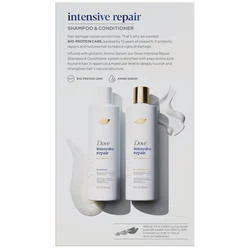
Dove Intensive Repair Shampoo & Conditioner Set for Damaged Hair
Lower concern due to liquid format, but Dove lacks public PFAS commitments.
This liquid shampoo and conditioner set contains no water-repellent or coating features that would require PFAS. Dove hasn't disclosed PFAS policies or published ingredient transparency, leaving full formulation risk uncertain.
We flunk more products than we pass. This one earned its grade. How we grade
Material
water-based surfactants, conditioning agents, fragrance (liquid shampoo/conditioner)
Lab data
No public lab test
You may also be interested in
Top-graded picks in the categories readers replace first, every one scored on the same rubric.

- polypropylene filter housing, carbon/sediment cartridge
- We found no PFAS statement from the brand
- Bacterial growth in spent cartridges
3 hazards checked on this product, all on its full breakdown.

Aquasure
Premier Series 75 GPD Under Sink Reverse Osmosis Water Filtration System
- RO membrane, carbon filters, stainless steel housing
- We found no PFAS statement from the brand
- Bacterial and microbial growth in housing and filters
4 hazards checked on this product, all on its full breakdown.

Avocado
Vegan Mattress
- organic cotton, natural latex, coconut coir, recycled steel coils
- The brand calls it PFAS-free, which we have not verified
- Heavy metals
2 hazards checked on this product, all on its full breakdown.
What Dove Intensive Repair Shampoo Damaged Hair is made of, ingredients and materials
Dove Intensive Repair is a liquid shampoo and conditioner formulated primarily with water, mild surfactants (cleaning agents), and conditioning agents such as silicones or plant-derived emollients. Liquid hair care products do not require high-performance coating or water-repellent chemistry, so the material matrix is straightforward, the product is designed to rinse away completely after use, minimizing dermal or systemic exposure to individual ingredients. The surfactants used in major commercial shampoos are typically biodegradable and widely studied; Dove's formulations fall within established safety margins for scalp contact.
What’s concerning
Category baseline
The starting point for this type of product, before anything specific to this product is counted.
No PFAS disclosure
No public statement from the brand about PFAS in this product.
1,4-dioxane (manufacturing byproduct in surfactants)
Dioxane can be a trace contaminant in ethoxylated surfactants used in shampoos. Regulatory agencies (FDA, EU) permit residual dioxane below 10 ppm in cosmetics; no recall or known excess contamination of Dove Intensive Repair is on public record. Risk from trace amounts in rinse-off products is considered minimal due to brief contact and complete rinsing.
Fragrance allergens and sensitizers
Dove Intensive Repair contains fragrance compounds; some individuals report scalp irritation, dermatitis, or allergic reactions to fragrance in shampoos. This is a category-wide issue, not unique to Dove. Unscented or fragrance-free formulations are available if sensitivity is a concern.
What’s reassuring
Base material not linked to PFAS
The main material recorded for this product is not one associated with PFAS.
Formaldehyde / VOCs
No public reports link Dove Intensive Repair to formaldehyde-releasing preservatives such as DMDM hydantoin or diazolidinyl urea. Modern Dove formulations use preservatives within EU and FDA cosmetic guidelines, though ingredient lists are not always fully disclosed.
Source, ATSDR ↗Heavy metals
Liquid shampoos and conditioners do not contain colorants or pigments at levels that would warrant heavy metal testing. No recalls or warnings specific to lead, cadmium, or mercury in this product line are on record.
Source, FDA ↗Microplastic beads
Dove discontinued the use of polyethylene microbeads in rinse-off products several years ago in response to regulatory pressure. Current Intensive Repair formulations are not known to contain plastic microbeads based on ingredient disclosures and product labeling.
How is this PFAS grade calculated?
The brand's record and disclosure
Dove (owned by Unilever) has not faced major product recalls or disclosed safety violations specific to this shampoo line. The brand does not publicly commit to PFAS-free formulation or publish detailed ingredient sourcing data beyond compliance with beauty industry standards (FDA cosmetic ingredient rules in the US, EU cosmetics regulations in Europe). Unilever has made some public statements on reducing microplastics in rinse-off products, though Dove's older formulations may have contained polyethylene microbeads; the current Intensive Repair line is not known to contain microbeads based on available product labeling.
How it compares in its category
Liquid shampoos and conditioners are low-risk personal care products compared to aerosol sprays, powder-based products, or leave-on treatments, because the contact time is short and the product is rinsed away. Dove's formulations are mainstream commercial offerings and do not position themselves as 'clean' or 'natural' brands, meaning fewer unsubstantiated claims and less pressure toward unproven substitute ingredients. Comparable alternatives (e.g., Pantene, Garnier, store-brand conditioners) have similar risk profiles; premium or 'natural' brands do not systematically outperform Dove on hazard avoidance in this category.
If you buy it
Use as directed on the product label, apply to damp hair, lather shampoo, rinse thoroughly, and apply conditioner to mid-lengths and ends before rinsing. Ensure complete rinsing to avoid residue buildup over time, which can cause scalp irritation or product accumulation unrelated to ingredient toxicity. Store in a cool, dry place to prevent bacterial growth in the bottle; discard if you notice off-odors, color changes, or visible contamination. Replace every 6-12 months depending on usage; no special storage precautions beyond standard bathroom conditions are needed.
What is not known about PFAS in this product?
- Basis
- Model estimate, 78% confidence, not a lab result
- Lab test
- None on record for this exact product
- Brand statement
- Dove has made a specific claim
Formulations change between production runs, so check the current label. How we grade.
More shampoo grades
How we score, every product runs through the same public 0-100 rubric based on materials, coatings, brand disclosure, lab findings, and recalls. See the full methodology → Spotted a mistake? Report an error.