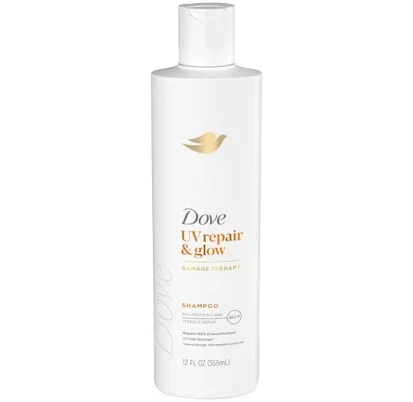
Dove UV Repair & Glow Damage Therapy Shampoo
Lower concern for a liquid shampoo without waterproofing or water-repellent features.
This liquid shampoo has no waterproofing or long-wear claims typical of PFAS use. Dove makes no PFAS disclosures, though the product category itself poses minimal inherent risk.
We flunk more products than we pass. This one earned its grade. How we grade
Material
aqueous shampoo base (surfactants, polymers, water)
Lab data
No public lab test
You may also be interested in
Top-graded picks in the categories readers replace first, every one scored on the same rubric.

- polypropylene filter housing, carbon/sediment cartridge
- We found no PFAS statement from the brand
- Bacterial growth in spent cartridges
3 hazards checked on this product, all on its full breakdown.

Aquasure
Premier Series 75 GPD Under Sink Reverse Osmosis Water Filtration System
- RO membrane, carbon filters, stainless steel housing
- We found no PFAS statement from the brand
- Bacterial and microbial growth in housing and filters
4 hazards checked on this product, all on its full breakdown.

Avocado
Vegan Mattress
- organic cotton, natural latex, coconut coir, recycled steel coils
- The brand calls it PFAS-free, which we have not verified
- Heavy metals
2 hazards checked on this product, all on its full breakdown.
What Dove UV Repair & Glow Therapy Shampoo is made of, ingredients and materials
This is a water-based liquid shampoo formulation containing surfactants (cleansing agents), conditioning polymers, and fragrance compounds suspended in aqueous solution. The 'Damage Therapy' and 'UV Repair' claims suggest added conditioning polymers and possibly UV-absorbing compounds, but these remain dilute in a rinse-off product. Liquid shampoos have minimal risk for leaching or degradation hazards that plague cookware or food storage; the main exposure route is skin contact during wash and rinse, where dilution and contact time are both limited.
What’s concerning
Category baseline
The starting point for this type of product, before anything specific to this product is counted.
No PFAS disclosure
No public statement from the brand about PFAS in this product.
Fragrance allergens and contact sensitizers
Dove shampoos contain fragrance blends listed as 'perfume' on labels. While fragrance is not disclosed in detail (industry standard opacity), common components such as limonene, linalool, and eugenol can trigger contact dermatitis in sensitive individuals. Risk is low for most users due to dilution and rinse-off format, but scalp contact time is longer than body wash.
1,4-dioxane in surfactant by-products
Shampoo surfactants, particularly ethoxylated ingredients (e.g., sodium laureth sulfate), can be contaminated with trace 1,4-dioxane during manufacturing. Major brands like Dove typically use purified surfactants and ethylene oxide strippers to remove residual dioxane, but regulatory limits allow up to 10 ppm. No specific dioxane test results for this product are publicly available.
Preservative-related contact irritation
Liquid shampoos require antimicrobial preservatives; Dove formulations typically use methylisothiazolinone (MIT) or parabens. Scalp irritation, itching, or dermatitis can occur in individuals with sensitivity to these compounds, though prevalence is low. Preservative allergies are rare but well-documented in dermatology literature.
What’s reassuring
Base material not linked to PFAS
The main material recorded for this product is not one associated with PFAS.
Polymer conditioning agents and scalp buildup
The 'Damage Therapy' formulation likely includes silicones or acrylate polymers for conditioning claims. These are rinse-off and do not accumulate systemically, though prolonged use without chelating shampoo may cause cosmetic scalp buildup (dullness, stiffness) rather than toxicological harm.
Talc contamination in mineral additives
No credible evidence indicates talc inclusion in this aqueous liquid shampoo. Talc concern applies primarily to powders and pressed cosmetics. This product contains no reported mineral-based dry ingredients.
How is this PFAS grade calculated?
The brand's record and disclosure
Dove (Unilever) has a documented history of transparency in ingredient disclosure and safety compliance, with no major recalls or established hazard controversies specific to this shampoo line. The brand publishes safety data sheets and participates in industry safety standards (ISO, EU regulations). No credible reports of contamination, undisclosed allergens, or regulatory violations exist for this product. Unilever has faced scrutiny on PFAS use in some product lines but has not been flagged for intentional PFAS addition to shampoos.
How it compares in its category
Liquid shampoos are among the lowest-risk personal care formats because they are rinse-off products with minimal skin dwell time and no thermal processing during use. Dove's formulation is mainstream and mid-market, with ingredient profiles comparable to mass-market brands like Pantene and Garnier. Higher-end salon brands and specialty formulations (e.g., sulfate-free, organic) do not inherently carry lower hazard profiles; Dove's commodity formulation is actually audited by more regulatory bodies due to scale.
If you buy it
Use as directed, apply to wet hair, massage briefly, and rinse thoroughly. No special storage precautions are needed beyond keeping the cap sealed and storing at room temperature away from direct heat. Discard if the formula separates visibly or develops odor (sign of microbial growth, though rare in preserved shampoos). If skin irritation or itching occurs after use, discontinue and rinse scalp thoroughly; individual sensitivity to fragrance or preservatives is possible but not product-wide.
What is not known about PFAS in this product?
- Basis
- Model estimate, 78% confidence, not a lab result
- Lab test
- None on record for this exact product
- Brand statement
- Dove has made a specific claim
Formulations change between production runs, so check the current label. How we grade.
More shampoo grades
How we score, every product runs through the same public 0-100 rubric based on materials, coatings, brand disclosure, lab findings, and recalls. See the full methodology → Spotted a mistake? Report an error.