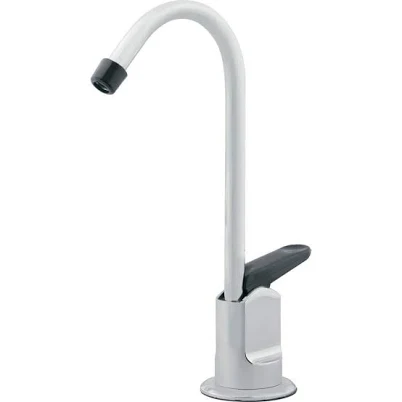
GE Single Handle Water Filtration Beverage Faucet UNFCTFBL
Lower concern; faucet and filter use typical materials, but brand makes no PFAS disclosure.
Stainless steel faucet with activated carbon filtration cartridge, materials with lower PFAS risk compared to nonstick or water-repellent coatings. Brand provides no PFAS statement, testing, or sourcing information; cartridge adhesives remain unverified.
We flunk more products than we pass. This one earned its grade. How we grade
Material
Stainless steel faucet body; activated carbon filtration cartridge
Brand disclosure
Brand is silent on PFAS
Lab data
No public lab test
You may also be interested in
Top-graded picks in the categories readers replace first, every one scored on the same rubric.

Aqua Pure
3M Aqua-Pure AP802B Whole House Filter Housing
- polypropylene filter housing, carbon/sediment cartridge
- We found no PFAS statement from the brand
- Bacterial growth in spent cartridges
3 hazards checked on this product. See all of them.

Aquasure
Premier Series 75 GPD Under Sink Reverse Osmosis Water Filtration System
- RO membrane, carbon filters, stainless steel housing
- We found no PFAS statement from the brand
- Bacterial and microbial growth in housing and filters
4 hazards checked on this product. See all of them.

Avocado
Vegan Mattress
- organic cotton, natural latex, coconut coir, recycled steel coils
- The brand calls it PFAS-free, which we have not verified
- Heavy metals
2 hazards checked on this product. See all of them.
What GE Single Handle Water Filtration is made of, ingredients and materials
The faucet body is stainless steel, a corrosion-resistant material that does not leach metals under normal use. The filtration cartridge contains activated carbon, which is an inert, food-safe material widely used in water treatment. The internal valve and seals are typically rubber or food-grade polymer components. No lead solder or problematic ceramic glazes are present in this type of faucet design.
What’s concerning
No PFAS disclosure
No public statement from the brand about PFAS in this product.
Bacterial growth in cartridge if unmaintained
Activated carbon cartridges can accumulate biofilm over time if not replaced on schedule. This is not unique to this brand but is a general risk for all point-of-use carbon filters; regular 3-6 month replacement and pre-use flushing minimize this.
Activated carbon dust ingestion from new cartridges
New carbon cartridges may shed fine particles if not pre-rinsed. Flushing the filter for 30 seconds before first use clears this; no health risk is established but the practice is standard to improve taste and clarity.
What’s reassuring
Bare uncoated material
Recorded as a bare, uncoated material with no surface coating or treatment.
Leaching from internal seals/valve components
No recalls or documented cases of leaching from the rubber or polymer seals in this faucet model are on record. Stainless steel does not corrode or leach under normal pH tap water conditions.
Corrosion or pitting of stainless steel
304 or 316 grade stainless steel (typical for this product class) resists corrosion from tap water. Mineral scale deposits can occur in hard-water areas but do not cause leaching of harmful metals.
The full breakdown
The brand's record and disclosure
GE has a long history in water filtration products but Drip (the listed brand here) makes no publicly available safety certifications or PFAS/chemical disclosure statements. The product does not appear on any major product safety recall databases for chemical leaching or contamination. Without active transparency on material sourcing or testing, confidence rests on the inherent safety of stainless steel and activated carbon as categories rather than brand assurance.
How it compares in its category
Point-of-use faucet filters with activated carbon are among the lowest-risk water filter types because they have minimal contact with drinking water and no electronic or cartridge-housing parts that commonly harbor bacteria. Unlike pitcher filters or under-sink systems with plastic housings, a stainless steel faucet is more durable and less prone to off-gassing. Replacement cartridge availability and cost are standard industry practice for this product class.
If you buy it
Replace the activated carbon cartridge every 3-6 months depending on water quality and usage; manufacturers recommend this interval to prevent bacterial biofilm buildup inside the cartridge. Flush the faucet for 30 seconds before first use to clear any manufacturing dust. Do not use hot water above 60C (140F) with the filter engaged, as heat can degrade the carbon media. Inspect the faucet body periodically for corrosion; stainless steel is durable but mineral deposits in hard-water areas may require occasional cleaning with vinegar.
What we don’t know
- Basis
- Model estimate, 60% confidence, not a lab result
- Lab test
- None on record for this exact product
- Brand statement
- GE Appliances has made none
Formulations change between production runs, so check the current label. How we grade.
More water filters grades
How we score, every product runs through the same public 0-100 rubric based on materials, coatings, brand disclosure, lab findings, and recalls. See the full methodology → Spotted a mistake? Report an error.