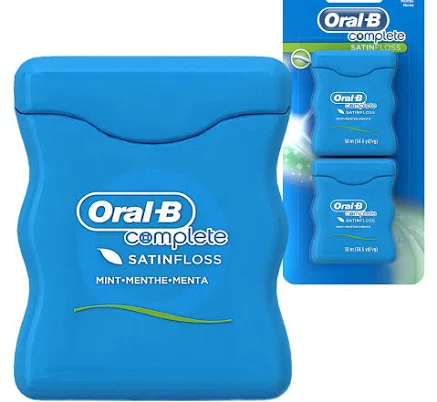
Oral B Satin Floss
Oral-B says its floss is now made without Teflon-type coating or PFAS, a claim we have not verified.
Oral-B says its Glide floss is no longer formulated with Teflon-type coating and that none of its floss products are formulated with Teflon-type coating or any type of PFAS. We record that as an unverified brand claim. Glide was made with Teflon-type coating for decades, so older packs still on some shelves may predate the change.
Brand says: “Oral-B says its Glide floss is no longer formulated with PTFE and that none of its floss products are formulated with PTFE or any type of PFAS.”
We flunk more products than we pass. This one earned its grade. How we grade
Material
Nylon filament (primary material)
Brand disclosure
Brand claims PFAS-free
Lab data
No public lab test
You may also be interested in
Top-graded picks in the categories readers replace first, every one scored on the same rubric.

- polypropylene filter housing, carbon/sediment cartridge
- We found no PFAS statement from the brand
- Bacterial growth in spent cartridges
3 hazards checked on this product, all on its full breakdown.

Aquasure
Premier Series 75 GPD Under Sink Reverse Osmosis Water Filtration System
- RO membrane, carbon filters, stainless steel housing
- We found no PFAS statement from the brand
- Bacterial and microbial growth in housing and filters
4 hazards checked on this product, all on its full breakdown.

Avocado
Vegan Mattress
- organic cotton, natural latex, coconut coir, recycled steel coils
- The brand calls it PFAS-free, which we have not verified
- Heavy metals
2 hazards checked on this product, all on its full breakdown.
What Oral B Satin Floss is made of, ingredients and materials
Oral-B Satin Floss is primarily nylon filament, a synthetic polymer chosen for strength, flexibility, and resistance to shredding. Nylon itself is inert in the oral cavity and does not degrade or leach under normal use conditions (saliva exposure, brief contact time, no heating). The 'satin' finish refers to the surface texture, which reduces friction and improves glide between teeth, but does not involve problematic coatings or treatments that would introduce hazards.
What’s concerning
Category baseline
The starting point for this type of product, before anything specific to this product is counted.
Allergic reaction to nylon or additives
Nylon allergies are exceedingly rare, but individuals with contact sensitivities may theoretically react to trace additives or processing residues. No pattern of allergic complaints specific to Oral-B Satin Floss is documented; discontinue use if mouth irritation occurs.
What’s reassuring
Brand-stated PFAS-free
The brand states this product is PFAS-free. We have not verified the claim.
Base material not linked to PFAS
The main material recorded for this product is not one associated with PFAS.
Nylon degradation or microplastic release
Nylon filament is chemically stable in the oral cavity under normal use. No established reports of floss shedding microplastics or degrading in ways that produce harmful particles during routine flossing.
Dye toxicity (colorants in floss)
Oral-B Satin Floss does not disclose specific colorants or dyes used. Floss colors are typically food-grade or cosmetic-grade approved dyes; no known safety incidents or hazard reports for this product's dye formulation exist in public records.
Gum trauma from mechanical use
This is a use-technique issue, not a material hazard. Properly used nylon floss does not cause gum damage; aggressive or incorrect flossing technique is the driver of any injury.
Heavy metals
No recalls or test reports document heavy metal contamination in this floss. The brand does not disclose processing chemicals or manufacturing standards specific to this product, but industry norms for dental devices exclude intentional heavy metal use.
Source, FDA ↗How is this PFAS grade calculated?
The brand's record and disclosure
Oral-B (owned by Procter and Gamble) has publicly stated that Satin Floss is formulated without Teflon-type coating or PFAS, moving away from earlier Teflon-family coating-based products. The company has not published independent third-party certification for this claim, and verification of PFAS absence has not been independently confirmed by external labs on record. No major recalls or safety controversies specific to this floss product are documented in public databases.
How it compares in its category
Nylon floss is the industry standard for traditional floss; Satin Floss sits in the mainstream category alongside competitors like Glide and Reach. Unlike some specialty flosses, it avoids Teflon-type coating/PFAS coatings, placing it in line with the recent market shift toward PFAS-free formulations. It is not fundamentally different in safety profile from other nylon flosses on the market.
If you buy it
Dental floss requires no special storage or care beyond keeping it dry and at room temperature. Nylon floss is not affected by heat, as it is never exposed to temperatures that would cause degradation (oral cavity ~37°C). Replace the spool when floss becomes frayed or when you notice reduced effectiveness; a standard spool typically lasts several months depending on frequency of use. No special disposal precautions are needed; nylon floss is non-biodegradable but generated in negligible quantities per user.
What is not known about PFAS in this product?
- Basis
- Model estimate, 72% confidence, not a lab result
- Lab test
- None on record for this exact product
- Brand statement
- Oral-B has made a specific claim
Formulations change between production runs, so check the current label. How we grade.
More dental floss grades
How we score, every product runs through the same public 0-100 rubric based on materials, coatings, brand disclosure, lab findings, and recalls. See the full methodology → Spotted a mistake? Report an error.