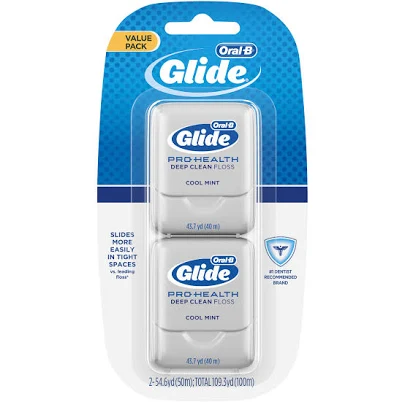
Oral-B Glide Pro-Health Deep Clean Dental Floss
Oral-B says its floss is now made without Teflon-type coating or PFAS, a claim we have not verified.
Oral-B says its Glide floss is no longer formulated with Teflon-type coating and that none of its floss products are formulated with Teflon-type coating or any type of PFAS. We record that as an unverified brand claim. Glide was made with Teflon-type coating for decades, so older packs still on some shelves may predate the change.
Brand says: “Oral-B says its Glide floss is no longer formulated with PTFE and that none of its floss products are formulated with PTFE or any type of PFAS.”
We flunk more products than we pass. This one earned its grade. How we grade
Material
Nylon monofilament core
Brand disclosure
Brand claims PFAS-free
Lab data
No public lab test
You may also be interested in
Top-graded picks in the categories readers replace first, every one scored on the same rubric.

- polypropylene filter housing, carbon/sediment cartridge
- We found no PFAS statement from the brand
- Bacterial growth in spent cartridges
3 hazards checked on this product, all on its full breakdown.

Aquasure
Premier Series 75 GPD Under Sink Reverse Osmosis Water Filtration System
- RO membrane, carbon filters, stainless steel housing
- We found no PFAS statement from the brand
- Bacterial and microbial growth in housing and filters
4 hazards checked on this product, all on its full breakdown.

Avocado
Vegan Mattress
- organic cotton, natural latex, coconut coir, recycled steel coils
- The brand calls it PFAS-free, which we have not verified
- Heavy metals
2 hazards checked on this product, all on its full breakdown.
What Oral-B Glide Pro-Health Deep Dental Floss is made of, ingredients and materials
Oral-B Glide Pro-Health uses a nylon monofilament core, a synthetic polymer chosen for strength, flexibility, and resistance to fraying during use. Nylon does not inherently leach toxic compounds into the oral cavity during normal flossing, as it is chemically inert under the wet, neutral-pH conditions of the mouth. The absence of Teflon-type coating (polytetrafluoroethylene, a Teflon-family coating historically used in floss for slickness) eliminates fume risk, which only occurs at temperatures well above normal use. This material class carries no documented health concerns for oral contact.
What’s concerning
Category baseline
The starting point for this type of product, before anything specific to this product is counted.
Allergic contact dermatitis from floss material or residual processing chemicals
Nylon itself is hypoallergenic, but residual dyes, slip agents, or antimicrobial coatings applied during manufacture could theoretically trigger contact sensitivity in susceptible individuals. Oral-B does not publicly detail all processing additives, limiting full assessment.
What’s reassuring
Brand-stated PFAS-free
The brand states this product is PFAS-free. We have not verified the claim.
Base material not linked to PFAS
The main material recorded for this product is not one associated with PFAS.
Nylon degradation or ingestion of small fibers
Nylon monofilament is mechanically robust and does not readily break into microfibers during normal flossing. No documented cases of fiber ingestion or gastrointestinal effects from dental floss have been established in medical literature.
Gum trauma or mechanical injury
This is a use-related hazard, not a material hazard. Improper flossing technique or excessive force can lacerate gums regardless of floss type; nylon monofilament is no more or less likely to cause injury than other materials when used correctly.
Contamination during storage or dispenser mold
Floss dispensers can accumulate bacterial or fungal growth if stored in humid environments, but this is a storage and hygiene issue, not a product defect. Regular replacement and dry storage mitigate risk.
How is this PFAS grade calculated?
The brand's record and disclosure
Oral-B, owned by Haleon (formerly GSK Consumer Health), has publicly stated removal of Teflon-type coating and PFAS from its floss lines in response to consumer and regulatory scrutiny of PFAS "forever chemicals". The claim has not been independently verified by third-party testing or published in peer-reviewed literature, but aligns with industry-wide movement away from Teflon-type coating in oral care. Haleon has not disclosed specific alternative surfactants or slip agents used in place of Teflon-type coating, limiting ability to assess full composition. No recalls or safety incidents involving this product have been reported in public databases.
How it compares in its category
Most dental flosses fall into two material camps, nylon monofilament (like this product) and waxed multifilament (e.g., silk, synthetic blends). Nylon monofilament is durable and does not fray; waxed varieties may contain natural waxes or synthetic coatings but carry similar low hazard profiles. Older Teflon-type coating-based flosses posed hypothetical thermal fume risk if microwaved or exposed to high heat, a scenario unlikely in normal flossing but cited in precautionary guidance. This product's removal of Teflon-type coating aligns it with alternatives of lower concern already on shelves.
If you buy it
Floss requires no special storage or maintenance; keep in a cool, dry environment away from extreme heat or moisture that could promote mold in the dispenser. Replace the spool when fraying or breakage begins, typically every 2-3 months with daily use. Use gentle sawing motions to avoid cutting gums; do not force floss between teeth or use excessively tight wrapping. Discontinue immediately if persistent gum irritation, bleeding, or allergic reaction (rare with nylon) occurs and consult a dentist.
What is not known about PFAS in this product?
- Basis
- Model estimate, 72% confidence, not a lab result
- Lab test
- None on record for this exact product
- Brand statement
- Oral-B has made a specific claim
Formulations change between production runs, so check the current label. How we grade.
More dental floss grades
How we score, every product runs through the same public 0-100 rubric based on materials, coatings, brand disclosure, lab findings, and recalls. See the full methodology → Spotted a mistake? Report an error.