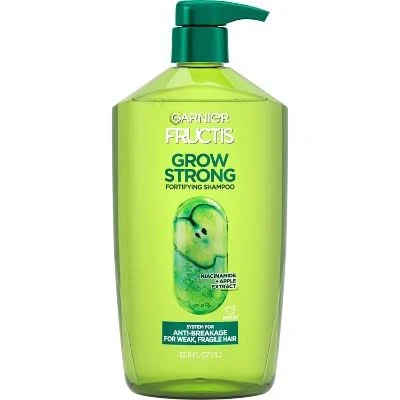
Garnier Fructis Grow Strong Shampoo
Lower concern for typical rinse-off shampoo with no known fluorochemical applications.
This rinse-off liquid shampoo contains no engineered water-, stain-, or grease-repellent treatment that would require PFAS. Standard rinse-off shampoos carry lower risk than waterproofed items.
We flunk more products than we pass. This one earned its grade. How we grade
Material
Water-based shampoo formulation
Brand disclosure
Brand is silent on PFAS
Lab data
No public lab test
You may also be interested in
Top-graded picks in the categories readers replace first, every one scored on the same rubric.

- polypropylene filter housing, carbon/sediment cartridge
- We found no PFAS statement from the brand
- Bacterial growth in spent cartridges
3 hazards checked on this product, all on its full breakdown.

Aquasure
Premier Series 75 GPD Under Sink Reverse Osmosis Water Filtration System
- RO membrane, carbon filters, stainless steel housing
- We found no PFAS statement from the brand
- Bacterial and microbial growth in housing and filters
4 hazards checked on this product, all on its full breakdown.

Avocado
Vegan Mattress
- organic cotton, natural latex, coconut coir, recycled steel coils
- The brand calls it PFAS-free, which we have not verified
- Heavy metals
2 hazards checked on this product, all on its full breakdown.
What Garnier Fructis Grow Strong Shampoo is made of, ingredients and materials
Garnier Fructis Grow Strong Shampoo is a water-based rinse-off formulation containing surfactants, humectants (likely glycerin or fruit extracts marketed as key ingredients), and preservatives typical of mass-market personal care products. Unlike leave-on products, rinse-off shampoos are diluted rapidly and largely removed from skin, reducing dermal exposure to problematic additives. The "fruit" branding refers to extract inclusions (mango, avocado, etc.) which are marketing-driven but chemically inert at typical concentrations.
What’s concerning
Category baseline
The starting point for this type of product, before anything specific to this product is counted.
No PFAS disclosure
No public statement from the brand about PFAS in this product.
Formaldehyde / VOCs
Standard shampoo preservatives such as DMDM hydantoin or imidazolidinyl urea can release trace formaldehyde over time. No independent testing of this specific Garnier product for formaldehyde release is on public record; if present, levels would typically be far below acute toxicity thresholds in a rinse-off application.
Source, ATSDR ↗1,4-dioxane (manufacturing byproduct)
Water-based shampoos with ethoxylated surfactants may contain trace 1,4-dioxane as a contaminant from synthesis. Garnier does not publicly commit to 1,4-dioxane reduction; independent testing data for this product is not available, but typical rinse-off shampoos present minimal dermal risk even if trace contamination is present.
Fragrance allergens
The product contains fragrance compounds (likely synthetic perfume blend rather than pure essential oils) which can trigger contact dermatitis or sensitization in individuals with fragrance sensitivity. Reactions are idiosyncratic and not universal; the ingredient listing typically groups fragrances as 'parfum' without full disclosure of components.
Scalp or eye irritation from surfactants
Anionic surfactants (primary lathering agents in shampoos) can cause mild irritation if left on skin or inadvertently splashed in eyes. This is not a formulation defect but an expected property of the product class; proper rinsing mitigates risk entirely.
What’s reassuring
Base material not linked to PFAS
The main material recorded for this product is not one associated with PFAS.
Heavy metals
Garnier Fructis Grow Strong Shampoo is not marketed as a colored or pigmented product; standard formulations do not require colorant additives that would introduce lead, cadmium, or antimony. No recalls or complaints related to heavy metal contamination in this product line are on record.
Source, FDA ↗How is this PFAS grade calculated?
The brand's record and disclosure
Garnier (parent, L'Oreal) maintains baseline ingredient disclosure on packaging and online but does not proactively highlight certifications for heavy metals, 1,4-dioxane reduction, or formaldehyde releasers. The brand has faced no major safety recalls or regulatory sanctions for this product line. No independent testing of Garnier Fructis shampoos for heavy metals in pigments or formaldehyde releasers is on public record, and the brand's stance on these contaminants remains unstated rather than explicitly addressed.
How it compares in its category
Mass-market shampoos like Garnier Fructis occupy the middle ground between budget drugstore products and premium salon lines; formulation quality is standard but not premium-certified. Competitors with explicit certifications (e.g., free-and-clear, sulfate-free verified brands) may offer slightly tighter formulation controls, but no published testing differentiates Garnier Fructis safety from comparable brands in this tier. The rinse-off nature makes this category inherently lower-risk than leave-on products like conditioners or leave-in treatments.
If you buy it
Use as directed, wet hair, apply, lather, rinse thoroughly with water. No special storage or maintenance is required beyond keeping the bottle sealed and cool. Replace when empty or after normal shelf life (typically 12-24 months unopened). If scalp irritation or allergic reaction occurs (redness, itching, rash), discontinue and consult a dermatologist; these reactions are rare but product-specific sensitivities exist.
What is not known about PFAS in this product?
- Basis
- Model estimate, 72% confidence, not a lab result
- Lab test
- None on record for this exact product
- Brand statement
- Garnier Fructis has made none
Formulations change between production runs, so check the current label. How we grade.
More shampoo grades
How we score, every product runs through the same public 0-100 rubric based on materials, coatings, brand disclosure, lab findings, and recalls. See the full methodology → Spotted a mistake? Report an error.