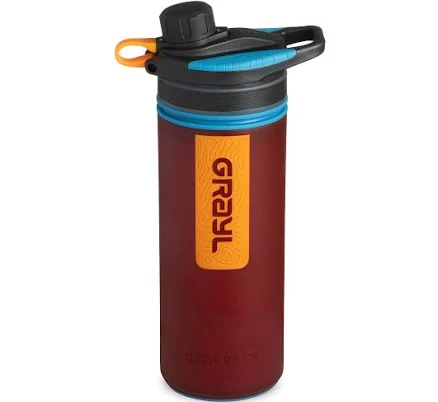
Grayl GeoPress Water Purifier Bottle
Lower concern; no PFAS-prone materials identified, but brand discloses nothing on PFAS.
Silicone, stainless steel, and coconut-shell carbon are materials not typically associated with intentional PFAS addition. Grayl makes no public PFAS disclosure or testing disclosure.
We flunk more products than we pass. This one earned its grade. How we grade
Material
Silicone, stainless steel, and activated coconut carbon filtration cartridge
Brand disclosure
Brand is silent on PFAS
Lab data
No public lab test
What Grayl GeoPress Water Purifier Bottle is made of, ingredients and materials
The GeoPress combines food-grade silicone squeeze chamber, stainless steel (likely 18/8) housing, and activated coconut carbon cartridge. Silicone is chemically inert at typical use temperatures and does not leach plasticizers or BPA; stainless steel is stable and does not corrode into water under normal conditions. The coconut carbon filter removes chlorine, taste, and odor but does not sterilize, so cartridge maintenance and replacement intervals are critical to safety.
What’s concerning
No PFAS disclosure
No public statement from the brand about PFAS in this product.
Bacterial growth in exhausted filter cartridge
Coconut carbon does not actively kill pathogens; once saturated, the cartridge can harbor bacteria if not replaced on schedule. Grayl provides clear replacement guidance, but user compliance determines real-world risk.
Activated carbon dust or fines in water
New or newly installed cartridges may release fine carbon particles during initial use. Grayl recommends pre-rinsing cartridges, and this is standard practice in the category.
What’s reassuring
Bare uncoated material
Recorded as a bare, uncoated material with no surface coating or treatment.
Silicone degradation under extreme temperature or UV
Food-grade silicone is stable under normal conditions, but prolonged exposure to direct sunlight or temperatures above 70 degrees Celsius could theoretically degrade it over years. No degradation reports for this product exist on record.
Stainless steel corrosion or leaching
18/8 stainless steel is corrosion-resistant in freshwater; however, prolonged contact with acidic or high-chloride water in poorly ventilated conditions could theoretically cause pitting. No documented cases for the GeoPress.
Housing material leachables (stainless steel or silicone)
Silicone and stainless steel do not leach BPA, phthalates, or heavy metals under normal drinking-water conditions. No testing data from Grayl or third parties indicates leaching of any concern.
The full breakdown
The brand's record and disclosure
Grayl publishes material composition and filter specifications on product pages but does not provide third-party certifications (NSF, WQA) for the GeoPress. The company has no documented recalls or safety controversies on record. Brand does not publicly address PFAS in its marketing or technical documentation, which is typical for consumer water bottles but leaves uncertainty about testing scope.
How it compares in its category
Most filtered water bottles use plastic housings (polycarbonate or tritan), which carry microleaching and BPA-related concerns; the GeoPress avoids this by using silicone and stainless steel. Carbon filtration is standard and effective for taste/odor but inferior to ion exchange or reverse osmosis for heavy metals or bacteria. This product sits in the mid-premium segment and outperforms budget plastic alternatives on material safety, though it does not offer pathogen removal.
If you buy it
Replace cartridges every 150 liters or 2 months of regular use (per manufacturer guidance) to prevent bacterial colonization in exhausted carbon. Do not use boiling water in the silicone chamber; typical cold-to-warm water (below 60 degrees Celsius) will not damage the material. Rinse the housing weekly and allow to air dry completely to prevent mold. The squeeze action and cartridge design are durable, but inspect silicone for cracks annually.
What we don’t know
- Basis
- Model estimate, 72% confidence, not a lab result
- Lab test
- None on record for this exact product
- Brand statement
- Grayl has made none
Formulations change between production runs, so check the current label. How we grade.
More water filters grades
How we score, every product runs through the same public 0-100 rubric based on materials, coatings, brand disclosure, lab findings, and recalls. See the full methodology → Spotted a mistake? Report an error.