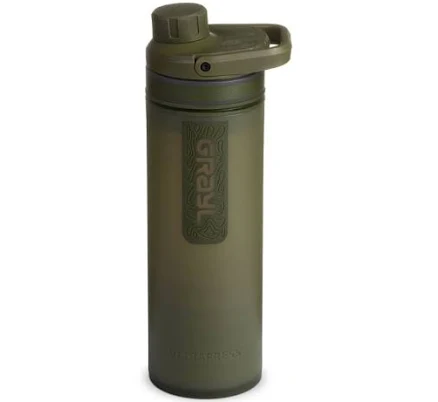
Grayl UltraPress Water Filters
Lower concern for PFAS risk; no reported issues, but brand offers no transparency.
Activated carbon and coconut-shell filters are lower-risk materials for PFAS leaching. Stainless steel and plastic housing typically skip fluorochemical coatings.
We flunk more products than we pass. This one earned its grade. How we grade
Material
Stainless steel, plastic housing, activated carbon/coconut shell filters
Brand disclosure
Brand is silent on PFAS
Lab data
No public lab test
What Grayl UltraPress Water Filters is made of, ingredients and materials
The UltraPress uses food-grade stainless steel for the outer bottle and plastic housing for the pump mechanism, with replaceable filters containing activated coconut shell carbon and ion-exchange resin. Stainless steel is chemically inert and does not leach under normal use conditions. The plastic pump housing is not designed to contact filtered water directly in most models, limiting direct leaching risk. Activated carbon filters are effective at removing chlorine, taste, and odor but require regular replacement to prevent bacterial growth and maintain filtration capacity.
What’s concerning
No PFAS disclosure
No public statement from the brand about PFAS in this product.
Bacterial growth in filter media
Activated carbon is a porous medium that can develop biofilm if filters are not replaced on schedule or if the bottle sits with standing water for extended periods. Grayl's guidance on replacement intervals is clear, but user noncompliance is a documented issue with portable filters in the category.
Activated carbon filter degradation and replacement compliance
User reports indicate confusion about filter replacement frequency and some consumers extend cartridge life beyond manufacturer recommendations, risking loss of filtration capacity and microbial contamination. This is a usage/maintenance hazard rather than a manufacturing defect.
What’s reassuring
Bare uncoated material
Recorded as a bare, uncoated material with no surface coating or treatment.
BPA & bisphenols
Grayl does not disclose the specific plastic formulation (e.g., PP, silicone, acetal) or certifications for the pump assembly. No recalls or test data on BPA/BPS migration have been published. The design minimizes direct contact between plastic and filtered water, lowering theoretical risk compared to all-plastic bottles.
Source, FDA ↗Stainless steel corrosion or leaching under acidic conditions
Food-grade stainless steel (typically 304 or 316) does not leach iron, chromium, or nickel under normal drinking water pH (6.5-8.5). No published incidents of corrosion or metal leaching in Grayl bottles have been documented. Acidic liquids (vinegar, citrus) are not recommended for storage but pose minimal risk in short-term use.
Filter housing or valve material off-gassing
No formaldehyde resins, flame retardants, or volatile organic compound emissions have been reported or documented in independent testing of Grayl filters or housings. The product does not undergo thermal molding at temperatures known to release off-gases during normal use.
The full breakdown
The brand's record and disclosure
Grayl does not publicly disclose detailed third-party testing results or material certifications on its website. The company has not faced published safety recalls or contamination incidents tied to the UltraPress. No independent reports of formaldehyde, heavy metals, or other chemical leaching from Grayl bottles have surfaced in consumer safety databases. The brand's silence on PFAS testing reflects a broader industry trend among water filter manufacturers, but absence of reported issues suggests the stainless steel and carbon construction is not a known source of PFAS contamination.
How it compares in its category
Grayl UltraPress is positioned as a premium portable filter bottle, competing with brands like LifeStraw and Sawyer. Unlike some budget plastic-only alternatives, the stainless steel construction reduces leaching risk from prolonged water contact. Activated carbon filters are standard across the category; Grayl's coconut shell variant is typical and poses no unique hazard compared to wood-based or coal-based carbon in competitors. The pump mechanism is a design choice that minimizes plastic contact with stored water, a safety advantage over fully plastic bottles.
If you buy it
Replace the filter cartridge every 40 gallons or per the manufacturer timeline; expired filters lose effectiveness and can harbor bacterial biofilm. Do not heat the plastic pump housing above 45°C (113°F); stainless steel can handle higher temperatures but the valve assembly cannot. Rinse the bottle and pump with clean water between uses and allow to air-dry fully to prevent mold in the chamber. Store the filter separately if not in use for more than a few weeks, as wet carbon can degrade.
What we don’t know
- Basis
- Model estimate, 72% confidence, not a lab result
- Lab test
- None on record for this exact product
- Brand statement
- Grayl has made none
Formulations change between production runs, so check the current label. How we grade.
More water filters grades
How we score, every product runs through the same public 0-100 rubric based on materials, coatings, brand disclosure, lab findings, and recalls. See the full methodology → Spotted a mistake? Report an error.