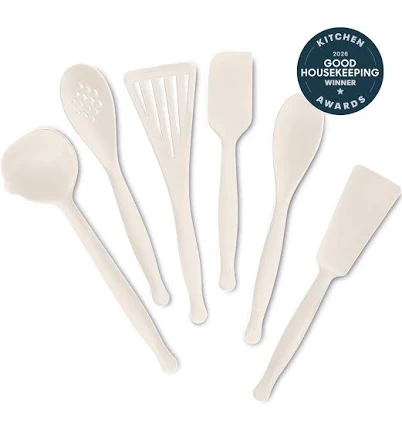
GreenPan · Non-Stick Kitchen Gadgets
Greenpan Premiere Silicone 6-Piece Utensil Set
Silicone with no coating described, and no PFAS statement from the brand.
The product information we reviewed describes silicone utensil heads, with no applied coating named. Silicone releases food on its own, so a non-stick claim on a silicone product describes the material rather than a coating. The brand has published no PFAS statement for it.
The better-graded swap
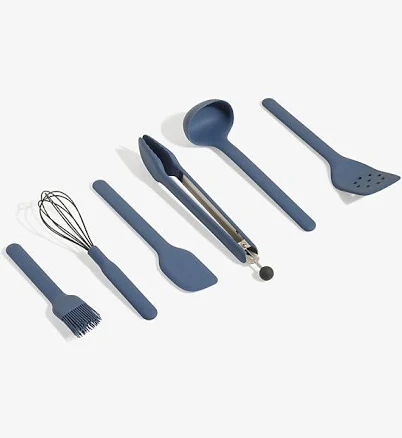
Our Place
Our Place Utensil Essentials 6-Piece Silicone Utensil Set
90/100 safety
Same rubric that flunked this product. The swap earned Excellent.
Still want this one anyway? Check the price on Amazon. We’d swap it.
Material
Silicone utensil heads
Lab data
No public lab test
Is Greenpan Premiere Silicone 6-Piece non-toxic? What it is made of
This set consists of silicone utensil heads (spatulas, spoons, etc.) bonded to handles, likely stainless steel or plastic. Silicone is a synthetic polymer with strong Si-O bonds that resist thermal breakdown and do not leach estrogenic compounds like BPA. Unlike traditional non-stick coatings, silicone itself contains no fluorocarbons, so fume risk from heating is absent. The main concern is handle material and any adhesive at the head-shaft joint.
What’s concerning
Category baseline
The starting point for this type of product, before anything specific to this product is counted.
No PFAS disclosure
No public statement from the brand about PFAS in this product.
Silicone degradation and microbial growth
Silicone utensils can degrade if exposed to high heat or UV light over extended periods, and seams between handle and head may accumulate bacteria if not dried thoroughly. This is a maintenance issue, not an acute chemical hazard.
What’s reassuring
Base material not linked to PFAS
The main material recorded for this product is not one associated with PFAS.
Handle material leaching (if plastic)
If handle is thermoplastic, BPA or phthalate presence depends on supplier and manufacturing year; GreenPan does not publicly disclose handle material. No specific recalls or test results on record for this product line.
Adhesive or coating on joints
Silicone utensils typically use food-grade epoxy or silicone adhesive at the head-shaft bond; no disclosure of adhesive formulation or heavy metal content is standard in the category, and no contamination has been reported for GreenPan products.
Thermal stability and fume risk
Silicone does not emit Teflon-type coating or other fluorocarbon fumes when heated within stated temperature limits (typically 400-500F). No fume-related incidents reported for silicone utensil sets.
Formaldehyde / VOCs
Cured silicone is a closed polymer and does not off-gas formaldehyde. No off-gassing complaints or test data available on record for this product.
Source, ATSDR ↗The full breakdown
The brand's record and disclosure
GreenPan markets itself as a PFAS-aware cookware brand but has not issued an explicit statement on this silicone utensil line or its adhesive formulation. The parent company (Groupe SEB) has faced no major chemical safety recalls on silicone utensil products. GreenPan's non-stick cookware has earned qualified third-party certifications (e.g., free of PFOA), though this certification does not extend to utensils. Their silence on silicone-specific testing is typical for the category, not a red flag.
How it compares in its category
Silicone utensils have lower concern in the category, they avoid the thermal fume and degradation risks of Teflon-type coating-coated utensils and the potential leaching of wooden or melamine handles. Most competitors (OXO, Calphalon, Cuisinart) also offer silicone options with similar risk profiles. GreenPan's positioning as a green brand does not materially change the chemistry here, but it does signal brand awareness of chemical concerns.
If you buy it
Silicone utensils are rated to 400-500F; do not expose to open flame or use in oven temperatures above the manufacturer's stated limit. Hand-wash or place in the dishwasher on the lower rack to avoid degradation near heating elements. Replace if silicone becomes discolored, brittle, or if the bond between head and handle degrades and begins to harbor food or bacteria. Avoid prolonged contact with strong solvents (e.g., acetone) as silicone can absorb odors and may soften slightly over years of use.
What we don’t know
- Basis
- Model estimate, 45% confidence, not a lab result
- Lab test
- None on record for this exact product
- Brand statement
- GreenPan has made a specific claim
Formulations change between production runs, so check the current label. How we grade.
Better-graded alternatives in Non-Stick Kitchen Gadgets
Our Place
Utensil Essentials 6-Piece Silicone Utensil Set
- Silicone utensils, no coating
- The brand calls it PFAS-free, which we have not verified
- Microplastic generation
2 hazards checked on this product. See all of them.
Our Place
Essential Utensil Set
- Stainless steel utensils
- The brand calls it PFAS-free, which we have not verified
- Nickel leaching from stainless steel
2 hazards checked on this product. See all of them.
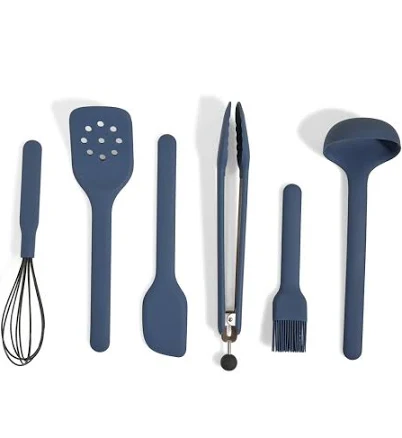
Our Place
Utensil Essentials Set
- Stainless steel utensils, material unclear
- The brand calls it PFAS-free, which we have not verified
- Handle material degradation (if present)
2 hazards checked on this product. See all of them.
More non-stick kitchen gadgets grades
How we score, every product runs through the same public 0-100 rubric based on materials, coatings, brand disclosure, lab findings, and recalls. See the full methodology → Spotted a mistake? Report an error.